Cat Essentials for a New Kitten
The cat essentials to have ready before your kitten comes home, what to look for in each, and the extras that can wait until you know your cat.

By Maren Whitlock · Published
Cat essentials checklist
0 of 9 ready
A new kitten needs less than the pet store aisle suggests. These are the cat essentials to have ready on day one, with what to look for in each. Tick them off in the checklist above, and use the full new kitten checklist for everything else.
The litter box corner
The litter box is the first thing to get right, because a kitten who likes their box keeps using it. Set it up before your kitten arrives, so it’s the first thing you show them.
A box your kitten can reach
Pick a box with low sides, so a small kitten can step in and out without a struggle. An open box is a simple start, since a kitten can see out and climb in from any side.
Put the box in a quiet spot that’s easy to reach, away from the food and water bowls. A busy hallway or a spot next to a noisy washing machine can put a kitten off using it.
Try not to move the box once your kitten uses it. If it has to move, shift it a little at a time, so your kitten can follow it.
Litter and a scoop
Unscented litter is the safest choice at first, since strong scents can put a cat off the box. If the shelter or breeder used a certain litter, start with the same kind, so the box feels familiar.
Add a sturdy scoop and a small bin or bag for waste. Scoop the box every day, and wash it out with mild soap now and then, skipping strong cleaners and scented sprays.
How many boxes
One box in your kitten’s first room is enough to start. Later, in a home with more than one floor, plan for a box on each floor, so there’s always one close by.
In a home with more than one cat, a common rule is one box per cat plus one extra. A mat under the box catches stray litter and can wait until you see how much your kitten kicks around.
If a cat already lives with you, the guide to introducing cats to cats covers how to set up the new cat’s room and the first meetings.
Food, water and a warm bed
Food, water and a warm place to sleep are the comforts that help a kitten relax in a new home. None of them need to be fancy, as long as they’re clean and easy to reach.
Bowls and the food your kitten eats now
Choose a food dish and a water bowl that are wide and shallow, heavy enough not to slide, and easy to wash. Stainless steel and ceramic are simple to keep clean.
Keep the food your kitten eats now, from the shelter or breeder, for the first days at home. Ask your vet before you change it, and keep fresh, clean water out at all times.
Wash the bowls and refill them every day. A container with a lid keeps dry food fresh and can come a little later.
A bed or a box with a blanket
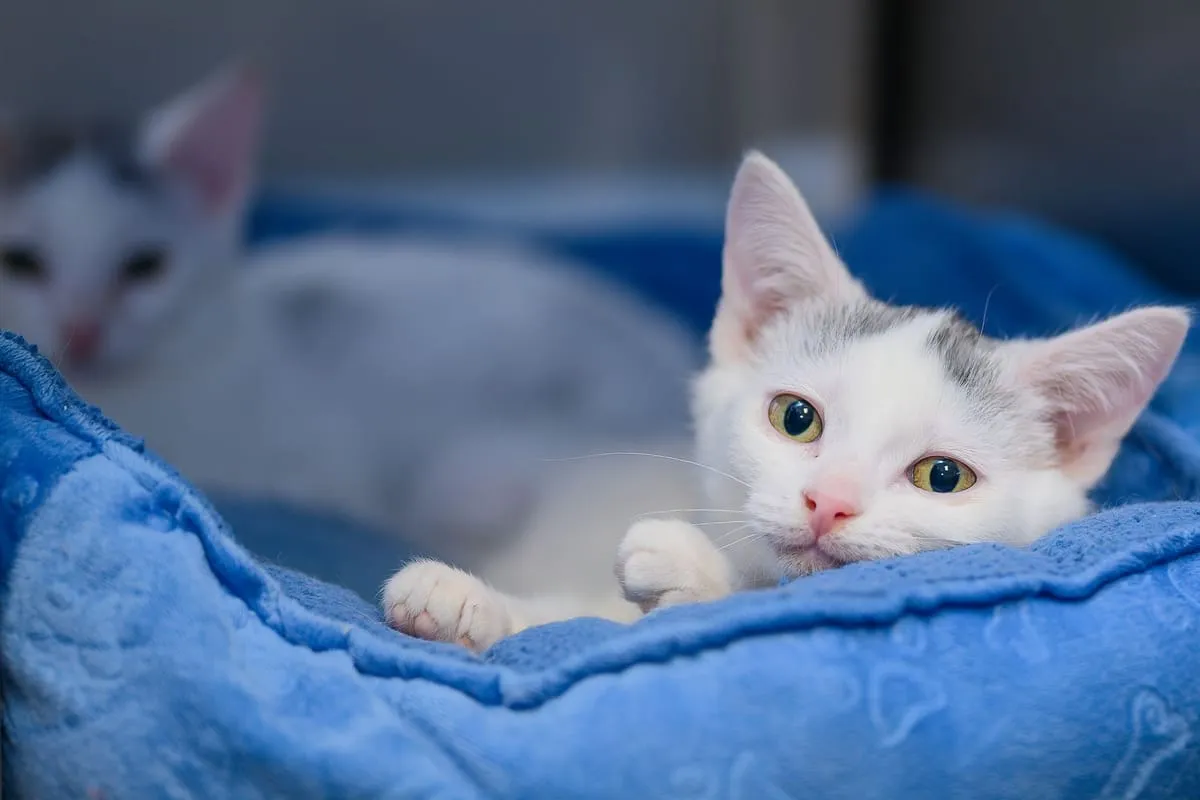
A kitten needs a clean, dry and warm place to sleep. A cat bed is lovely, but a cardboard box with a soft blanket or towel inside works just as well on day one.
Pick bedding you can wash often, and keep a second blanket on hand so there’s always a clean one. A fancier bed can come later, once you see where your kitten likes to sleep.
A spot to hide
A new home is big and strange, and hiding helps a kitten feel safe. A box tipped on its side with a towel inside gives your kitten a hiding spot of their own, so they don’t squeeze under the sofa instead.
Scratching, play and grooming
Scratching and play are how a kitten stretches, burns energy and learns to trust you. A little grooming from the first week keeps the coat tidy and gets your kitten used to being handled.
A sturdy scratching post
Scratching is natural, so the goal is to give your kitten the right place to do it. Pick a post that is tall enough for a full stretch and solid enough that it doesn’t wobble, because a post that tips over once may not get used again.
Rough materials like sisal rope or bark are good to scratch. Put the post near where your kitten sleeps or near furniture they might go for, and add a flat scratching pad for another room later.
An interactive toy
A wand toy you move is the best first toy for a kitten. It lets your kitten chase and pounce with you rather than with your hands, and it builds trust fast.
Play a few short sessions a day, and put the wand toy away afterward, since strings are not for playing with alone. A few small balls or toy mice are good for solo play.
A brush that suits the coat
Brushing keeps the coat clean and cuts down on shedding and hairballs. A soft brush or rubber mitt suits a short coat, and a long coat needs a brush plus a comb for tangles.
Start with a few seconds of brushing, followed by a treat or a game. Short, happy sessions now make grooming easy when your kitten is grown.
Getting home, and what can wait
A few things make the day your kitten comes home calmer. Others can wait until you know your kitten, so you only buy them once.
A carrier
A sturdy carrier is a must for the ride home and every vet visit after. Pick one that opens from the top as well as the front, which makes it easier to lift a nervous kitten in and out.
Put a towel inside and leave the carrier open in your kitten’s room. When it’s a normal place to nap, trips to the vet get much easier.
ID for your kitten
An ID tag on a safety collar, one with a breakaway clip or an elastic panel, helps your cat get home if they ever slip out. Ask your vet about a microchip too, and register the details in your name.
What can wait
A cat tree, a basket of toys, a fancy bed, window perches and travel gear can wait. In the first weeks you’ll learn whether your kitten likes to climb or hide, chase or pounce, so you buy the right things. These indoor cat ideas help when it’s time to add them.
For the first days at home, from one quiet room to a simple routine, see the New Kitten guide. And once your kitten has settled in, these kitten names can help with the next big decision.