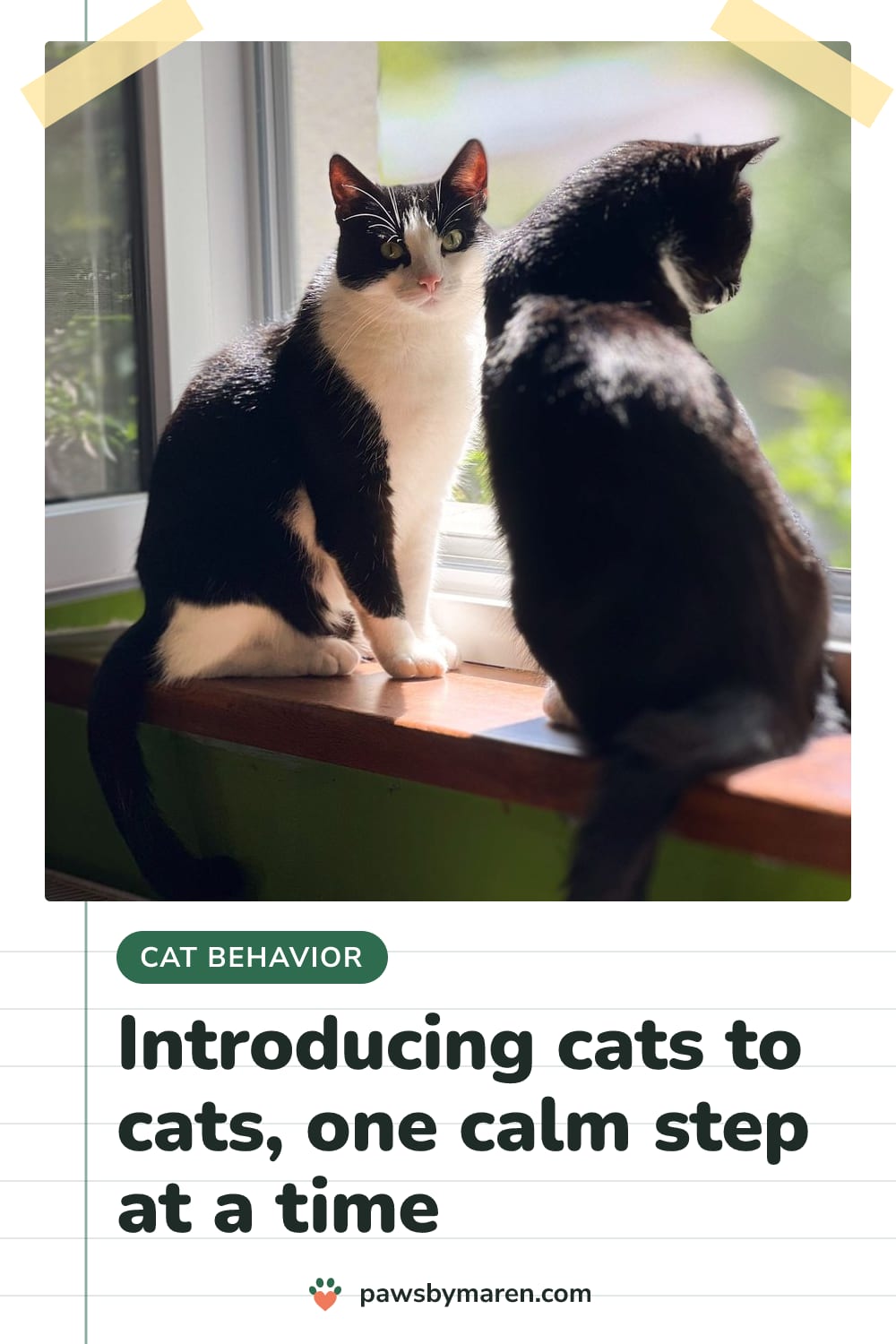
Introducing Cats to Cats the Calm Way
How to introduce a new cat to your cat: a safe room, swapping scents, play through a closed door, a first look through a gate and short supervised visits.

By Maren Whitlock · Published

Introducing cats to cats works best slowly: give the new cat a room of their own, let the cats get used to each other’s scent, then let them see each other before they share a room. Moving on only when both cats are calm can take a few days or a few months.
Below are the steps in order, how to set up your home first, the signs that things are going well or not, and what to do when it gets tense.
Before the new cat comes home
Cats are often fearful of changes to their home and the other animals in it. A little planning before the new cat arrives makes the whole introduction calmer for everyone.
Every cat in the home should have had a recent vet check-up first. Your vet can also check the new cat for common illnesses that spread between cats.
Pick a cat who fits
If you can choose, look for a cat around the same age or with a similar energy level as your cat. A bouncy kitten may wear out an older, quieter cat.
Ask the shelter or the previous family whether the new cat is known to enjoy the company of other cats. Two laid-back adult cats tend to be the easiest pair to introduce.
Set up a safe room
Choose a quiet room for the new cat, away from busy parts of the home, with a door that closes securely. Pick a room your cat doesn’t use much, so you aren’t taking over a favorite spot.
Fill it with everything the new cat needs: food and water, a litter box, a scratching post, toys, a bed and hiding spots. A cat tree or a shelf gives a shy cat somewhere high to feel safe.
Plenty to go around
Each cat needs their own set of things, spread around the home so no one has to share. Plan on one litter box, water bowl, food bowl, bed and scratching post per cat, plus one extra.
Too few of these, or too close together, is the most common cause of tension between cats. The cat essentials list covers what to have ready.
Step 1, a room of their own
Bring the new cat home in a carrier covered with a towel or blanket, so the cats can’t see each other, and carry it straight to the safe room. Open the carrier door and let the new cat come out when they’re ready.
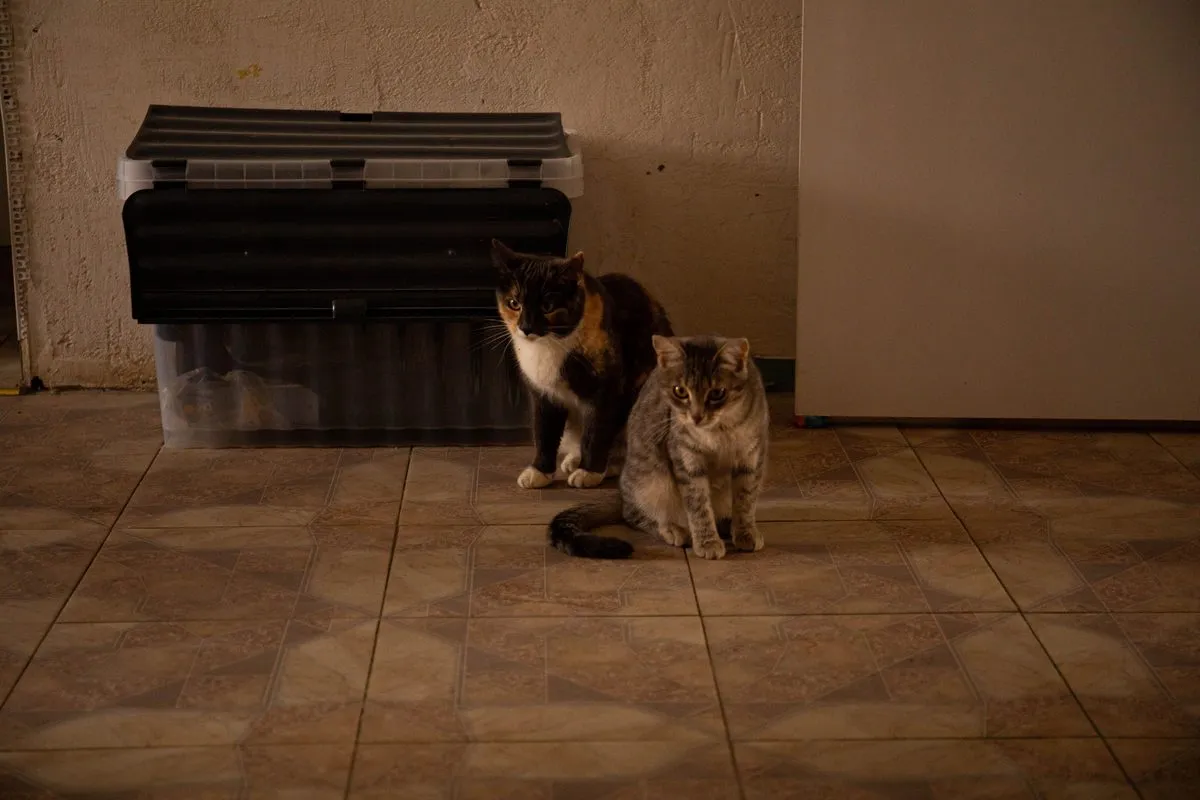
Let the new cat settle
Stay at this step until the new cat stops hiding all the time and explores the room with confidence. This can take a few days, and longer for a shy cat.
Spend time in the room with the new cat, with treats and gentle play, so they link the new home with good things. The guide to adopting a cat covers these first days in more detail.
Keep your cat’s routine
Keep your resident cat’s meals, play and cuddles on their usual schedule. If your cat seems upset by the sounds or smells at the door, keep them away from it for now.
Step 2, swap scents
Cats learn a lot about each other through smell, so the next step is getting them used to each other’s scent without meeting. Start once the new cat is comfortable in the safe room.
Swap bedding and toys
Trade a blanket, a bed or a soft toy between the cats every day. Watch how each cat reacts to the new smell.
Repeat it daily until neither cat reacts with tension. Hissing, growling, pacing, avoiding the item or going outside the litter box mean a cat needs more time.
Share scent on a soft cloth
After a few calm days, gently rub a soft cloth on one cat’s cheeks and chin, and between the eyes and ears. Then rub the same cloth on the other cat in the same places.
Repeat with each cat until they’re relaxed about it. Leave the scented cloths where the cats can sniff them in their own time.
Swap rooms
Once the cats are calm with each other’s smell, let them trade spaces for a while. Put your resident cat in a favorite room with treats and toys, and let the new cat explore the shared rooms for a short time.
Then return each cat to their own space. Over a few days, let the new cat explore a little longer each time.
Step 3, play and a first look
Next, the cats get used to each other’s presence, first without seeing each other and then with a barrier between them. Keep every session short and happy.

Play on each side of the door
Tie two cat toys together with strong string and put one on each side of a closed door, so each cat plays with one end. Keep sessions to 5 to 20 minutes, and stop before the cats lose interest.
If a cat hisses or growls at the door, don’t scold them. Stop, give the cats some distance and try again later.
A first look through a barrier
When the door play is calm, let the cats see each other through a barrier for short sessions. A tall, sturdy baby gate at least 36 inches high works, and so do a screen door or a glass door.
Some owners cover the gate with a sheet and lift it for a moment at a time, with treats for both cats. Give each cat a toy or treats on their own side to keep things relaxed.
Watch both cats
Keep an eye on each cat’s body language the whole time. If either cat seems uneasy, stop right away and go back to door play for a few more days.
Step 4, short visits together
Once the cats are relaxed seeing each other through the barrier, they can start spending supervised time in the same room. Pick a time when both cats are busy with food or play.
Keep the first visits short
Start with short visits in a large room, with someone watching. Treats and wand toys keep each cat busy and turn the other cat’s company into something good.
Reward calm, friendly or neutral behavior with treats. If one cat starts to stalk, chase or pounce, distract them with a toy.
Build up slowly
If the visits go well, repeat them over several days and make each one a little longer. Leave the cats alone together only after several days, or even weeks, of calm visits.
Until then, keep the new cat in the safe room when you can’t watch. Every cat should always have a hiding spot and a way to walk away.
Signs it’s going well or not
Every cat moves at their own pace, so watch the cats, not the calendar. Their body language tells you when to move on and when to slow down.
Good signs
Good signs include eating, playing and resting normally near the door or the gate, and calm curiosity about the other cat. A hiss here or there is not a concern.
Signs to slow down
Steady hissing or growling means a cat isn’t ready, and so do a swishing tail, flattened ears or raised fur. Crouching, slinking away and hiding more are signs too.
Going outside the litter box or eating less can also mean a cat is stressed. If you see these, return to the last step that went well.
Going back a step is fine
Going back isn’t a failure. Rushing on before both cats are comfortable can lead to long-term tension, while a few extra days now often save months later.
When things get tense
Even a careful introduction can have tense moments. Stay calm and keep everyone safe.
Break up a stare
Never reach in with your hands or pick up a cat in a tense moment. A stressed cat may lash out at whoever is closest, including you.
Instead, place a pillow, a cushion or a piece of cardboard between the cats to block their view. Then get them playing with separate toys, or calmly move them to different rooms.
Give them time apart
A short break apart can help. Make sure each cat has everything they need in their own space while they cool down.
Keep up the play
Daily play for each cat, at least two short sessions, uses up energy that might otherwise go into bothering the other cat. Shelves and cat trees let cats share a room without being face to face.
If the tension doesn’t ease, or a cat stops eating or using the litter box, talk to your vet. For more ways to keep indoor cats busy and happy, see these indoor cat ideas.
Names for a pair
Once the cats are friends, a pair of names that go together is a sweet finishing touch. These matching cat names run from Peanut and Butter to Leo and Luna.