Maine Coon Cat Size, Coat and Personality
The Maine Coon cat breed at a glance: adult size and weight, the shaggy coat and its colors, a gentle personality, grooming and where the breed comes from.

By Maren Whitlock · Published
Maine Coon at a glance
- Size
- Large
- Adult weight
- 9 to 22 lb
- Coat
- Long
- Recognized by
- CFA, ACFA, FIFe, TICA
Typical figures for the breed. Any one cat can be bigger or smaller than these.
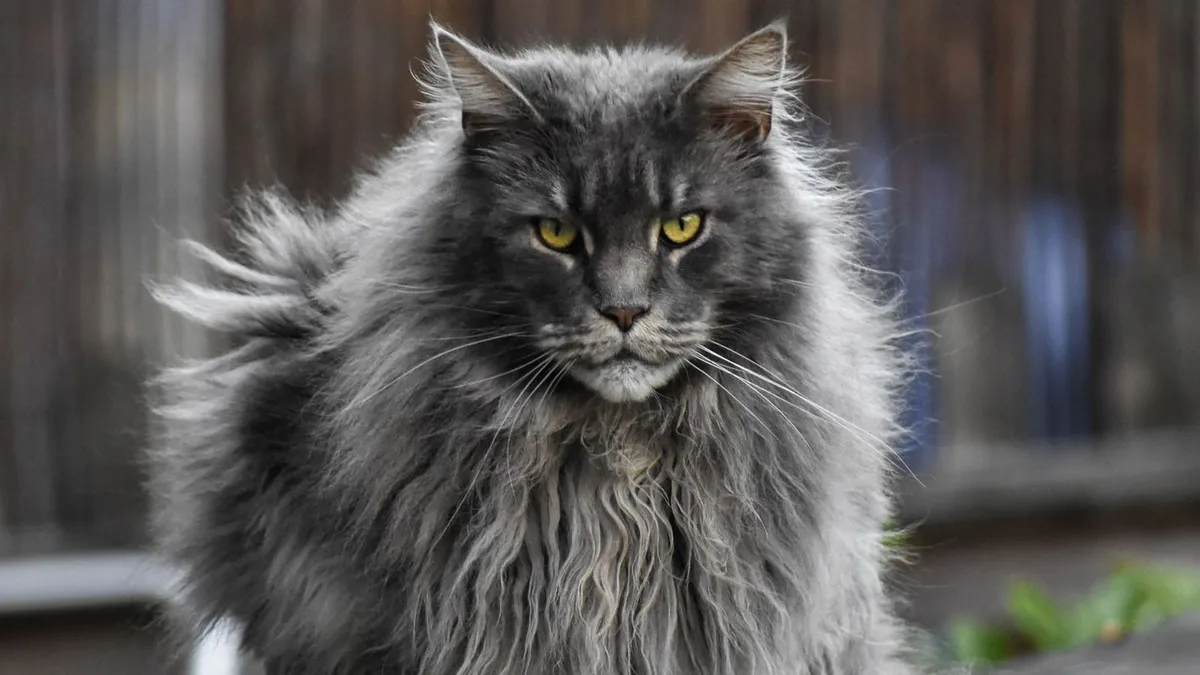
The Maine Coon is a large, rugged cat with a heavy, shaggy coat and a famously gentle nature. It grows slowly, gets along with most people and pets, and would rather follow you around the house than sit in your lap.
Size and growth
Maine Coons are one of the biggest cat breeds, and cat fanciers call them the largest of all pedigreed cats. The card above shows the breed’s typical adult weight, and a mature male can reach or exceed 20 pounds.
Females are usually smaller than males. Both have a long, solid body, a broad chest and sturdy legs, so even a lean Maine Coon looks substantial.
The breed grows slowly. A Maine Coon can take up to 3 years to reach full growth, so a cat who looks grown at one year old may still be filling out.
Planning for a big cat
A large cat needs gear that fits. A roomy litter box, a sturdy scratching post that won’t tip when a heavy cat leans on it and a carrier big enough to turn around in all make life easier.
The cat essentials guide shows what to look for in each, and the same advice goes double for a cat this size.
A gentle personality
The Maine Coon is often called a gentle giant. Cat fanciers describe the breed as gentle and easygoing, yet active, and it has a reputation as a friendly companion that isn’t too demanding.
Maine Coons tend to like being around people. Many follow their humans from room to room and settle nearby, even if they aren’t the kind of cat that curls up in a lap.
They often get along well with other cats, children and dogs, which makes them a popular choice for busy family homes. As with any cat, slow, calm introductions help.
A soft voice
For such a big cat, a Maine Coon is surprisingly quiet. The breed rarely meows loudly and often gets your attention with a soft chirp instead.
Down to earth
Many Maine Coons prefer to stay on the ground rather than jump to the highest shelf. That makes them good candidates for a game of fetch.
The coat and its colors
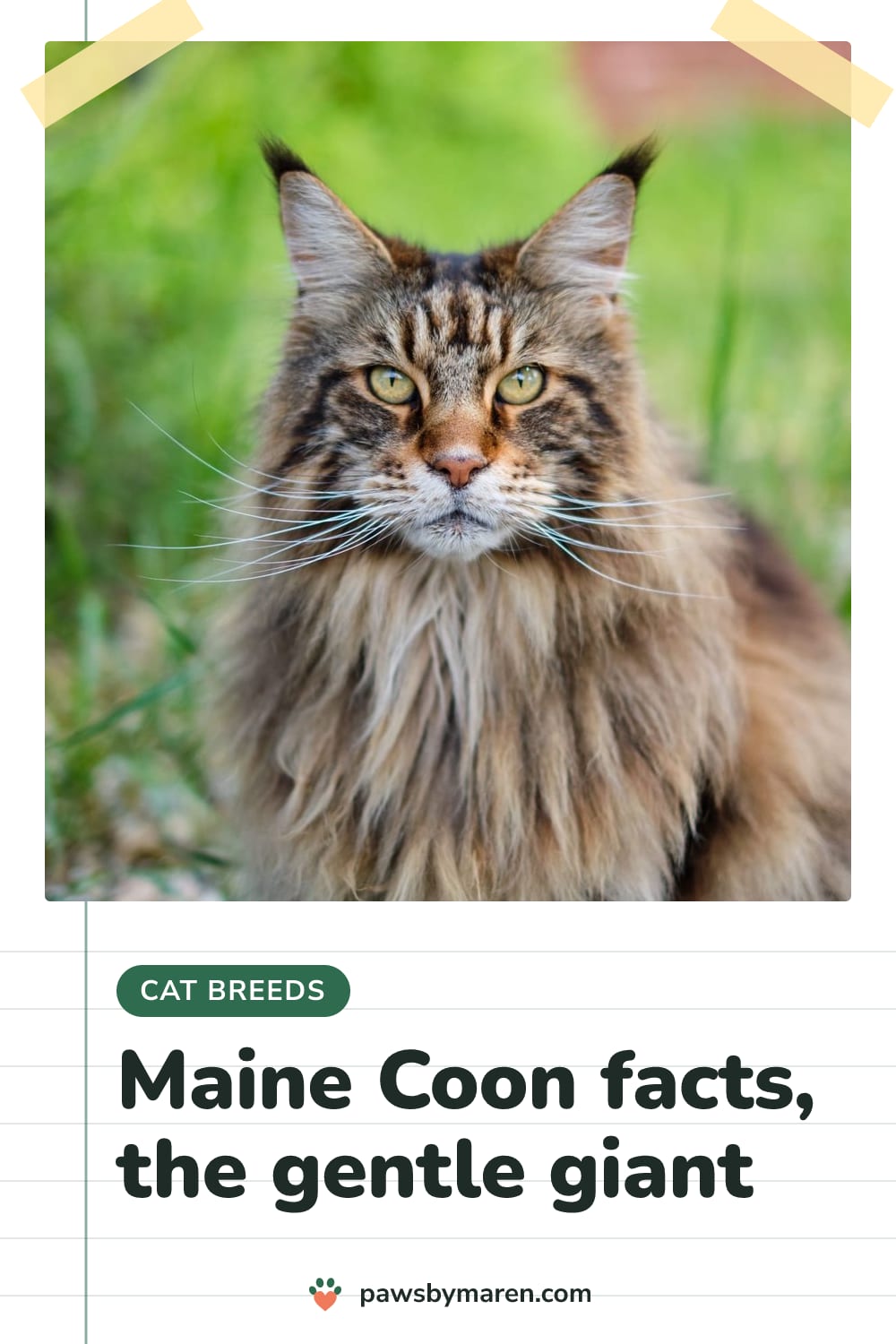
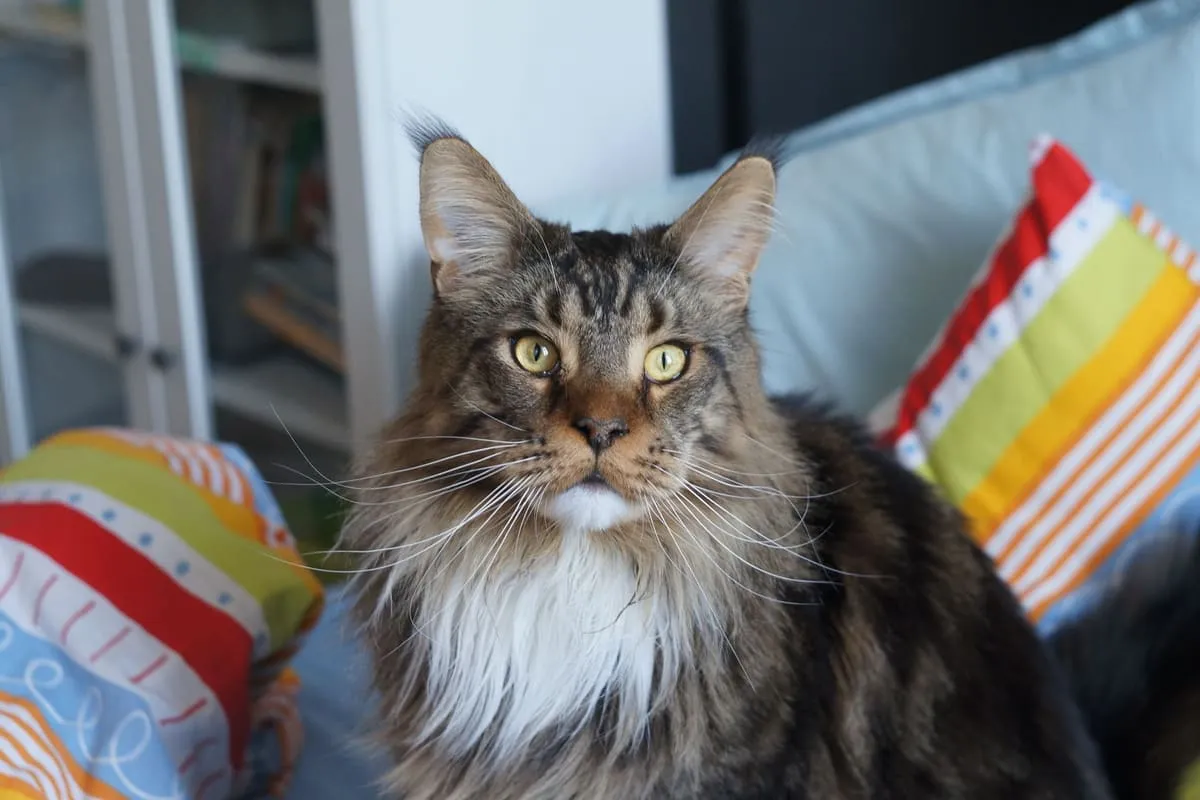
A Maine Coon’s coat is heavy and shaggy, built for a cold climate. It is short on the head, shoulders and legs and longer down the back and sides.
Long fur on the belly, shaggy britches on the back legs and a frill around the neck finish the look. The tail is broad at the base and tapers to the tip, though it’s hard to see under all that fur.
Colors and eyes
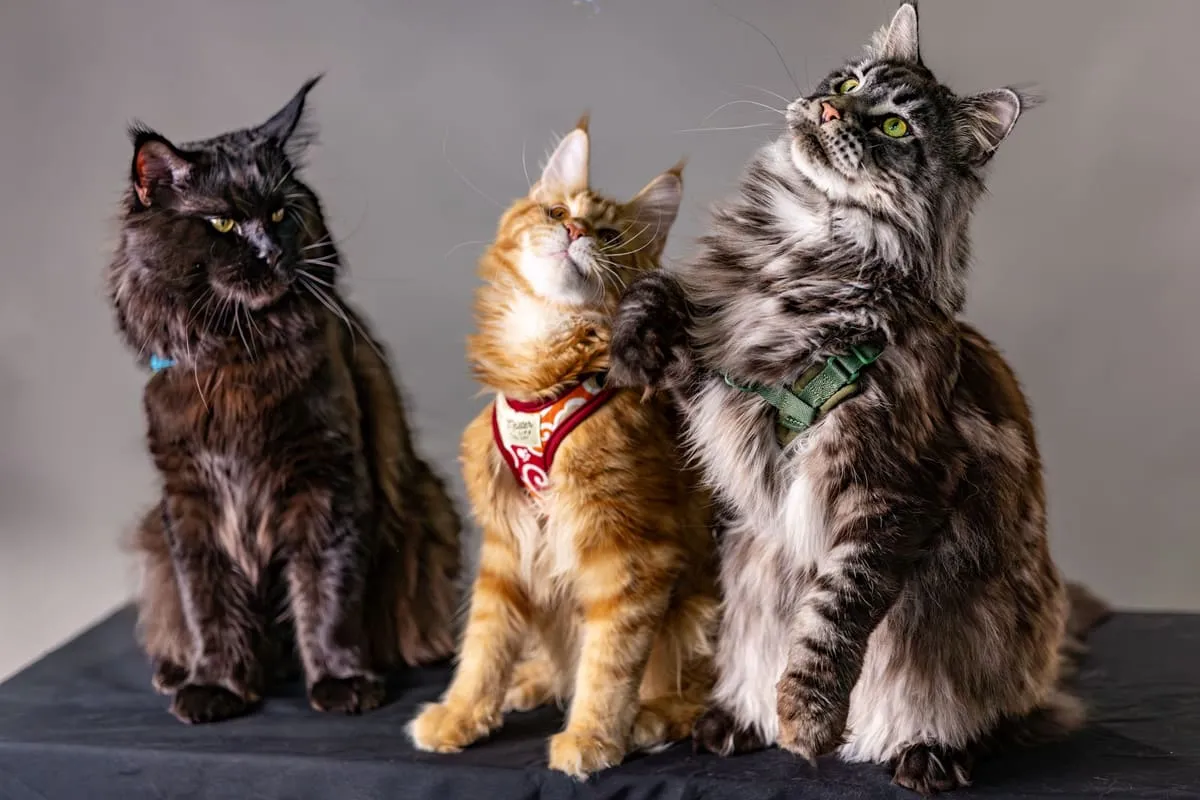
Maine Coons come in almost every color and pattern, from solid white, black, blue, red and cream to tabbies, bicolors and smokes. The most common look is the brown tabby, in a classic or mackerel pattern.
The eyes are large and oval, in shades of green, gold, green-gold or copper. White Maine Coons, and those with white in the coat, can also have blue eyes or one eye of each color.
The big, well-tufted ears are wide at the base and taper to a point, which adds to the breed’s wild look.
Grooming a Maine Coon
For all that fur, a Maine Coon’s coat is easier to keep than it looks. A comb through the coat a few times a week, in sessions of just a few minutes, keeps it tidy.
Regular baths aren’t needed, though an occasional bath is fine, and the coat is far easier to keep than a Persian cat’s. Many Maine Coons enjoy the attention that comes with being groomed, so short, calm sessions from kittenhood make it a routine you can both enjoy.
Coat texture
How often to groom depends on the coat’s texture. A soft, cottony coat tangles easily and needs brushing every day, while a silky coat can go longer between sessions.
Whatever the texture, every Maine Coon needs regular grooming. Keep an eye on the thick fur of the ruff and the britches, and comb it gently rather than pulling at it.
Water and nails
Unlike many cats, Maine Coons often like water, and many don’t mind a bath. Some will even dip a paw in the water bowl or join you near the sink.
Trim the nails regularly too, a little more often while your cat is a kitten. A scratching post helps keep them in shape between trims.
Where the Maine Coon comes from
The Maine Coon has deep roots in New England, and it is the official state cat of Maine. It is one of the oldest cat breeds in North America.
A popular legend says the breed came from cats mating with raccoons, which explains the name and the bushy tail. That’s genetically impossible, but the breed’s raccoon-like look made the name stick.
The most likely story is that local shorthaired cats mated with longhaired cats brought to the area by seafarers. The heavy coat that came out of it suited the harsh New England winters.
People valued Maine Coons for their rugged looks and their skill at catching mice, and the breed became America’s first native show cat. It is recognized by the major cat clubs listed in the card above.
Lost and found again
The breed’s popularity faded later, as other longhaired breeds arrived in the United States, and the Maine Coon came close to disappearing. Dedicated breeders brought it back.
Today the Maine Coon holds championship status with the Cat Fanciers’ Association, and its rugged looks and gentle ways have won it fans across the country.
Is a Maine Coon right for you
A Maine Coon suits a home that has room for a big cat and time for regular combing. The breed’s size means everything from the litter box to the carrier should be on the large side.
It also suits people who like a cat that stays close. A Maine Coon is social and likes to be part of whatever is going on, though it rarely demands attention with loud meowing.
Families with children or other pets often find the breed a good fit, thanks to its gentle, easygoing nature. Calm, slow introductions still matter, as they do with any cat.
If you love the look but not the grooming, a shorthaired cat may suit you better. Many shelters also have big, fluffy mixed-breed cats that share the Maine Coon’s look and laid-back style.
Naming a Maine Coon
A big, fluffy cat suits a big name, or a funny small one. These brown cat names suit a classic brown tabby, and the Persian cat names list has plenty of names for a fluffy, regal cat.