Dog Bed Guide to Size, Style and Comfort
How to pick a dog bed: the right size for big and small dogs, bolster, orthopedic, raised and covered beds, washable covers and the best spot at home.

By Maren Whitlock · Published
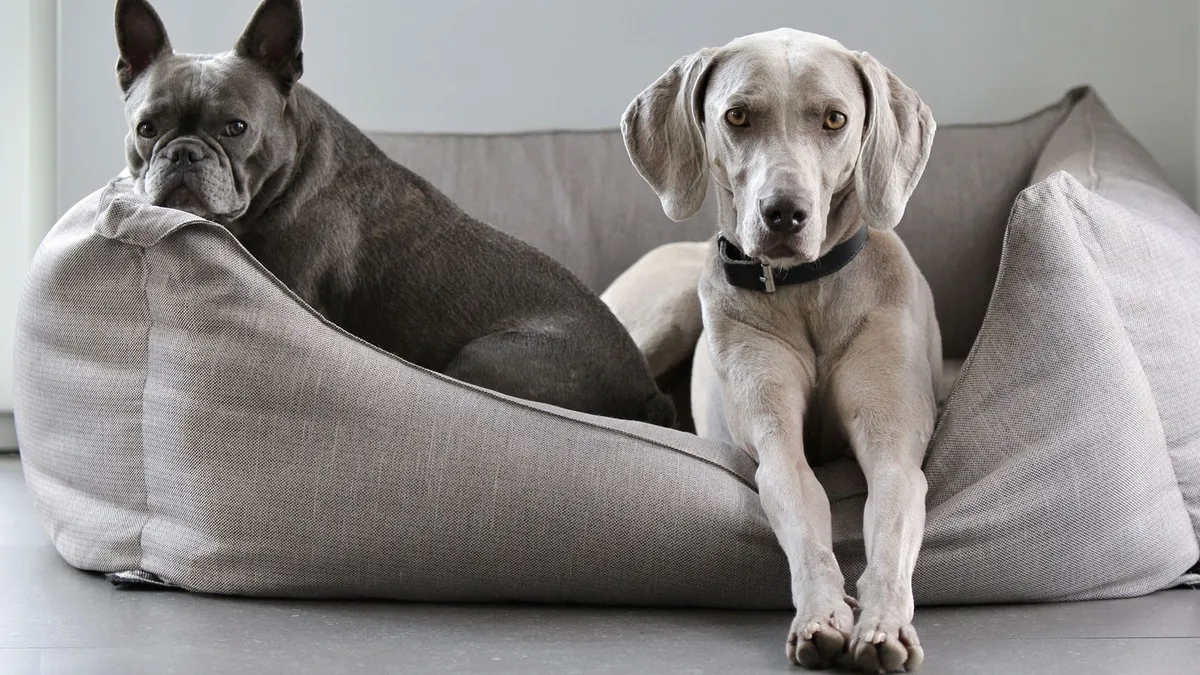
The best dog bed fits the way your dog sleeps: a bed with raised sides for a dog who curls up, a flat, roomy one for a dog who sprawls, and a thick, supportive one for a big or older dog. A removable cover you can wash makes any bed easier to live with.
Dogs sleep about 12 to 18 hours a day, depending on age, so a good bed matters. Below are how to size a bed, the main bed styles, what to look for in the materials, and where to put it.
Why a dog needs a bed
A bed of their own gives your dog a comfortable, quiet place to rest. If your dog isn’t allowed on your bed or the couch, a soft spot of their own matters even more.
Older dogs and large breeds, like the Bernese Mountain Dog, tend to need more sleep than others. A supportive bed helps an older dog with stiff joints and a growing puppy alike.
A den of their own
Dogs are den animals, so many like a bed tucked away from the hustle and bustle of the home. A bed in a quiet corner, or inside an open crate, can become a favorite hideaway.
More than one bed
You don’t have to stop at one. A bed where the family gathers, one where your dog sleeps at night and one in a spot they choose for themselves gives them somewhere to rest wherever you are.
A few comfy beds around the home can also tempt a dog off the furniture.
How to pick the right size
The right size depends on your dog’s body and on how they like to lie. A bed that’s too small forces a dog to curl up even when they’d rather stretch out.
Watch how your dog sleeps
Before you shop, notice how your dog sleeps for a few days. Do they curl into a tight ball, lie flat on their side, or burrow under a blanket?
A dog who sleeps curled up, nose to tail, needs less room than one who sleeps on their side with their legs out. Many dogs switch positions through the night, so allow for the biggest one.
Measure your dog
For a dog who likes to stretch out, measure them lying down. A bed about a quarter longer than your dog lying down, and about that much wider than they are tall, leaves room to sprawl without curling up.
For a big dog bed, it’s worth measuring twice. A large dog who hangs off the edge of the bed often ends up on the floor instead.
Puppies and growth
A puppy will grow, so think about the adult size before you pick a big bed. A soft blanket or a simple crate pad works well at first, and you can pick the forever bed once your puppy is grown.
Dog bed styles
Dog beds come in a handful of styles, and each one suits a different kind of sleeper. Match the style to how your dog likes to rest.
Bolster beds
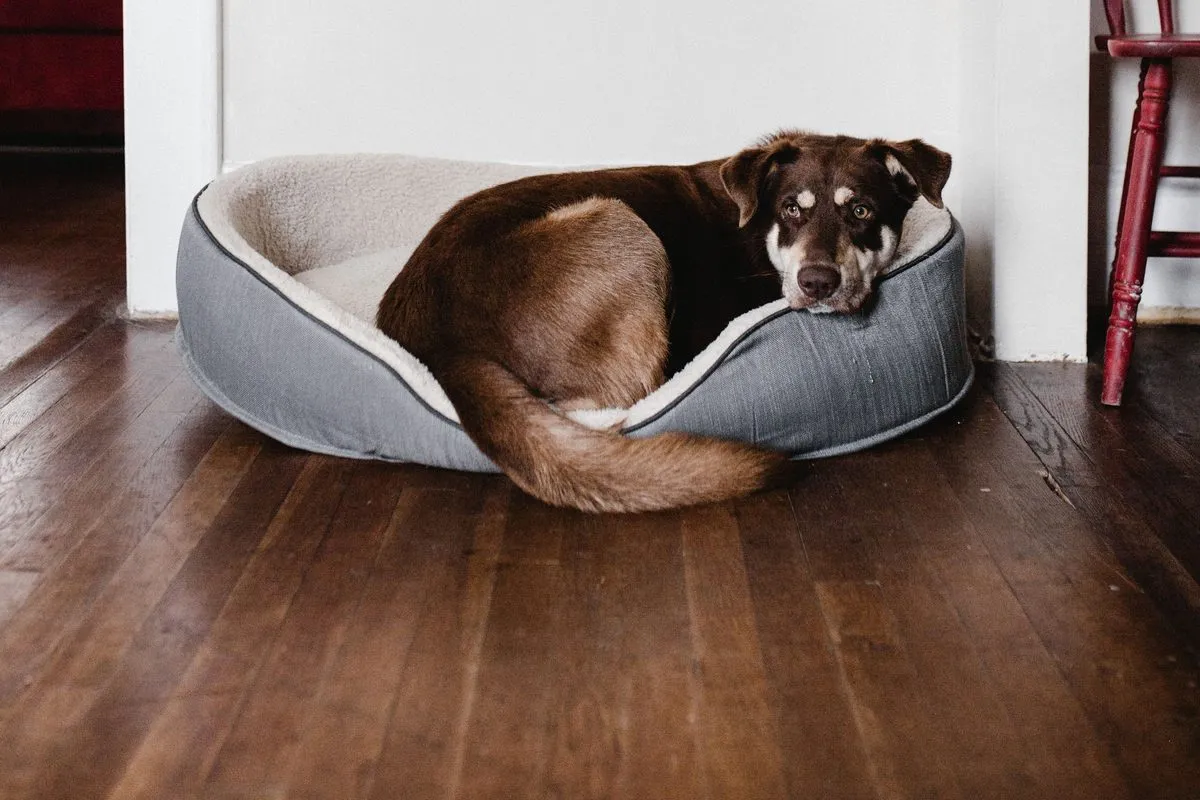
A bolster bed has a cushioned rim on some or all sides. Dogs who burrow, nest or curl up usually love one, since they can tuck in and rest their head on the edge.
A dog who likes to lean against something while they nap often picks a bolster bed too. A round bolster bed suits a small curler.
Flat beds and mats
A flat bed, cushion or mat suits a dog who sleeps on their side with their legs out. With no sides in the way, they can stretch out in any direction.
A firm foam bed or a cool gel mat also suits dogs who seem to prefer the hard floor.
Orthopedic beds
An orthopedic bed is built from supportive foam, such as egg-crate or memory foam. A bed needs at least 2 inches of memory foam to be labeled orthopedic, and most have at least 4.
Memory foam can flatten over time, so compare the thickness and quality of the foam. If your dog seems stiff getting up, ask your vet what kind of bed would help.
Raised beds
A raised or elevated bed is a sturdy frame with fabric stretched across it, like a cot. Air flows underneath, which helps keep a dog cool, and it can work outdoors too.
For a giant breed, a raised bed about 1 to 2 feet off the ground usually fits their body better. Pick one that’s sturdy and won’t slide across the floor.
Covered and cave beds
A covered bed, sometimes called a cave bed, has a hood or a pocket a dog can crawl into. It suits small dogs who like to burrow and nervous dogs who feel safer tucked away.
Warming beds
A self-warming bed reflects a dog’s own body heat back at them, with no electricity. An electric warming bed needs caution and supervision, especially with a dog who chews.
What to look for in a dog bed
Beyond the style, a few details make a bed easier to keep clean and comfortable for longer.

A washable cover
Look for a bed with a removable cover that you can toss in the wash weekly. A machine-washable bed is even better, especially for a puppy who is still house training or an older dog who has accidents.
A waterproof liner under the cover keeps spills and accidents from soaking into the foam.
Sturdy fabric
A tough outer fabric, like denim or canvas, stands up to digging, scratching and lots of trips through the washer. Soft plush fabric is cozy but may not last as long with a dog who digs before lying down.
A nonslip base
A bed that slides across a hard floor can startle a dog. A bed with a nonslip bottom stays put, and a rug or mat with a nonslip backing underneath adds grip and a little extra cushioning.
Chewers and puppies
If your dog chews, skip loose stuffing, zippers they can reach and anything that’s easy to tear apart. Check the bed often for loose pieces, and take away a bed that’s coming apart.
Where to put a dog bed
Where the bed goes matters almost as much as the bed itself. A good spot helps your dog settle and actually use it.
A quiet corner
Put the bed somewhere calm, away from busy doorways and the main path through the room. Many dogs like to rest where they can still see their people without being stepped over.
Bedroom or living room
A bed in your bedroom lets a dog sleep near you at night without sharing your bed. A second bed in the living room gives them a spot during the day.
Hard floors and outdoors
Lying on hard floors all the time can be tough on a big dog’s joints. A thick bed or a pad on tile and wood floors gives them a softer place to land.
For a porch or a yard, a raised bed with breathable fabric is easy to keep clean and keeps your dog off the hot or damp ground.
Teach your dog to use it
Toss a treat onto the bed and praise your dog when they step onto it. With a little practice, a cue like “go to bed” sends your dog to their spot, and the dog commands guide shows how to teach a cue step by step.
For a new puppy, the puppy essentials list covers the bed along with the crate and everything else to have ready.