Puppy Essentials You Really Need
The puppy essentials worth buying before day one, what to look for in each, and the extras that can wait until you know your puppy.

By Maren Whitlock · Published
Puppy essentials checklist
0 of 14 ready
A new puppy needs less than the pet store aisle suggests. These are the things to have ready on day one, with what to look for in each. Tick them off in the checklist above, and use the full new puppy checklist for everything else.
A crate and a washable bed
Pick a crate your puppy can stand up, turn around and lie down in. If your puppy will grow a lot, choose the adult size with a divider, and move the divider back as your puppy grows, so the crate never has room for a potty corner. Wire crates fold flat and let air through; plastic ones feel more like a den and double as a carrier for car rides.
Not sure how big your puppy will get? The small dog breeds guide shows the adult size of popular little breeds, and there’s an estimate for a Maltipoo’s full grown size.
For the bed, a flat crate pad or a cushion with a removable, washable cover beats a deep bed with stuffing your puppy can pull out. Keep a second cover or an old towel on hand, so there’s always a clean one while the other is in the wash.
Think about where the crate will stand. At night it works best next to your bed, where your puppy can hear you and you can hear them wake up. Once it’s set up, crate training a puppy shows how to make it a place your puppy likes.
By day, a spot in the room where the family spends time keeps your puppy from feeling shut away. Some people keep a second, lighter crate or a bed for the living room rather than carrying one crate back and forth. This dog bed guide covers sizes and styles for when your puppy is grown.
Gates or a playpen
A puppy can’t be watched every minute. Gates across a doorway, or a playpen with a bed and a water bowl inside, give your puppy a safe area while you cook, work or shower. Look for gates tall enough that your puppy can’t climb over as they grow, and a playpen with panels that lock together.
Set the area up on a floor that’s easy to wipe, away from cords and anything you don’t want chewed. Put the bed at one end, water at the other and a couple of toys in between, so the space is somewhere your puppy is happy to stay.
Puppy proofing basics
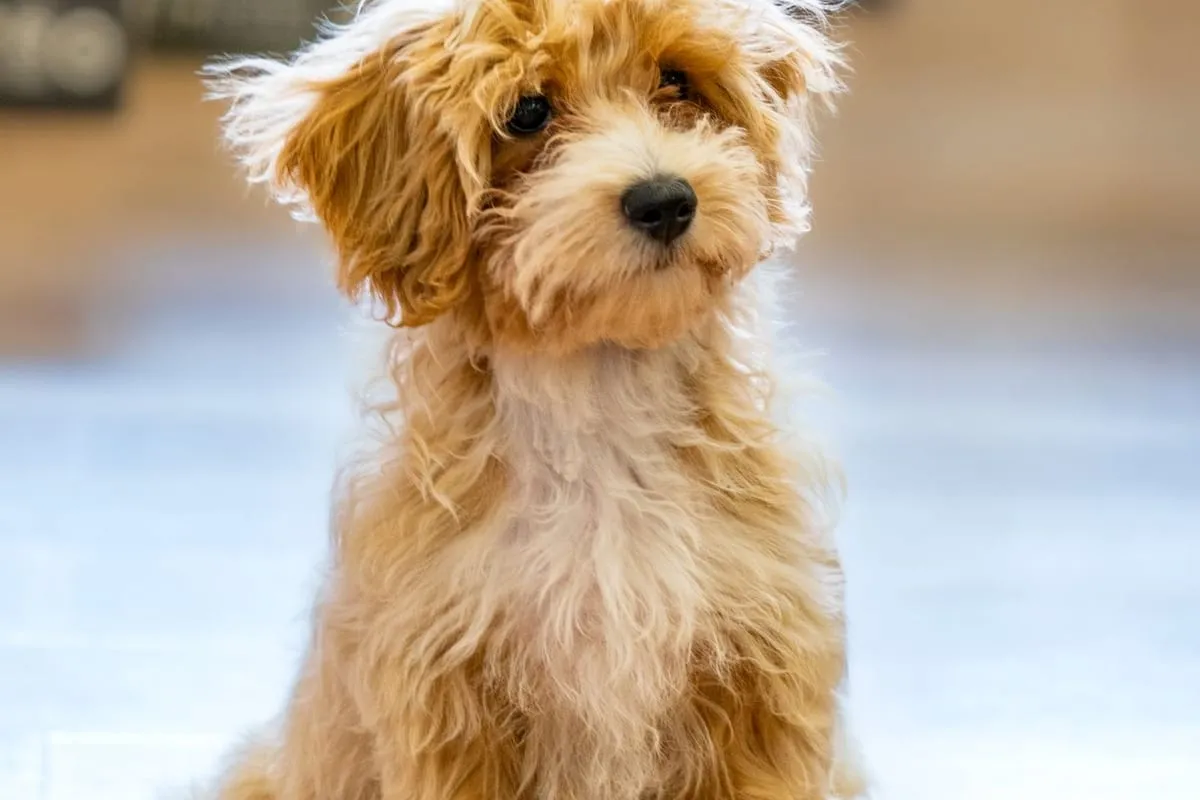
A puppy explores with their mouth, so look at your floor from their height before day one. A few simple things go a long way:
- covers or clips that keep cords out of reach
- latches for low cabinets that hold cleaners
- a trash can with a lid, or one kept behind a door
- a basket for shoes, socks and kids’ toys
Most of puppy proofing is putting things away. The rest is watching your puppy, and the gates and playpen do that job when you can’t.
Everyday gear
These are the things you’ll reach for several times a day, from the first morning on. Simple, sturdy and easy to clean beats fancy every time.
Bowls, food and soft treats
Choose bowls that are heavy or have a rubber base, so they don’t slide or tip. Stainless steel and ceramic are easy to clean.
Keep the food your puppy eats now, from the breeder or shelter, for the first days at home, and ask your vet before you change it. Add small, soft treats you can break into tiny pieces for training.
Collar, ID tag, harness and leash
- Collar and ID tag: a flat collar that sits snugly but lets you slide your fingers under it, with a tag that has your phone number. Check the fit every week, because puppies grow fast.
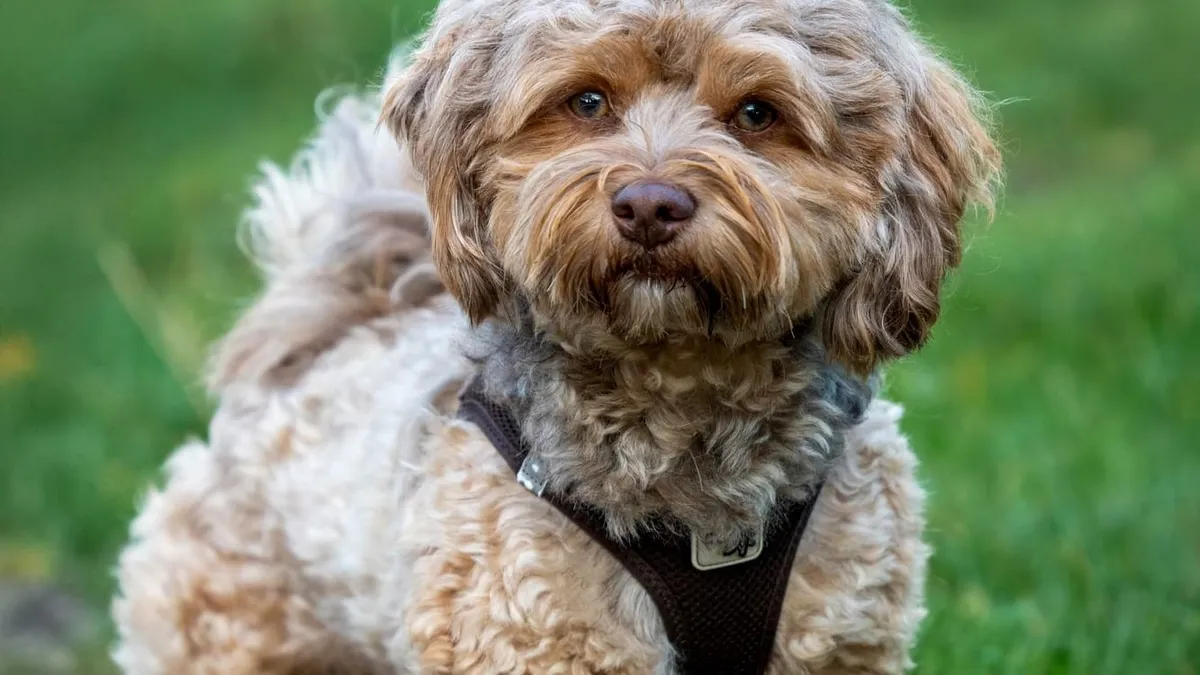
- Harness: one that fits snugly around the chest without rubbing behind the front legs. A harness keeps the pull off your puppy’s neck while they learn to walk on a leash.
- Leash: a light, plain leash is easiest to train with. Retractable leashes can wait until your puppy walks well beside you.
Clean-up
Accidents will happen. An enzyme cleaner breaks down the smell, so your puppy isn’t drawn back to the same spot. Add poop bags with a holder that clips to the leash, and keep paper towels by the door.
Toys, grooming and the vet
A puppy needs something to chew, a little care for their coat and a vet who knows them. All three are easy to set up before day one.
Chew toys
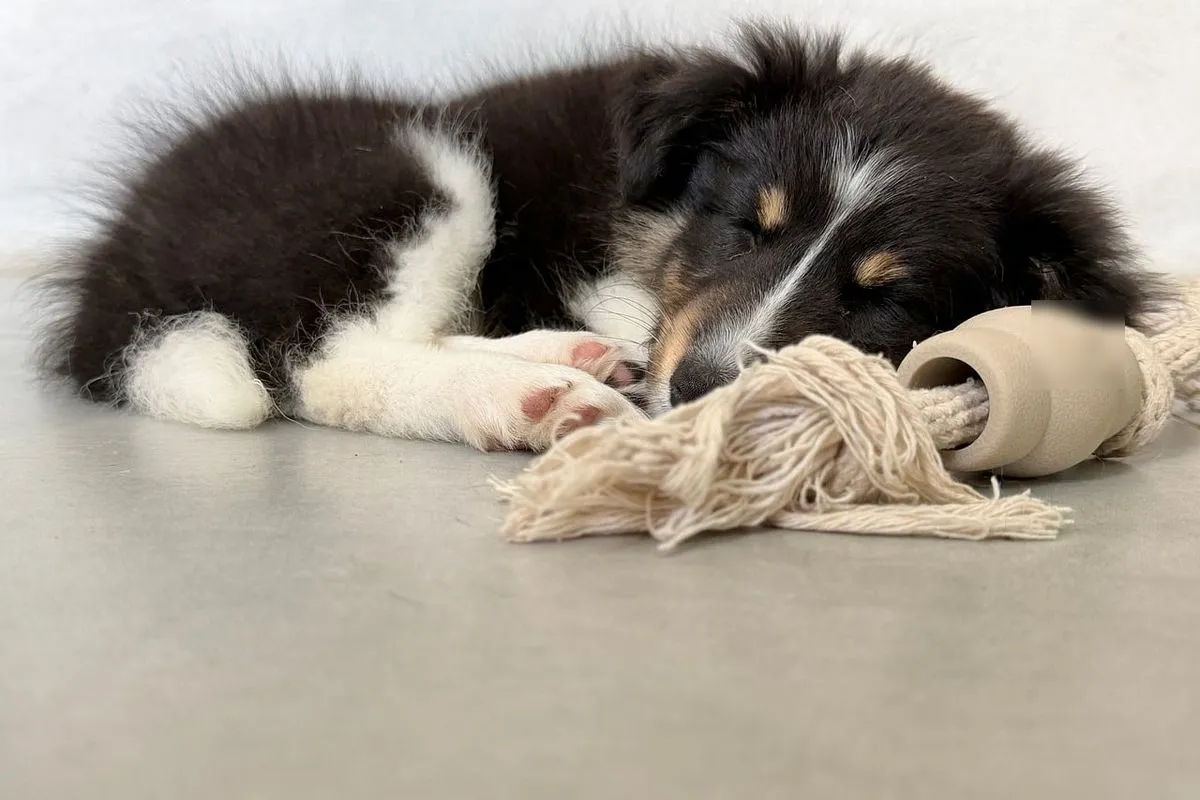
Puppies chew to explore and to soothe their gums. Give them toys sized for their mouth, too big to swallow and firm enough not to break into pieces. Rotate a few toys rather than offering them all at once, and swap out any toy that starts to fall apart.
A good starting mix is one firm rubber toy you can fill with a little of your puppy’s food, one soft toy to carry around and cuddle, and one toy for games of tug with you. Save rope toys and soft toys for times you’re watching, since a puppy can pull them apart. When your puppy goes for a shoe or a chair leg, swap it for a toy and praise them for taking it.
A puppy who chews hands as well as toys is normal, and these steps for puppy biting teach a gentle mouth.
A brush and a vet visit
A brush or comb that suits your puppy’s coat lets you start short, happy grooming sessions from the first week, and these puppy grooming tips show how to keep them calm. A slicker brush and a metal comb suit curly and long coats; a soft bristle brush or a rubber mitt suits short coats. A mild dog shampoo and a stack of old towels cover puppy bath time.
Add a pair of puppy nail clippers, and ask your vet or groomer to show you how to use them; these dog nail trimming hacks make the first trims calmer. And book a first visit with your vet before your puppy comes home, so the date is set and your questions have a place to go.
Before and after pickup day
A few small things make the day your puppy comes home calmer, and a few big ones can wait until you know your puppy.
The ride home
Bring a crate or a carrier for the car, strapped in so it can’t slide, with a towel inside in case your puppy gets carsick. Pack poop bags, paper towels and the leash, and ask someone to sit near your puppy if you can. Stop at the potty spot the moment you arrive, before you go inside.
A spot by the door
Keep the leash, poop bags and a pouch of treats in one basket or on a hook by the door you’ll use for potty breaks. When everything is in one place, every trip outside starts quickly, which matters a lot with a young puppy who can’t wait long.
What can wait
Outfits, a large plush bed, a basket of toys and travel gear can wait. In the first weeks you’ll learn how big your puppy is getting, how they sleep and what they like to chew, so you buy the right things once.
A new puppy gift basket
Buying for a friend’s new puppy? Choose a few things from the list above that the new owner may not have yet: a soft toy, a chew toy, a pack of poop bags, an enzyme cleaner and a brush. Leave food and treats out, since the owner will keep what the puppy already eats.
For the first days at home, from the first night to a simple routine, see the New Puppy guide.