Puppy Biting Training Tips for a Soft Mouth
Puppy biting training tips that work: why puppies bite, how to stop a puppy from biting in four calm steps, teething, the mistakes to skip and when to get help.

By Maren Whitlock · Published
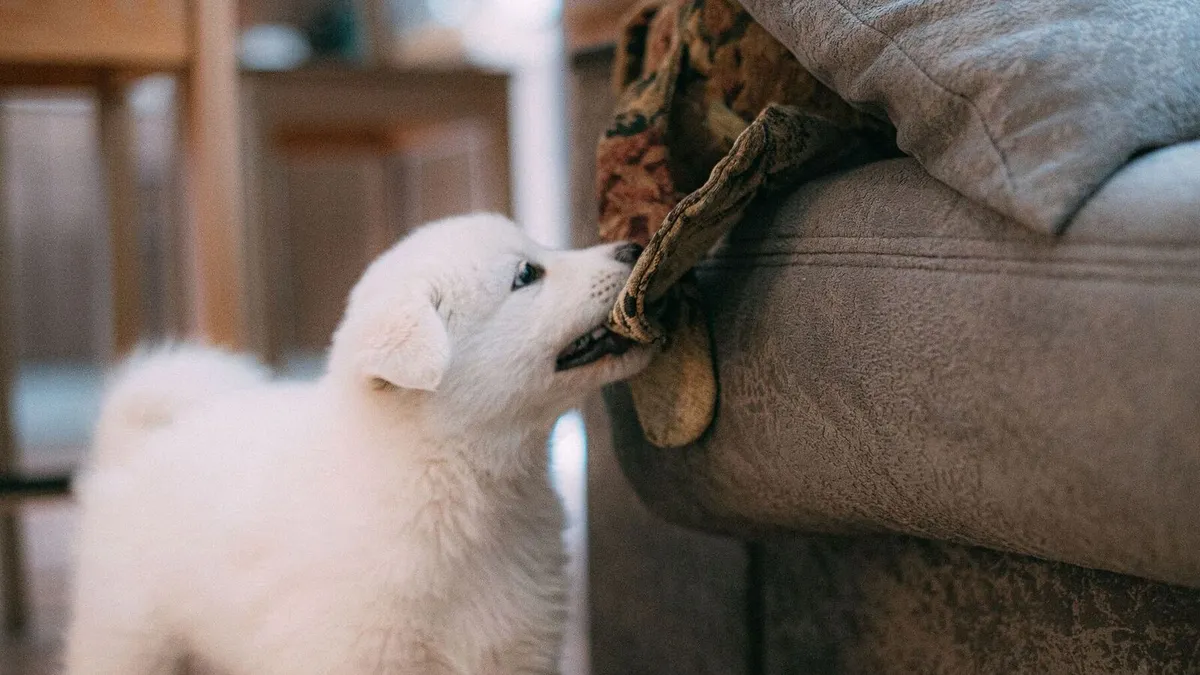
Puppy biting is normal, and it fades with the right habits. Make teeth on skin end the fun, give your puppy a toy to bite instead, and keep them rested, since a tired puppy bites more.
The tips below turn that into a simple routine for every day. Stay calm and consistent, and most puppies get much gentler within a few weeks.
Why puppies bite
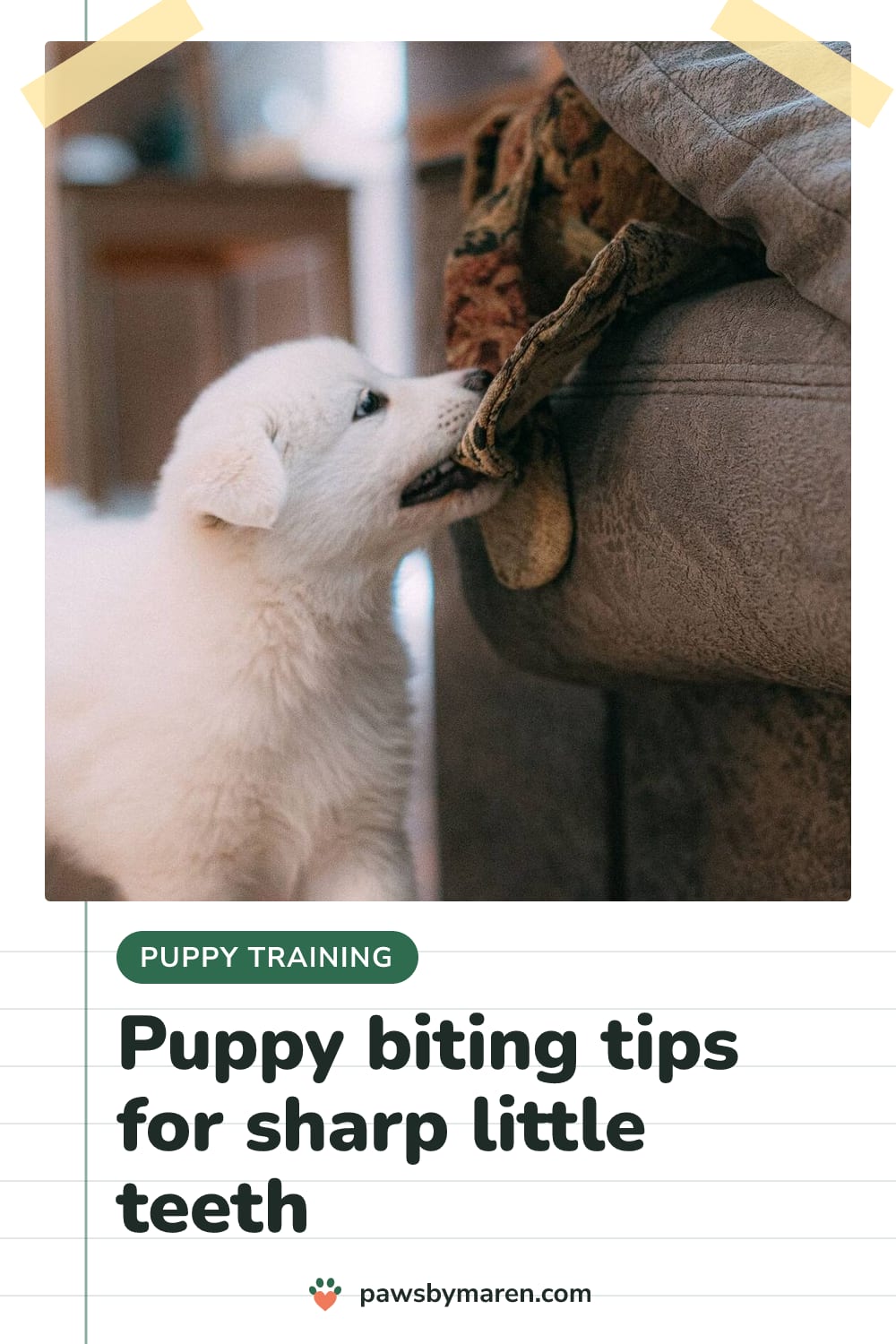
Puppies explore the world with their mouths. They pick things up, chew them and test them the way a toddler uses their hands, so a hand or a sleeve is just one more thing to try.
Biting is also how puppies play. Littermates wrestle and nip each other all day, and when one bites too hard, the other yelps and stops playing for a moment.
Teething
Teething makes it worse. A puppy has 28 sharp baby teeth, which start to fall out at about 3 months to make room for 42 adult teeth.
Most puppies finish teething by about 6 months. Until then, their gums are sore and chewing feels good, so they look for something to bite all day long.
Tired and overexcited
Many puppies bite most in the evening or after a busy day. An overtired puppy acts wild instead of sleepy, and the biting gets harder and faster.
A puppy who needs a potty break, a drink or a meal can get mouthy too. Check those first, then see whether a nap is overdue.
Learning a soft mouth
The goal isn’t a puppy who never uses their mouth. It’s a puppy who learns to control how hard they bite, so play stays gentle around people.
How to stop a puppy from biting in four steps
These four steps work together. Use the same ones every time, and ask everyone at home to do the same, so your puppy gets one clear message.
Step one, go still
When your puppy’s teeth touch your skin, say a short “ouch” and let your hand go limp. Don’t jerk it away, since a moving hand looks like a toy and the teeth can scrape you.
If the “ouch” makes your puppy more excited, skip it. Just go still and quiet, and tuck your hands under your arms.
Step two, offer a toy instead
As soon as your puppy lets go, offer a toy to bite. A soft tug toy or a chew toy gives them something better to do with their mouth, and they learn which things are fine to bite.
Step three, take a short break
If your puppy bites again, end the game. Stand up, turn away and ignore them for 30 to 60 seconds, or step out of the room if they keep following you.
A gate or a playpen makes this easy. You step to the other side, wait a moment, then come back and play again calmly.
Step four, reward gentle play
Praise your puppy whenever they lick you, play softly or let go. Say a cue like “easy” in a calm voice during gentle play, and give a treat when they keep their teeth to themselves.
Teething, chewing and the right toys
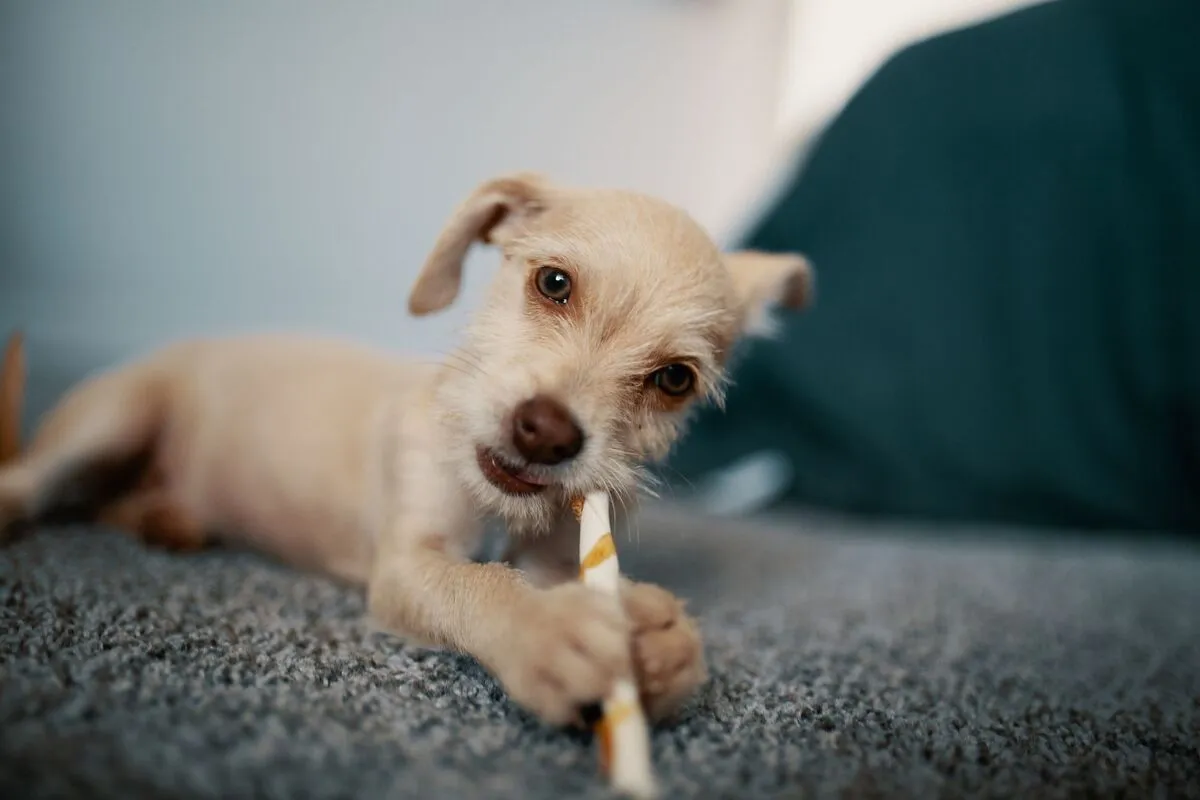
A teething puppy needs to chew, so the trick is to give them better things to chew than you. Keep two or three chew toys within reach in every room where your puppy spends time.
Choose toys sized for your puppy’s mouth, too big to swallow and firm enough not to break into pieces. A rubber toy cooled in the freezer can feel good on sore gums.
Rotate and supervise
Swap the toys every few days, so they stay new and interesting. Watch your puppy with any toy until you know how they chew, and throw a toy away once pieces start to come off.
The puppy essentials list has the chew toys and the other supplies worth having ready from day one.
Chewing the house
Puppies who chew hands often chew furniture, shoes and cords too. Put tempting things away, and use a gate or a pen to keep your puppy in a safe space when you can’t watch them.
When your puppy grabs a shoe or a chair leg, swap it for a toy and praise them for taking it. Your puppy learns what’s theirs to chew without being scolded.
Food toys and busy work
A food toy filled with part of your puppy’s meal keeps their mouth busy and calms them down. A few easy dog enrichment ideas, like a sniffing game, work just as well on a rainy afternoon.
Play that keeps biting down
The way you play teaches your puppy how to play. Games with your hands teach them to bite hands, and games with a toy teach them to bite the toy.
Play with a toy, not your hands
Skip wrestling and rough hand play, and don’t wave your fingers or toes in front of your puppy’s face. Use a long tug toy or a ball for fetch, so there’s always some space between your hands and their teeth.
Tug is fine, and it’s a great outlet for a mouthy puppy. Stop the game for a moment whenever teeth touch skin, then start again once your puppy is calm.
Ankles, legs and clothes
Moving feet and trouser legs look like a chase game. Carry a tug toy in your pocket, stop walking when your puppy grabs at you, and offer the toy instead.
Walk on once your puppy is playing with the toy. You can also hold a treat beside your leg as you walk, so your puppy learns to stay next to you calmly.
Puppies and children
Children move fast and squeal, which excites a puppy. Keep play between children and a young puppy short and supervised, and teach children to stand still like a tree when the puppy nips.
Naps, routine and training
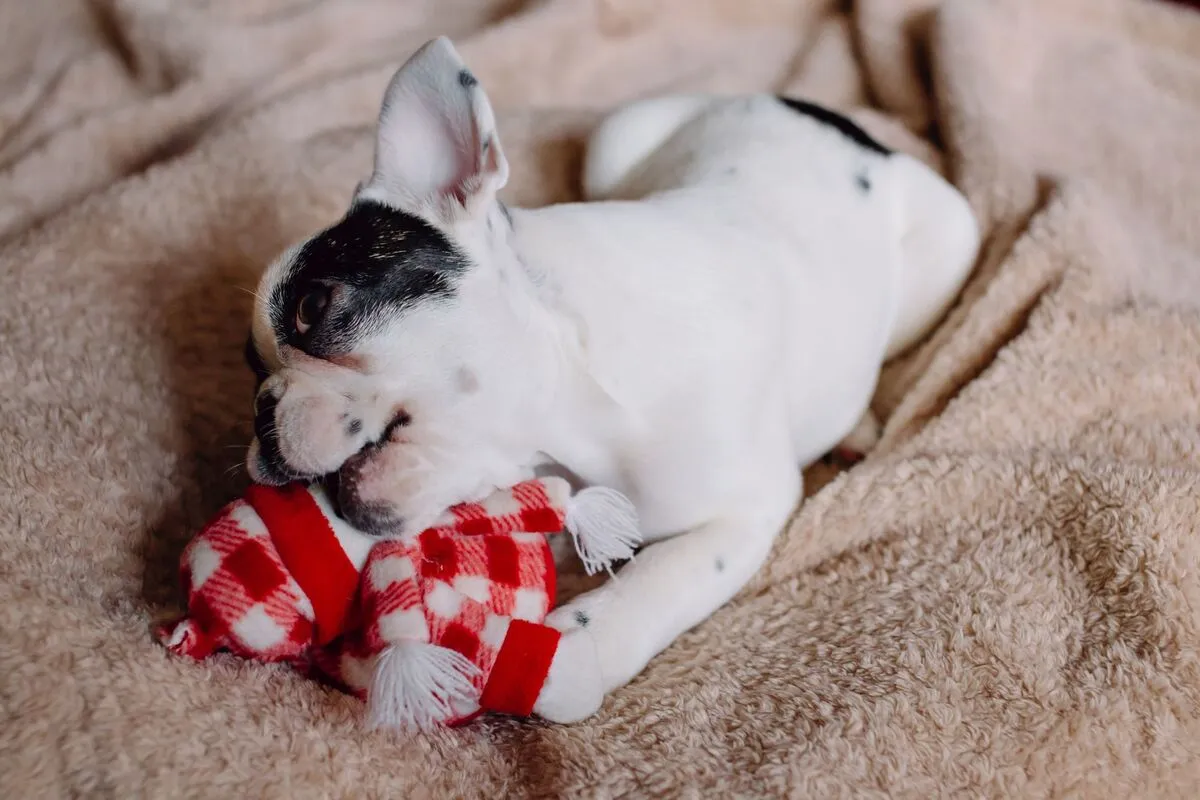
A puppy needs a lot of sleep, and many of the worst biting spells happen when a nap is overdue. Build quiet rest into the day, and treat a sudden burst of biting as a sign your puppy is tired.
Use the crate as a calm break
A crate is a good place for a calm break. Put your puppy in with a chew toy, without scolding, and let them out once they’ve settled, so the crate stays a happy place and never a punishment.
The steps in crate training a puppy make the crate somewhere your puppy wants to be, which makes these breaks easy.
A day with enough rest
A daily routine with naps, potty breaks, meals and short play sessions keeps your puppy from getting overtired. The puppy schedule builds that day for your puppy’s age, so you can see where the naps fit.
Give the mouth a job
Short training sessions burn off energy and give your puppy something to think about. Sit, down, leave it and drop it are all useful when your puppy is mouthy, and the dog commands guide has simple steps for each.
The puppy training schedule shows which of these to start at each age, so gentle play is part of the plan from the first weeks.
Mistakes that make biting worse
Some common reactions feel natural but make biting worse or teach your puppy to fear hands. Skip these, and the steps above work much faster.
Punishment
Never slap, hit, shake or tap your puppy’s nose for biting. It can make a puppy bite harder, become afraid of hands, or start biting for real later on.
Holding a puppy’s mouth shut or pushing fingers into it does the same. Your puppy learns that hands near the face are scary, which makes grooming and vet visits harder too.
Yelling and chasing
Yelling can feel like attention to a puppy, and attention is what they wanted in the first place. Chasing a puppy who grabbed a sock turns it into a game, so trade the sock for a treat instead.
Pulling away and stopping all play
Jerking your hand away makes it more fun to catch. Let your hand go limp instead, then end the game calmly.
Stopping play for good doesn’t help either. Your puppy still needs to play, so teach gentle play rather than no play at all.
When puppy biting gets better, and when to get help
Most puppies bite far less as teething ends and the habits above settle in. Expect good days and wild days along the way, since progress with biting is rarely a straight line.
If biting hasn’t eased by about 6 months, ask an experienced dog trainer or an animal behavior specialist for help. A puppy class is also a good place to practice gentle play with other puppies and their people.
Signs it isn’t play
Play biting looks loose and bouncy. A puppy who goes stiff or freezes, pulls their lips back, growls, or bites much harder than in play may be scared or upset rather than playing. The guide to dog body language shows these signs in more detail.
Biting around food, toys or being handled belongs in this group too. Talk to your vet and a qualified behavior professional soon, since this kind of biting rarely goes away on its own.
Keep going
Puppy biting takes patience, but it’s one of the phases that passes. With calm, consistent steps from everyone at home, your puppy grows into a dog with a soft mouth and good manners.