Dog Body Language Signs and What They Mean
Dog body language explained: what the tail, ears, eyes, mouth and posture say about a relaxed, playful, stressed, scared or warning dog, with a printable chart.

By Maren Whitlock · Published
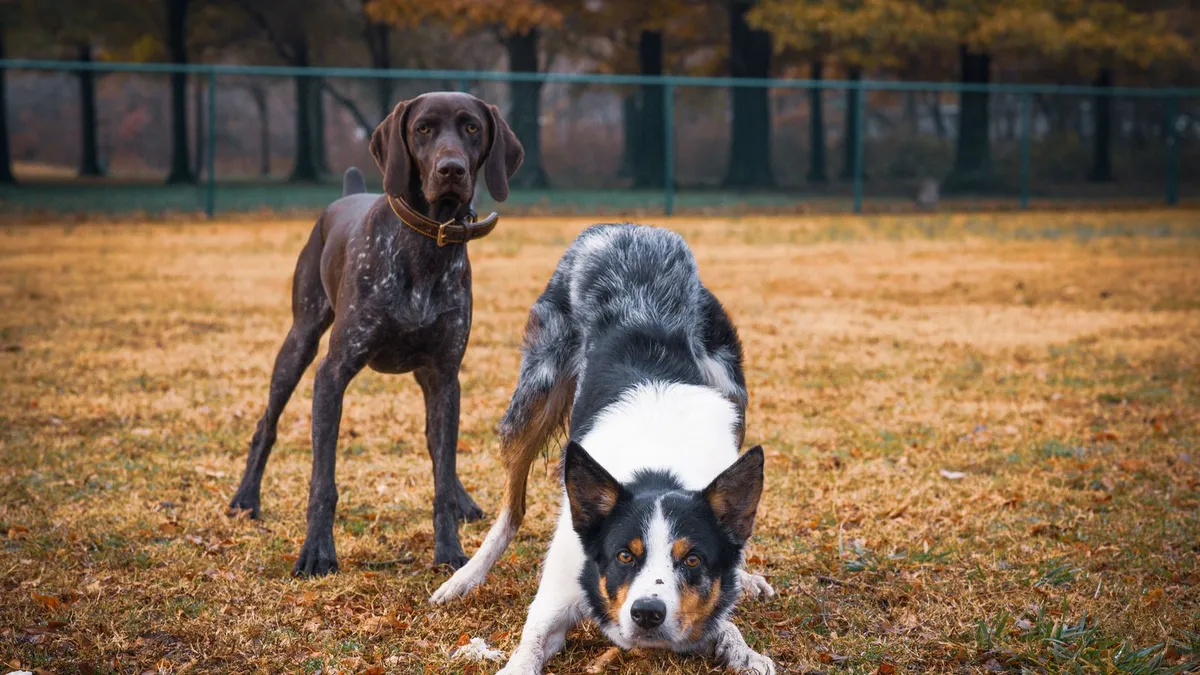
Dog body language chart
Relaxed and content
- Body: Loose and soft, with the weight spread evenly
- Ears: In their natural spot, or slightly back or out to the sides
- Eyes: Soft, often squinting into an almond shape with no white showing
- Mouth: Open and relaxed, maybe panting, corners turned up a little
- Tail: Level with the back or lower, with a loose, sweeping wag
- What to do: All is well, so enjoy a cuddle, a walk or a training game
Happy and playful
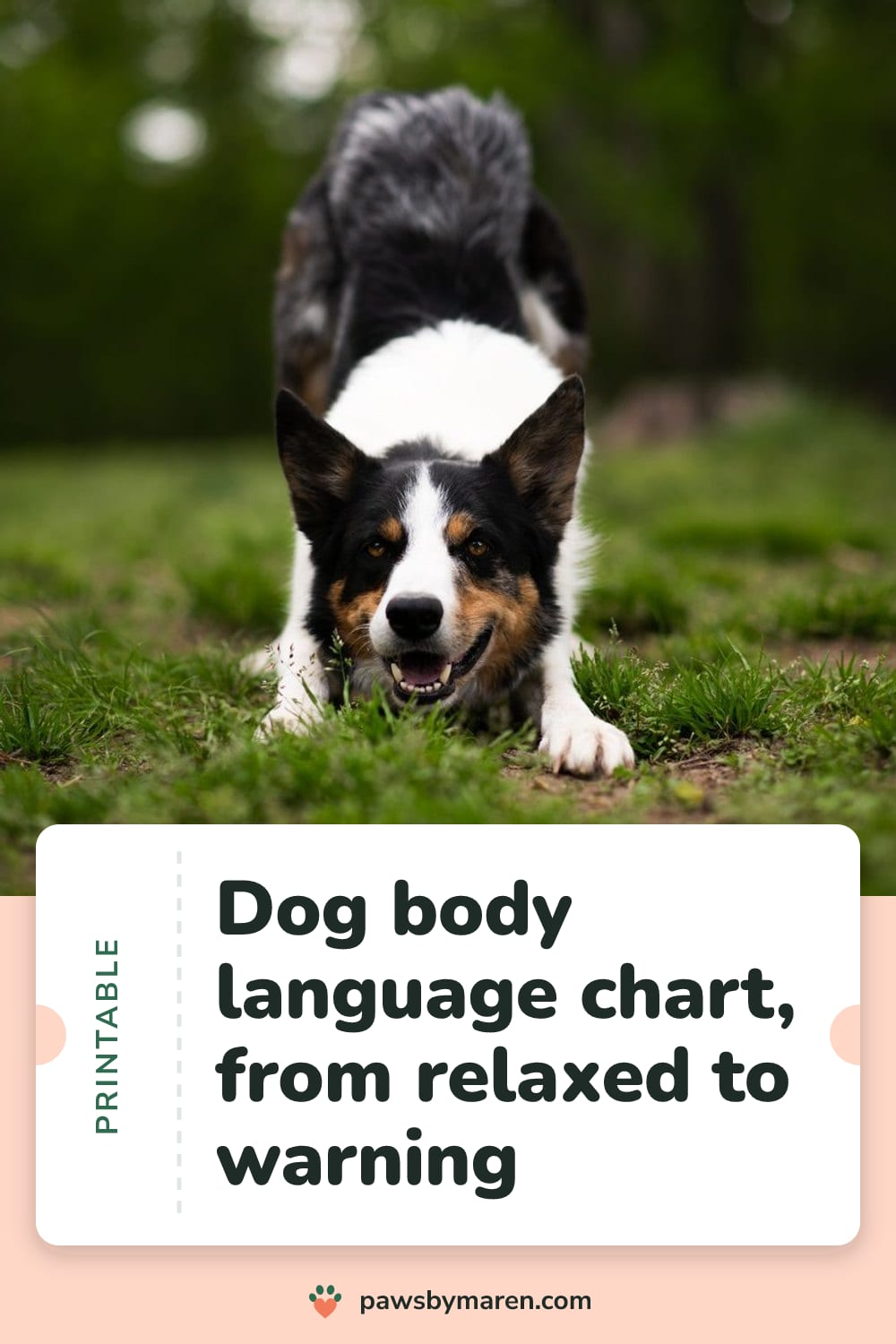
- Body: A play bow, chest down and rear up, then loose, wiggly, bouncy moves
- Eyes: Soft and bright, with no hard stare
- Mouth: Open, with big, silly faces
- Tail: A loose wag, or a happy helicopter spin
- What to do: Join the game, and watch for short pauses that keep play friendly
Alert and interested
- Body: Weight shifted forward toward what caught the eye
- Ears: Pointed forward at the sound or sight, often with a wrinkled forehead
- Eyes: Focused on one thing
- Mouth: Often closed
- Tail: Raised above the back, held still or moving in short, quick wags
- What to do: Let your dog look, then calmly call them back to you if the interest builds
Stressed or uneasy
- Body: Turning or moving away, sniffing the ground or scratching out of the blue
- Body: A raised front paw, or sweaty paw prints on the floor
- Eyes: Looking away from a person, dog or thing
- Mouth: Yawning when not tired, quick lip licks, or fast panting with a tight mouth
- Tail: Lowered, with a slow or stiff wag
- What to do: Give your dog a break and some space from whatever is bothering them
Scared
- Body: Crouching, leaning away, trembling, or rolling onto the side or back
- Ears: Flattened back against the head
- Eyes: Wide open with big pupils, or whale eye, with the whites showing
- Mouth: Closed, with the lips pulled back at the corners
- Tail: Low, or tucked between the back legs
- What to do: Stay calm and quiet, let your dog move away, and never force them closer
Warning, give space
- Body: Stiff and tall, head up, weight forward, hackles up along the back
- Ears: Pricked forward or to the side, or pinned back if fear is behind it
- Eyes: A hard, fixed stare, sometimes with the whites showing
- Mouth: A wrinkled muzzle and lips pulled up over the front teeth, often with a growl
- Tail: High and stiff, or wagging in short, stiff flicks
- What to do: Stop, look away, and calmly give the dog room; don't reach out or stare
- Read the whole dog and the moment, not one sign alone.
- Tails and ears differ by breed, so learn what normal looks like for your dog.
- Ask your vet about a sudden change in behavior, and a certified trainer or behaviorist about growling or bites.
Dog body language is how dogs say how they feel, with the tail, ears, eyes, mouth and whole body. No single sign tells the full story, so read them together and think about what’s happening around the dog.
The chart above sorts the signs into six moods, from relaxed and playful to stressed, scared and a clear warning. Print it, or pick one mood to see it on its own.
Read the whole dog
Every dog is talking all the time, mostly without a sound. The trick is to look at the whole body at once, then at the moment the dog is in.
A wagging tail can mean excitement, but paired with a stiff body, raised hackles and hard eyes, it means something very different. One sign alone is easy to misread.
Start with what’s normal
Learn what your dog looks like when calm. Some breeds carry the tail high over the back, others low, and floppy or upright ears move in their own ways.
Once you know your dog’s normal, small changes stand out. A tail that drops, ears that flatten or a body that goes still all say something has changed.
Watch the moment
Notice what comes before, during and after a signal. A yawn after a long walk means something different from a yawn while a stranger leans over your dog.
The tail
Many people think a wagging tail always means a happy dog. In fact, a wag shows a dog is emotionally aroused, and that arousal can be excitement or something less friendly, like frustration or worry.
Speed and swing
In general, the faster the wag, the more aroused the dog. A slow, sweeping wag that moves the whole back end usually means a relaxed, friendly dog.
A fast, stiff, twitchy wag shows a higher level of arousal and can go with tension or alertness. A round, helicopter-style wag is the easiest to read, a happy wag often seen when a dog greets someone it loves.
Position
Tail height matters as much as movement. A tail held high often shows confidence, a tail level with the back is relaxed, and a tail held low or tucked between the legs signals fear, stress or discomfort.
Remember that every breed has its own resting tail position. Compare your dog’s tail with its usual spot, not with another dog’s.
Ears and eyes
Ears and eyes are some of the clearest signs, even on dogs with floppy ears. Watch the base of the ear and the shape of the eye.

Ears
A relaxed dog holds its ears in their natural spot, or slightly back or out to the sides. As interest grows, the ears move forward toward whatever caught the dog’s attention, often with a wrinkled forehead.
A fearful dog usually pulls its ears back flat against its head. Even floppy-eared breeds move the base of the ear forward and back, so look at where the ear starts.
Soft eyes and hard eyes
Soft eyes, with relaxed lids and a gentle look, mean a calm and content dog. A relaxed dog often squints a little, so the eyes look almond-shaped with no white showing.
Hard eyes look fixed, intense and unblinking. A long, hard stare is often a warning, especially with a stiff body.
Whale eye
Whale eye is when the whites of the eyes show, often as the dog turns its head but keeps watching something. It usually means the dog feels anxious, worried or pressured, for example when it’s afraid of losing a toy.
Looking away is a signal too. Dogs often avoid eye contact on purpose when they feel uncomfortable and want to avoid trouble.
The mouth and face
A dog’s face says a lot, but some expressions mean the opposite of what they would on a person. Yawns, licks and grins all need a second look.
Relaxed and tense mouths
A relaxed dog often has its mouth open and may pant gently, with no tension around the lips. A scared or tense dog usually keeps its mouth closed and may pull its lips back at the corners.
Fast panting with a tight mouth and stress wrinkles can be a sign of stress, not heat. So can a panting dog who suddenly snaps its mouth shut when something changes nearby.
Yawning and lip licking
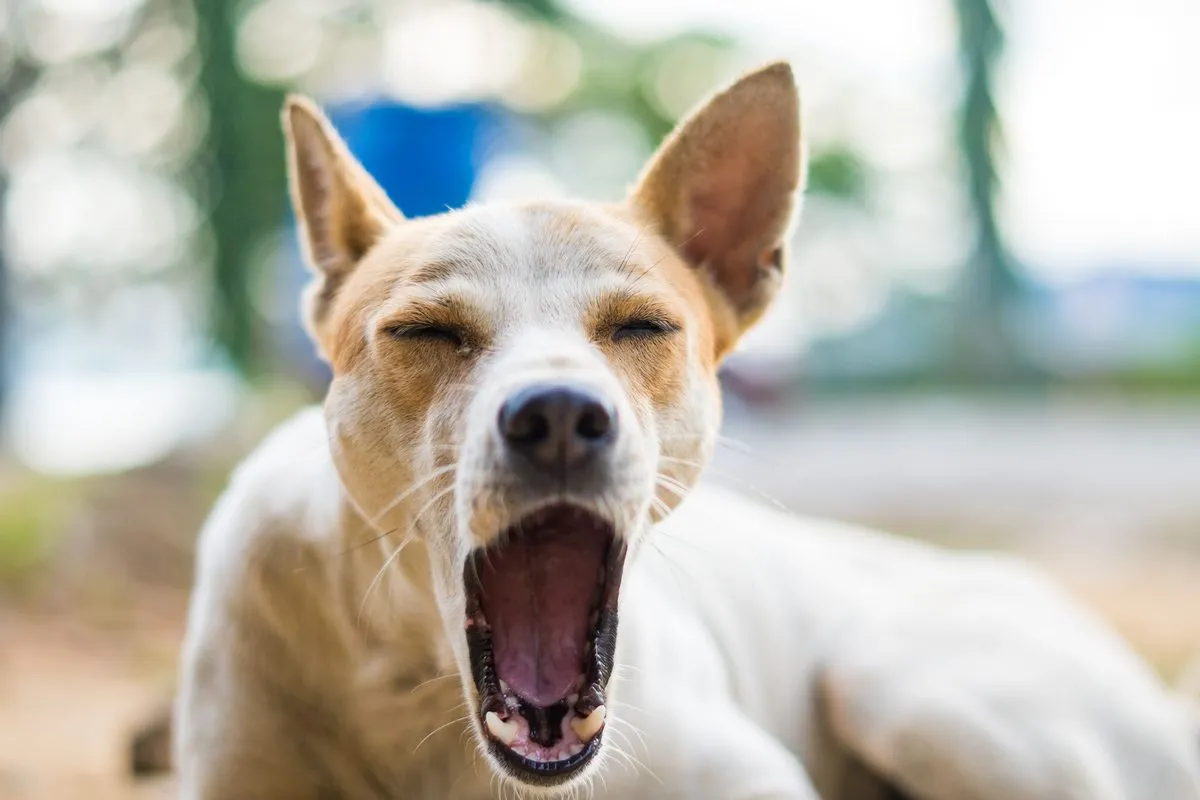
Dogs often yawn when they feel stressed or unsure, not tired. A yawn can help a dog calm itself and others in a tense moment.
A quick flick of the tongue over the lips is another sign of unease. Dogs lick their lips after eating, too, so think about the moment before you decide.
Grins and snarls
When a dog wrinkles its muzzle and pulls its lips up to show its front teeth, often with a growl, it’s giving a clear warning. The face goes tense and the eyes go hard.
Some dogs show a friendly grin instead. The front teeth show, but the body stays loose and wiggly, the eyes are soft and squinty, and the dog is plainly saying hello.
Posture and movement
The whole body tells you how big or small a dog wants to look. Weight, height and movement each add to the picture.
Play bows and wiggles
The play bow is one of the easiest signals to read. The dog drops its chest to the ground with its rear in the air, inviting another dog or a person to play.
Play looks loose, wiggly and bouncy, with brief pauses. A dog that turns stiff, moves slowly or keeps moving away may be done with the game.
Small and low
A dog that crouches low, leans away or trembles is showing fear or uncertainty. Making itself small is the dog’s way of saying it means no harm.
Rolling onto the back can be a request for a belly rub from a relaxed dog. It can also be a sign of strong stress, so check the eyes, mouth and tail.
Tall and forward
A dog that shifts its weight forward is showing interest. With a high tail, a stiff body and hard eyes, that interest can turn into a warning.
A raised front paw often means a dog feels unsure or cautious. In pointing breeds, though, it can simply mean the dog has found something to point at.
Raised hackles
Raised hackles are hairs that stand up along the shoulders, the back or down to the tail. Like goosebumps, they show arousal, not aggression on their own, and the dog may be excited, nervous, surprised or upset.
Stress, fear and warning signs
Stress signs often come first and quietly. Spotting them early lets you help your dog before it feels it has to say more.
Early stress signs
Watch for yawning when not tired, lip licking, looking away, sniffing the ground or scratching out of the blue, and a lowered tail. A stressed dog may also shed more or leave sweaty paw prints on the floor.
When you see these, give your dog a break and some space from whatever is bothering it. A short walk away is often enough.
Fear
A scared dog leans away, crouches, trembles or rolls onto its side, with wide eyes, flattened ears and a low or tucked tail. A very frightened dog may freeze or try hard to escape.
Stay calm and quiet, let your dog move away, and never pull or push it closer to what it fears. The tips on puppy training cover meeting new things a little at a time.
Aggressive body language
A dog giving a warning looks big and stiff, with its head raised, its weight forward and a hard stare. A wrinkled muzzle, bared front teeth and a growl make the message very clear.
Stop, look away and calmly give the dog room. Don’t reach out, stare or turn it into a contest.
When to get help
Ask your vet about any sudden change in how your dog behaves. For growling or bites, a certified trainer or animal behaviorist can help you find the cause and a safe plan.
Putting it into practice
Reading body language is a skill that grows with practice. The more you watch, the more your dog’s small signals will stand out.
Watch with the chart
Keep the chart above handy at home or the dog park. Try spotting one sign at a time, like the ears, then add the tail and the eyes.
Body language and barking
Barks and growls make more sense with the body around them. A bark with a loose, wiggly body is often play, while a bark with a stiff body is a warning; the guide to dog barking explains the different barks.
Teaching puppies and kids
Children and new owners learn fast with a few simple rules: leave a sleeping or eating dog alone, let the dog come to you, and step back from a stiff body or a hard stare. These habits help everyone, dogs included, feel safe.
For calm, everyday manners that make these moments easier, the dog commands guide has simple steps for each cue.