Puppy Schedule by Age, Hour by Hour
Make a daily puppy schedule for your puppy's age, with potty breaks, meals, play and naps from wake-up to bedtime, then print it for the fridge.
Published
Puppy schedule
Your puppy's day
10 weeks old, up at 6:30 am, bed at 9:30 pm
- 6:30 am Wake up and potty break
- 6:45 am Breakfast
- 7:00 am Potty break after the meal
- 7:15 am Play and a few minutes of training
- 7:30 am Potty break
- 7:45 am Nap in the crate or pen
- 9:00 am Potty break after the nap
- 9:15 am Play and a few minutes of training
- 10:00 am Potty break
- 10:15 am Nap in the crate or pen
- 11:30 am Potty break after the nap
- 11:45 am Lunch
- 12:00 pm Potty break after the meal
- 12:15 pm Play and a few minutes of training
- 12:30 pm Potty break
- 12:45 pm Nap in the crate or pen
- 2:00 pm Potty break after the nap
- 2:15 pm Afternoon meal
- 2:30 pm Potty break after the meal
- 2:45 pm Play and a few minutes of training
- 3:00 pm Potty break
- 3:15 pm Nap in the crate or pen
- 4:30 pm Potty break after the nap
- 4:45 pm Play and a few minutes of training
- 5:30 pm Potty break
- 5:45 pm Nap in the crate or pen
- 7:00 pm Potty break after the nap
- 7:15 pm Dinner
- 7:30 pm Potty break after the meal
- 7:45 pm Play and a few minutes of training
- 8:00 pm Potty break
- 8:15 pm Nap in the crate or pen
- 9:15 pm Last potty break
- 9:30 pm Bedtime in the crate
- Potty breaks at least every 2 hours while your puppy is awake, and after every nap, meal and play session.
- 4 meals a day. Follow your vet's feeding plan for what and how much.
- If your puppy wakes up at night, take them out quietly, then straight back to bed.
How the schedule works
Pick your puppy's age, the time your day starts and bedtime. The day updates right away.
The schedule builds the day from short cycles: a potty break, play and a little training, another potty break, then a nap in the crate or pen.
Meals land at the start of a cycle, spread across the day. The last one comes at least 2 hours before bed, so the night starts with an empty bladder.
When it looks right, use Download PDF or Print for a copy on the fridge. Copy text sends it to everyone who helps with the puppy.
Reset takes you back to the starting day.
Reading your puppy's day
Each line of the schedule is one of a few kinds of moment, shaded so you can tell them apart.
- Potty breaks come first thing, after every nap, meal and play session, and last thing at night.
- Meals are times only. What and how much is between you and your vet.
- Play and a little training fill the awake time, a few minutes at a stretch.
- Naps happen in the crate or pen, somewhere quiet.
- Bedtime comes after a last potty break, in the crate next to your bed.
Potty breaks and meals
Potty breaks and meals are the backbone of the day. Once they happen at about the same times, everything else falls into place around them.
Potty breaks by age
How long a puppy can wait between potty breaks grows with age. While awake, a puppy under 10 weeks needs a break about every 1 hour.
At 10 to 12 weeks, it's about every 2 hours. From 3 months, add about an hour for each month of age, up to 6 hours.
On top of that, take your puppy out after every nap, meal and play session. Those are the times they most often need to go.
The potty training guide has the chart by age and the steps that teach your puppy where to go.
Meals at the same times
Young puppies eat several small meals: usually 4 a day up to 12 weeks, 3 until about 6 months, then 2.
Feeding at the same times each day makes potty times easier to predict.
The schedule shows when, not what or how much. Follow your vet's feeding plan for that.
Naps and play
Between the potty breaks, a puppy's day is mostly naps and short bursts of play.
Naps matter more than you'd think
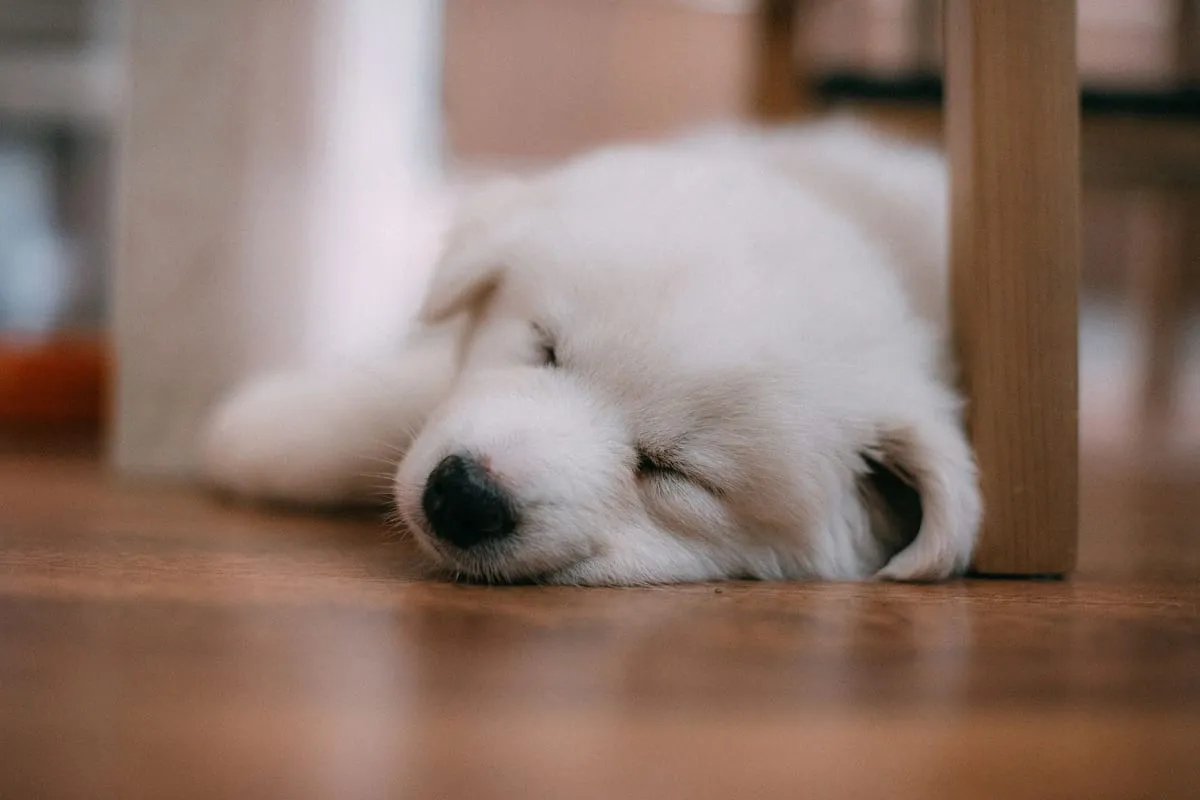
Puppies sleep a lot, and a tired puppy is often a bitey, wound-up puppy. Regular naps keep the awake times happy.
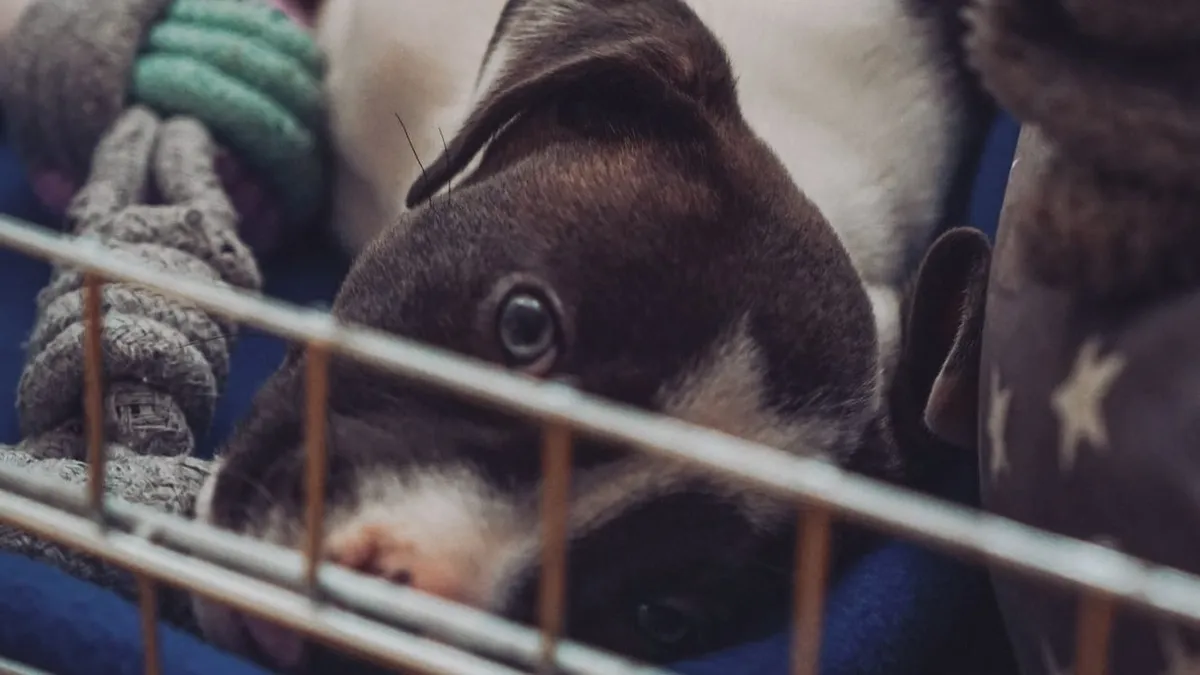
Put your puppy in the crate or pen for naps, with a chew toy, in a quiet spot. If they fall asleep somewhere else, that's fine too.
When they wake up, go straight out for a potty break before anything else.
When your puppy won't nap
Some puppies fight sleep, especially when there's a lot going on. A quiet room, a covered crate and a chew toy usually help.
Start the nap right after a potty break and a little play, when your puppy is ready to rest. If they cry, wait for a quiet moment before you let them out.
Play and training in the day
The play slots are where your puppy learns. Use a few minutes of each one for their name, sit or walking on a light leash.
Keep it short and end while your puppy is still keen. The Training guide has the first lessons to try.
Fitting the schedule to your life
A puppy's routine has to work for the people around them too.
If you're away during the day
Tick "Away from home" and set when you leave and come back. The schedule keeps your puppy in a safe puppy area with water and a chew toy while you're out.
It also shows when someone should come by for a potty break, and for a meal if one falls in that time. A sitter, a neighbor or a dog walker can fill those slots.
Working from home with a puppy
Being home all day helps, but it doesn't mean your puppy gets your attention all day. Naps in the crate or pen give you both some quiet time.
Plan your calls around the nap slots, and use the play slots as your own breaks. A short walk to the potty spot clears your head too.
A schedule for the whole family
Print the schedule and put it where everyone can see it. Then add a name next to each potty break, meal or walk.
Kids can help with the easy parts, like play or filling the water bowl. A grown-up should handle meals and night trips.
When everyone follows the same day, your puppy learns the routine faster.
Nights, weekends and a growing puppy
The schedule doesn't stop at bedtime or on Saturdays, and it changes as your puppy grows. A few habits keep it steady.
Nights
The last potty break comes right before bedtime. Then your puppy sleeps in the crate next to your bed, where they can hear you.
Young puppies often wake once or twice in the night. Keep those trips short and boring: out to the spot, a quiet word of praise and back to bed.
Weekends and changes
Try to keep wake-up time about the same every day, weekends included. Puppies settle faster when the day starts the same way.
When you need to change the routine, shift it a little at a time. As your puppy grows, update the age here and the schedule spaces the breaks further apart.
As your puppy grows
Every few weeks, set the new age in the schedule. Potty breaks spread out, meals drop and awake times get longer.
Your puppy may be ready for longer walks and more training then. Keep the same wake-up time and bedtime, and the change will feel natural.
Make it your own
No schedule fits every puppy on every day. Think of the printed day as a guide for the family, not a timetable to keep to the minute.
Small changes are fine, as long as the big pieces stay in place: the potty breaks, the meals and a calm bedtime.
Every puppy is different, so treat the schedule as a starting point.
If your puppy sniffs the floor, circles or wanders off during play, take them out right away, even if a break isn't due. If they sleep longer or wake sooner, move the next break with them.
A day that stays about the same from one day to the next matters more than the exact minutes.
Bringing your puppy home soon? The 8 week old puppy schedule walks through the very first days, and the new puppy checklist covers what to have ready.
A little older? The 12 week old puppy schedule covers the weeks around three months.
As your puppy grows, the dog years calculator shows their age in human years. When the first birthday comes around, these dog birthday party ideas help you plan the day.
Frequently asked questions
How often does a puppy need to go potty?
While awake, a puppy under 10 weeks needs a potty break about every 1 hour, and at 10 to 12 weeks about every 2 hours. From 3 months, add about an hour for each month of age, up to 6 hours. Add a break after every nap, meal and play session too.
How many meals a day does a puppy need?
Usually 4 meals a day up to 12 weeks, 3 until about 6 months, then 2. The schedule shows meal times only; follow your vet's feeding plan for what and how much.
What if I work all day?
A young puppy can't wait a whole workday for a potty break. Tick "Away from home" and set your times: the schedule shows when a sitter, neighbor or dog walker should come by.
When should my puppy go to bed?
Pick a bedtime that suits your home and keep it the same every night. Give the last meal at least 2 hours before bed and take your puppy out right before.
Save it for later
Pin this page so it's there when you need it.