Crate Training a Puppy Step by Step
How to crate train a puppy calmly: picking and setting up the crate, four simple steps, nights, whining, and a chart of how long a puppy can stay in by age.

By Maren Whitlock · Published
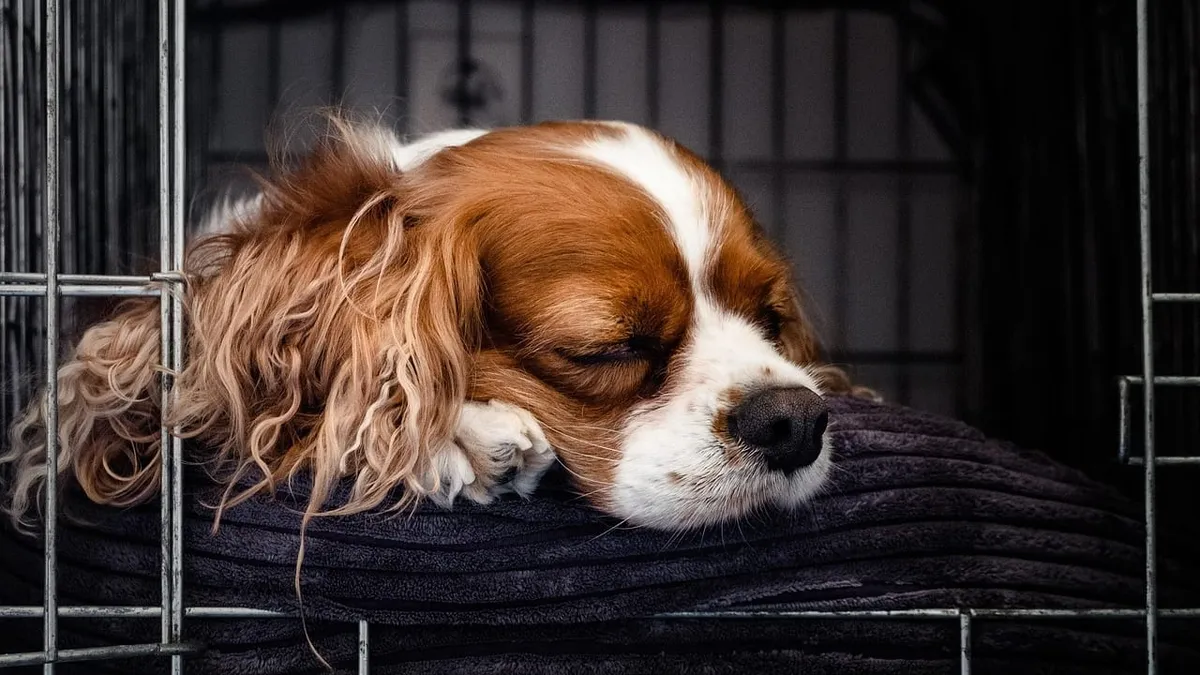
Crate time by age
| Age | Time in the crate |
|---|---|
| 8 to 9 weeks | Up to 1 hour |
| 10 to 12 weeks | Up to 2 hours |
| 3 to 5 months | Up to 3 hours |
| 6 months and older | Up to 4 hours |
Daytime crate time in a row, between potty breaks and play. Overnight, a puppy sleeps in the crate and goes out whenever they wake up needing to go.
A crate gives your puppy a safe, quiet place of their own, and it makes potty training and nights much easier. The trick is to make the crate somewhere your puppy wants to be, one small step at a time.
The chart above shows how long a puppy can stay in the crate during the day at each age. Print it and keep it near the crate, so everyone at home follows the same plan.
Choosing and setting up the crate
Pick a crate your puppy can stand up, turn around and lie down in comfortably. A crate that’s much bigger leaves room to pee in one end and sleep in the other, which works against potty training.
If your puppy will grow a lot, buy the adult size with a divider. Move the divider back as your puppy grows, so the space always fits.
Where to put it
By day, put the crate in a calm spot where the family spends time, so your puppy doesn’t feel shut away. At night, move it next to your bed or just outside your bedroom, where your puppy can hear you.
What goes inside
A washable pad or an old towel makes the crate comfortable. Some puppies pee on soft bedding or chew it; if yours does, take it out for a while and try again later.
Once your puppy is reliable, a proper dog bed in the crate or beside it gives them a cozy spot of their own.
Add a safe chew toy, and take your puppy’s collar off before they go in, so it can’t catch on the crate. Keep the door open whenever you’re home and not training, so your puppy can wander in on their own.
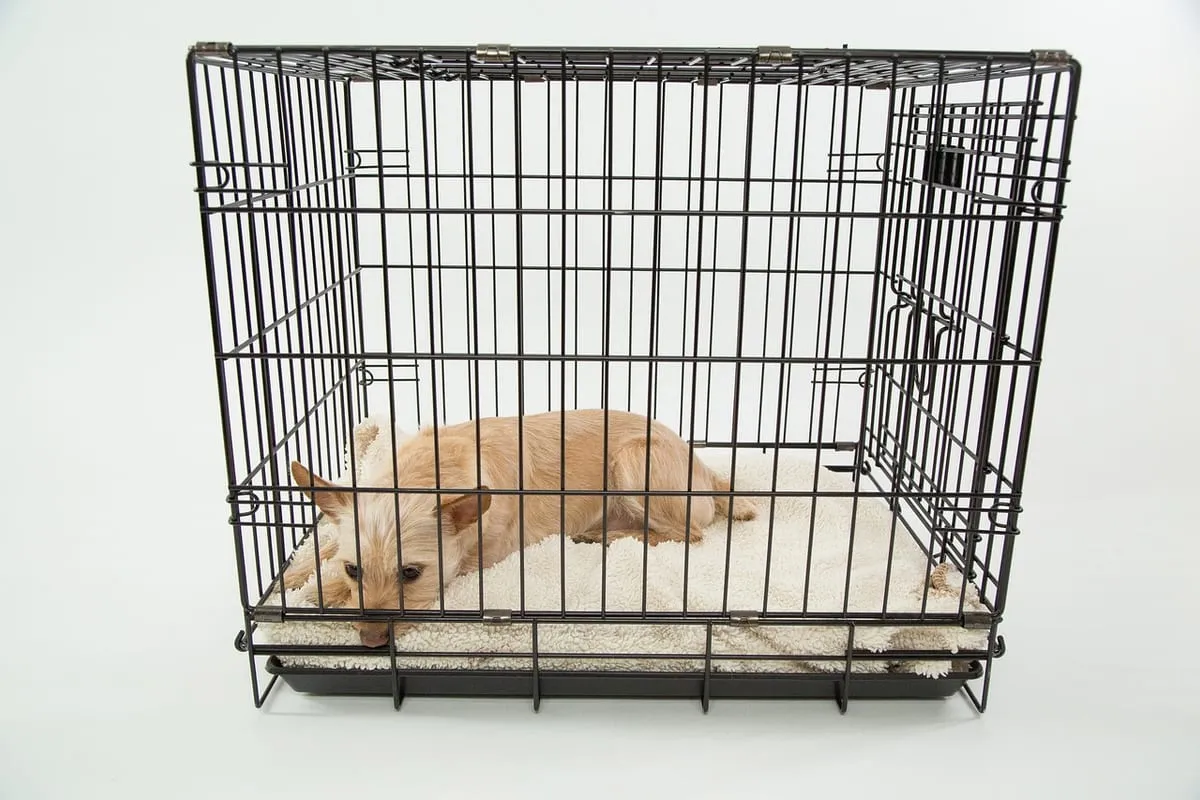
Crate training a puppy in four steps
Take these steps at your puppy’s pace. Some puppies move through a step in minutes; others need several days. Move on only when the current step is easy.
Step one, meet the crate
- Prop the door open, or take it off for now.
- Drop a few treats near the crate, then just inside the door, then all the way in.
- Let your puppy go in and out on their own. Never push them in.
- Keep tossing treats until your puppy walks calmly all the way inside.
Step two, meals in the crate
Feed your puppy’s meals in the crate. If they go in readily, put the bowl at the back; if not, put it only as far in as they’ll happily go, and move it back a little each meal.
Once your puppy eats comfortably inside, close the door while they eat. Open it as soon as they finish at first, then leave it closed a little longer each meal, until they stay in calmly for about 10 minutes after eating.
Step three, short stays while you’re home
Say a cue like “crate,” point inside and give a treat as your puppy goes in. Close the door and sit quietly nearby for a few minutes, then step into another room for a few minutes, then come back and let your puppy out.
Repeat this several times a day, slowly adding time. Keep going until your puppy stays quietly in the crate for about 30 minutes with you mostly out of sight.
Step four, leaving the house and nights
Start leaving your puppy in the crate for short outings. Put them in with a chew toy a little before you leave, and keep goodbyes and hellos calm and matter-of-fact, so coming and going is no big deal.
How long a puppy can stay in the crate
A puppy can’t hold it for long, so daytime crate time is short at first. The chart above takes the shorter of two limits: how often your puppy needs a potty break at that age, and a cap on crate time for young puppies and grown dogs.
That’s why the youngest puppies come out after a short stay, and why even a grown dog shouldn’t spend long stretches of the day in a crate. The times are a most, not a goal: shorter stays are fine.
The rest of the day
A crate is for naps, quiet time and the moments you can’t watch your puppy, not for most of the day. Between crate stays, your puppy needs potty breaks, play, training and time with you. A few easy dog enrichment ideas, like a food toy or a sniffing game, fill that time well.
If you’re out for longer than the chart allows, plan a midday break with a family member, a neighbor or a dog walker. A gated puppy area with a bed, water and toys is another option for longer stretches.
Building the day around it
The puppy schedule builds a full day for your puppy’s age, with naps in the crate between potty breaks, meals and play. It’s an easy way to see where crate time fits, and the 12 week old puppy schedule shows it for a puppy around three months.
Nights in the crate
At night, keep the crate next to your bed or close by in a hallway. Hearing and smelling you helps a young puppy settle, and you’ll hear them wake up.
Take your puppy out for a last potty break right before bed. If they wake in the night and whine, carry them to the potty spot, keep it quiet and boring, then put them straight back in the crate.
Once your puppy sleeps through the night calmly, you can move the crate to where you’d like it to stay. For the potty side of nights and how often to go out, see potty training a puppy.
A calm bedtime routine
The same steps every night help your puppy wind down. Play a little, take a last trip outside, then settle them in the crate with a chew toy and lights low.
Keep the first few nights calm and boring. A puppy who learns that waking up means a quiet trip outside and straight back to bed soon starts sleeping longer stretches.
Whining, barking and other setbacks
Some whining is normal at first. Never scold or punish your puppy for crying in the crate, and never use the crate as a punishment, or it stops being a happy place.
If your puppy whines after being let out to potty, wait for a moment of quiet before you open the door. If you think they need to go, take them out on a leash, straight to the potty spot and back.
Signs your puppy is stressed
Watch for pacing, shaking, scratching or biting at the door, long howling or barking, and drooling. These mean the crate time is too long or came too fast, so go back a step and build up more slowly.
For barking outside the crate too, the guide to dog barking covers the common causes and a calm quiet cue.
A crate doesn’t fix separation anxiety, and some anxious dogs panic in one. If your dog can’t settle when left alone, try a larger, puppy-proofed area instead, and ask a trainer or your vet for help.
Crate training an older dog
Dogs of any age can learn to like a crate. Use the same steps, at whatever pace your dog needs, with plenty of treats and the door open at first.
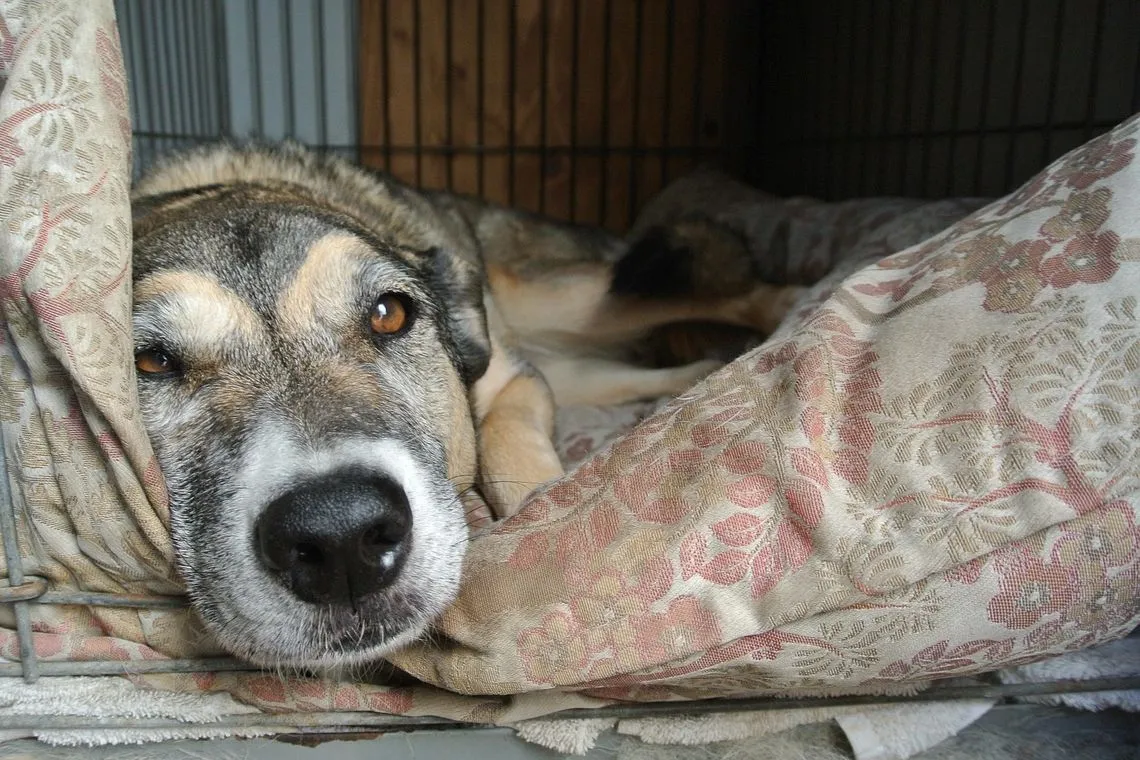
Keep the crate near you at the start, so your dog doesn’t connect it with being alone. Senior dogs with stiff or sore joints may be more comfortable in a larger safe area with a soft bed, where they can move around and stretch out.
For rescue dogs
A newly adopted dog may never have seen a crate. Give them time to settle into the home first, and start with the door open and meals near the crate.
Some rescue dogs have spent time in kennels and may find a crate stressful at first. Watch for the stress signs above, go slowly, and use a gated area instead if your dog can’t relax inside.
For everything else in the first weeks of training, from first cues to biting, start with the Training guide.