Puppy Bath Time Tips for a Calm First Bath
Puppy bath time made easy: when to start, a washcloth first, then a gentle shampoo bath step by step, keeping the face and ears dry, and drying without a fuss.

By Maren Whitlock · Published
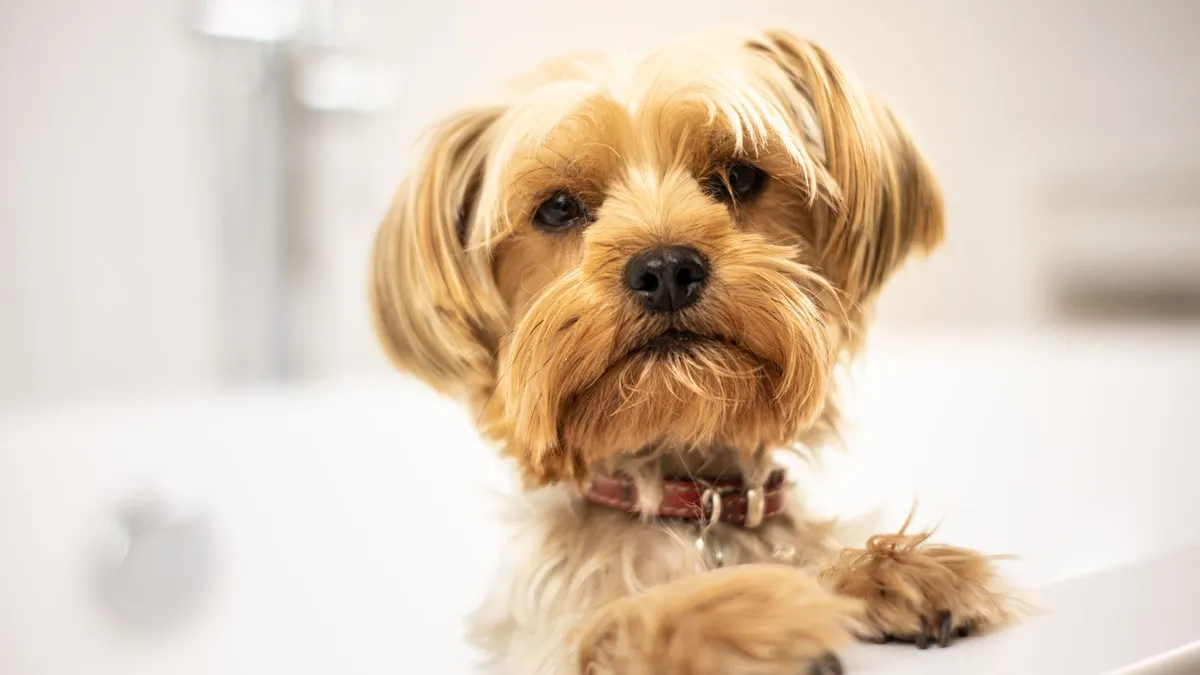
Puppy bath time goes best when it starts small and stays calm. A young puppy only needs a warm washcloth at first, and a full bath with a gentle dog shampoo comes later.
Keep the water lukewarm, the face and ears dry, and the treats coming. Below is how to start, a step-by-step first bath, drying, and how often a puppy really needs one.
When to start puppy baths
Bath time is a skill your puppy learns, just like sit or walking on a leash. Starting early, in tiny steps, teaches your puppy that the tub is a safe place.
A groomer on the AKC’s puppy bathing guide suggests starting as young as about 2 months, to build a routine that lasts a lifetime. Those first sessions aren’t really baths at all.
A washcloth first
Until about 3 months, a young puppy doesn’t need any shampoo. A warm, damp washcloth wiped over the coat cleans up most messes and gets your puppy used to being handled while wet.
Shampoo a little later
From about 3 months, you can move to a real bath with a mild shampoo and conditioner made for dogs. Ask your vet first which products suit your puppy’s skin and coat.
Short, happy visits to the tub
Before the first full bath, let your puppy explore the dry tub or sink with treats and praise. Touch the paws, ears and coat the way you will during a bath, and keep it short and sweet.
What you need
Gather everything before your puppy gets wet. A wet puppy can’t be left alone in the tub, even for a moment, so have it all within reach.
The bath kit
- Shampoo and conditioner made for dogs, never shampoo meant for people
- A soft washcloth for the face
- A few towels, more than you think you’ll need
- Cotton balls to keep water out of the ears
- A brush or comb for your puppy’s coat
- Small treats for the whole bath
A detachable shower spray makes rinsing much easier. If you don’t have one, a large cup or pitcher works too.
The right spot
A small puppy is easiest to wash in a sink or a baby tub, and a bigger one in the bathtub. Put a towel or a non-slip mat on the bottom so your puppy feels steady on its feet.
Dress for it
You’re going to get wet, so wear something that can take a splash. Your puppy will shake at least once, usually right when you lean in.
A puppy bath, step by step
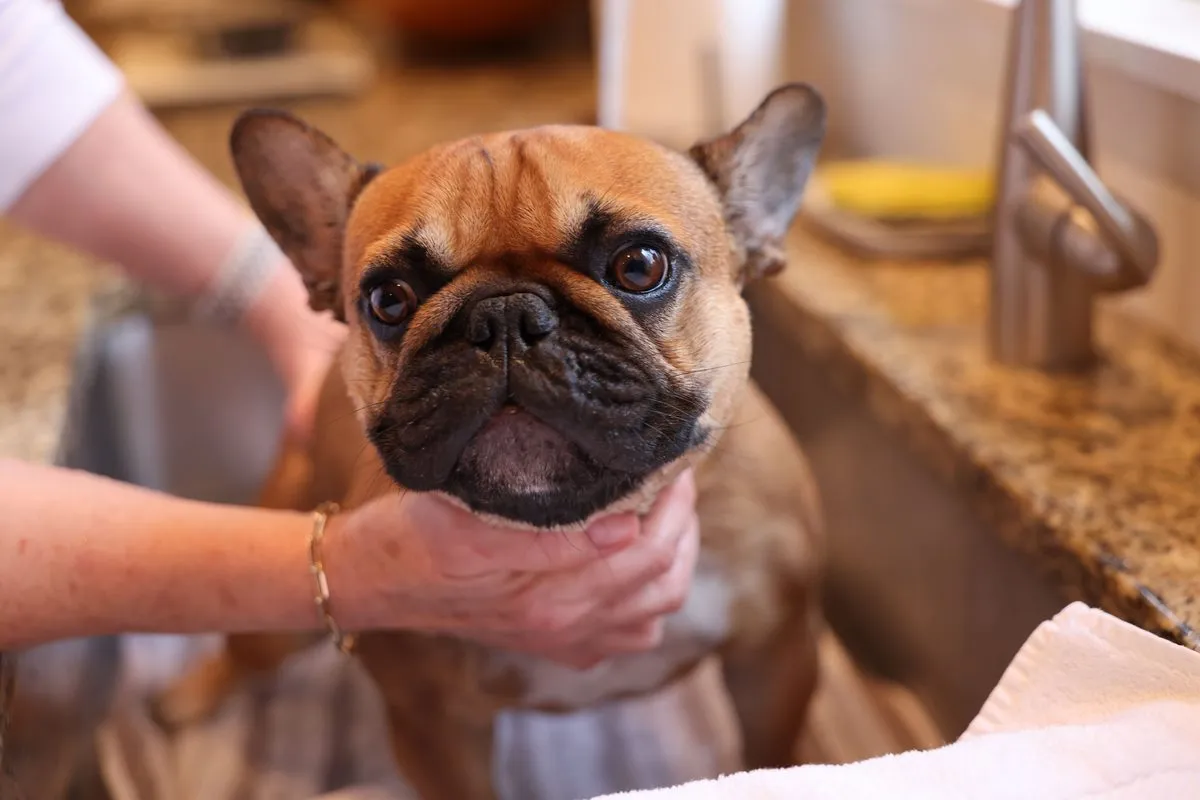
Keep the first real bath short and calm, and finish before your puppy gets upset. With treats and praise, most puppies learn to relax in the water over a few baths.
Brush first
Brush your puppy before the bath to remove loose hair and dirt. Tangles get tighter once they’re wet, so it’s much easier to work them out while the coat is dry.
Check the water
Use lukewarm water, never hot. Dogs feel heat differently from us, so water that seems pleasant to you may feel too warm to a puppy.
Wet and wash gently
Use a soft stream of water and gentle hands. Work the shampoo through to the skin, moving in the direction the coat grows, and wash the belly, legs, paws and under the tail.
Don’t scrub. Bathing a young puppy is a lot like bathing a baby, and slow, gentle movements help it feel safe.
Keep the face and ears dry
Skip the spray around the head. Wipe the face with a damp washcloth instead, and use as little product as possible near the eyes, ears, nose and mouth.
A dog’s ear canal bends, so water that gets in is hard to get out. A cotton ball gently placed in each ear helps keep it dry.
Rinse, then rinse again
Rinse with lukewarm water, starting at the head and working back. When you think you’ve rinsed enough, rinse a little more, since leftover soap can bother the skin.
Condition and rinse
A dog conditioner keeps the coat and skin from drying out after shampoo. Rinse it out just as well as the shampoo.
Drying your puppy
Drying is the part most puppies find funniest, and the part most owners find wettest. Have the towels ready before you lift your puppy out.
Towels first
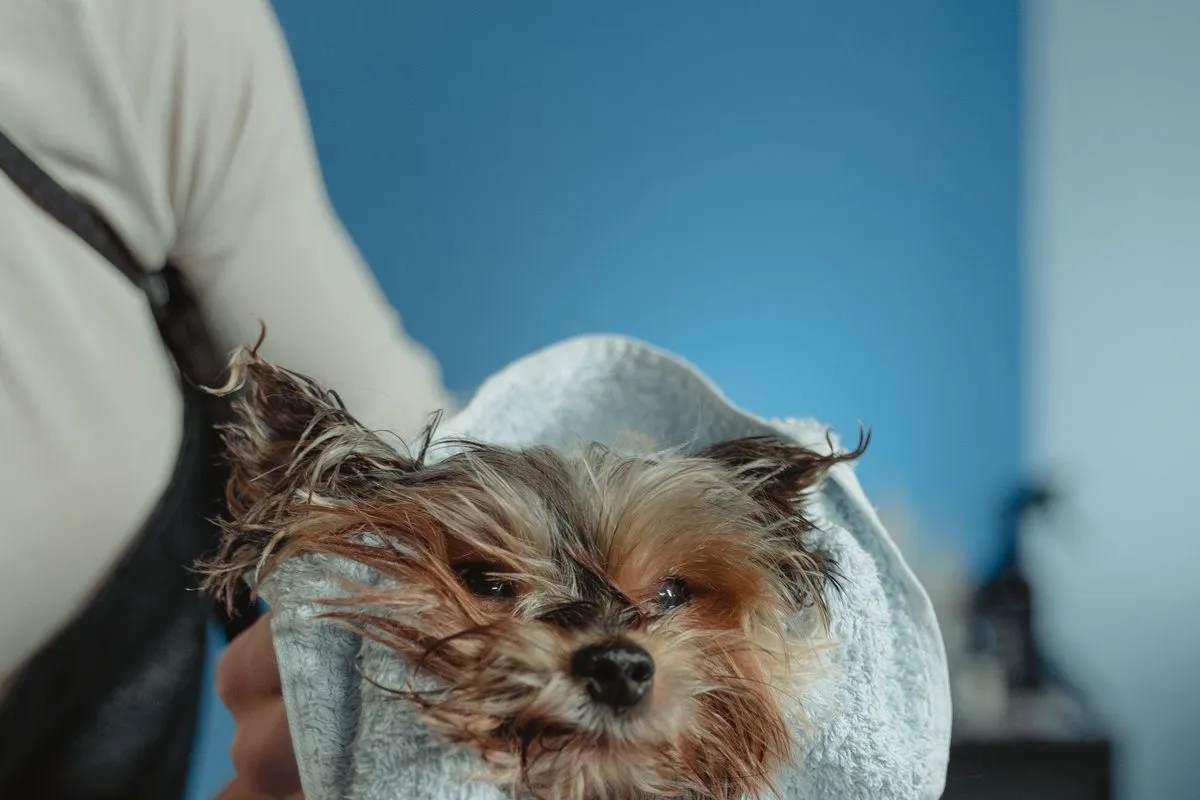
Wrap your puppy in a towel as soon as the bath is over, and rub gently to soak up the water. Swap to a dry towel as soon as the first one is soaked.
Expect a big shake, so stand back for a moment. Then keep drying, paying extra attention to the legs, belly and paws.
Using a blow dryer
If you use a blow dryer, set it to low heat and hold it at least 1 foot away. Brush the coat in the direction it grows as you dry, and keep the air away from the face.
Many puppies are unsure of the noise at first. Turn it on away from your puppy, offer a treat, and bring it closer only as your puppy relaxes.
Warm and cozy
Let your puppy finish drying in a warm room, away from drafts. A cozy spot with a favorite toy and a chew turns the end of the bath into something to look forward to.
How often to bathe a puppy
Most puppies only need a bath when they’re dirty or smelly. Bathing too often washes away the natural oils that keep the coat healthy.
Different coats, different needs
The coat makes a difference. Short, smooth coats need baths less often, and so do water-repellent coats with lots of natural oil, like a Golden Retriever’s.
Oily coats, like a Basset Hound’s, may need a bath more often. Thick double coats need few baths but a great deal of brushing.
Brushing between baths
Regular brushing keeps most coats clean between baths and spreads those natural oils. The dog grooming routine by coat type shows how often to brush, bathe and trim for your puppy’s coat.
When a bath can wait
A little mud often brushes out once it’s dry. For a muddy paw or a sticky face, a damp washcloth is usually enough, no full bath needed.
Building a lifelong habit
Treat each bath as a short training session. The puppy training schedule includes gentle handling from the first weeks, which makes bath time, brushing and nail trims easier for life.
Making bath time a happy time
The goal of the first baths isn’t a spotless puppy. It’s a puppy who learns that the tub, the water and your hands are nothing to fear.
Treats all the way
Hand out small treats before, during and after the bath. Keep a few treats on the edge of the tub, and offer one between each step.
Stay calm and quick
Talk softly, move slowly, and keep the first baths short. If your puppy gets upset, finish what you can calmly and try again another day. A short bath that ends well teaches far more than a long one that ends in tears.
Ask for help
If your puppy stays very frightened of the bath, a professional groomer who works with puppies can help. Short, happy groomer visits teach a puppy that grooming isn’t scary.
For everything else your puppy needs at home, from bedding to brushes, see these puppy essentials.