Dachshund Sizes, Coats, Personality and Care
The Dachshund at a glance: standard and mini sizes, smooth, long-haired and wire-haired coats, a brave and playful personality, care, puppies and German roots.

By Maren Whitlock · Published
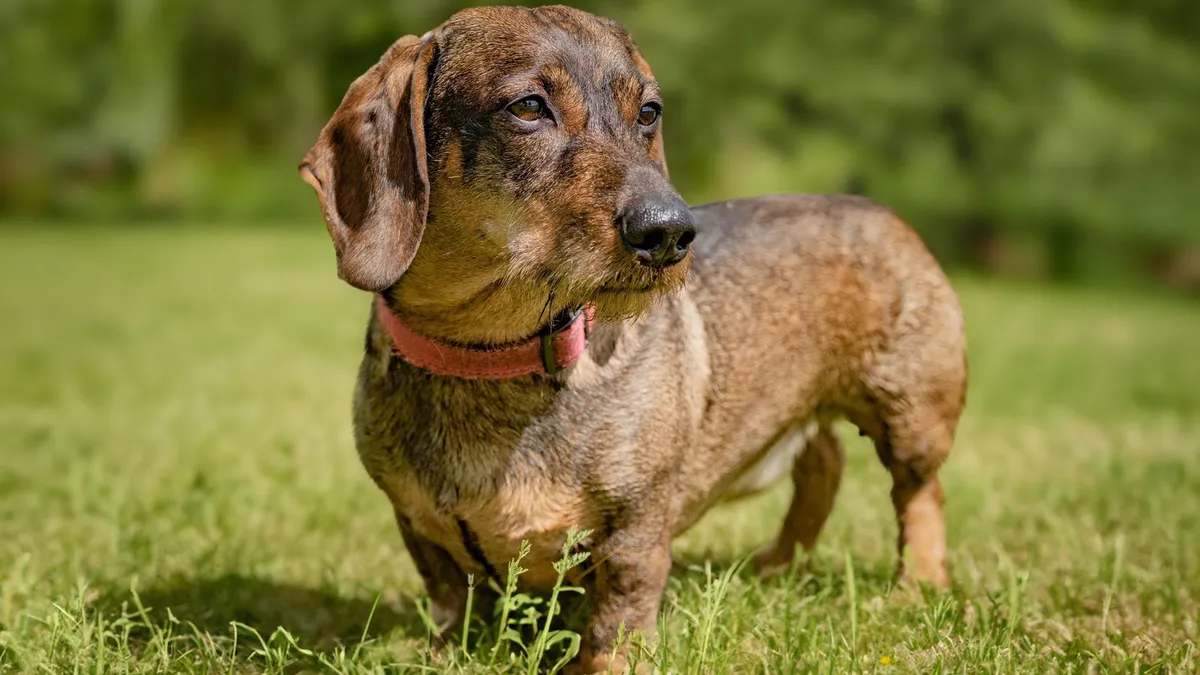
Dachshund at a glance
- Size
- Medium
- Adult weight
- 16 to 32 lb
- Height
- 8 to 9 in
- Coat
- Short or medium, smooth
Typical figures for the breed. Any one dog can be bigger or smaller than these.
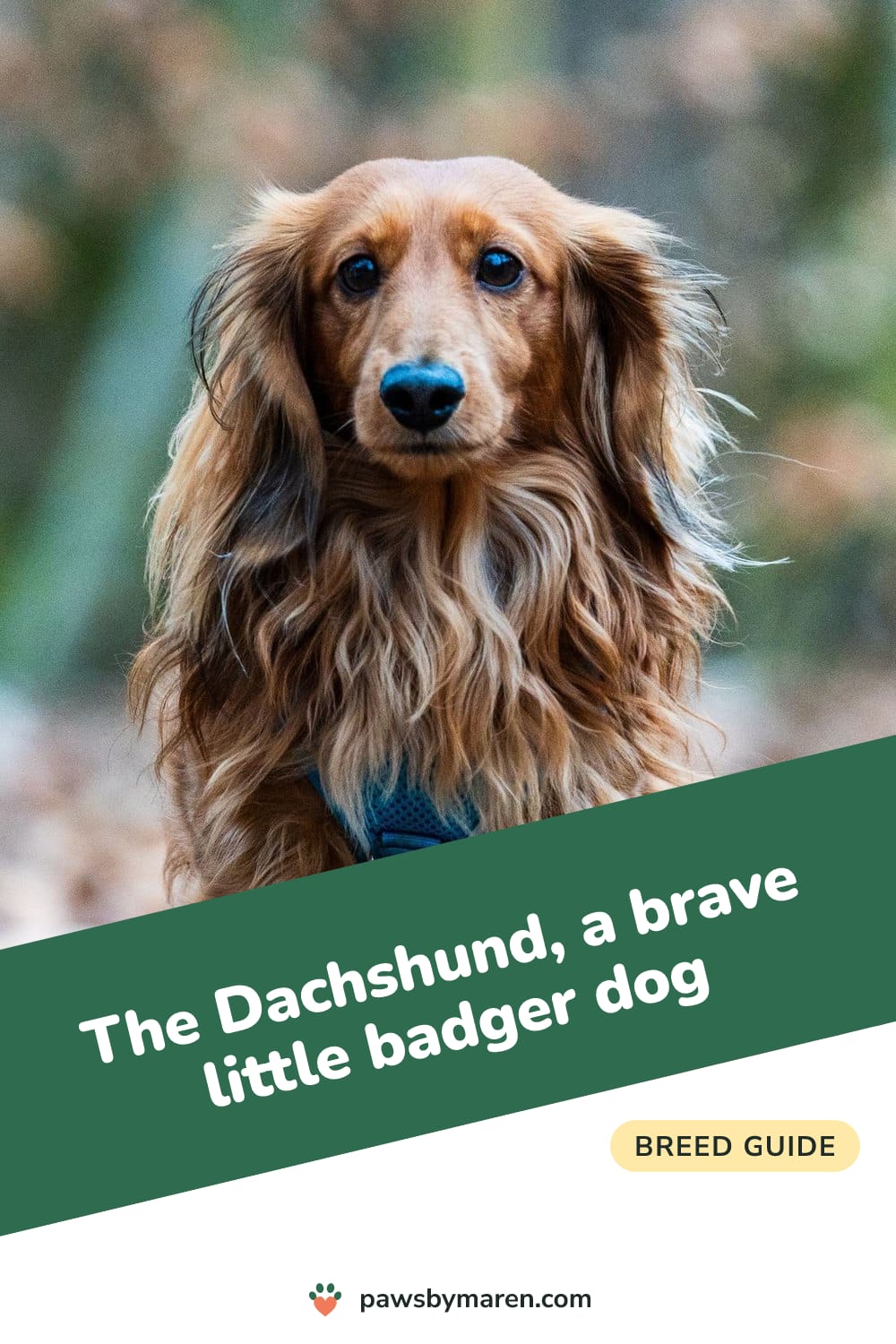
The Dachshund is a short-legged hound with a long body, short legs and a very big personality. It’s curious, friendly and spunky, with the courage of a much larger dog.
The card above shows the standard Dachshund’s typical size and coat. Below are the two sizes and three coats, the breed’s personality, care and exercise, puppies and training, family life and its long German history.
Sizes and build
The Dachshund comes in two sizes. A standard Dachshund usually weighs 16 to 32 pounds, and a miniature weighs 11 pounds or less.
The upper end of the standard range puts it in the medium weight class on the card, while the miniature is a true small dog. Both sizes have the same shape: a long, muscular body, a deep chest and short, strong legs. The head tapers to the nose, and the rounded ears frame the face.
Mini Dachshund or standard
The miniature is simply a smaller Dachshund, with the same coats, colors and personality. It suits a smaller home and is easy to carry, while the standard is a little sturdier.
A mini Dachshund puppy grows into the same bold, busy dog as a standard one. Choose the size that suits your home, and expect the same big bark from either.
Built for the job
That long, low body was made for work underground. Dachshunds were bred to follow badgers into their dens, and a short, strong dog could move through a tunnel where a taller one couldn’t.
For the same reason, Dachshunds aren’t built for distance running, big leaps or hard swimming. They are tireless on a walk, though, and game for almost anything else.
A brave, playful personality
Dachshunds are smart, curious and full of fun. They love to give and get affection, and they want to be with their people, not left outside.
They were bred to hunt dangerous prey on their own, so they can be brave to the point of rashness and a little stubborn. That mix of courage and charm is a big part of why people love them.
A big bark
A Dachshund’s bark is loud and houndy, a throwback to the days when it told the hunter where it was underground. Smart and watchful, a Dachshund makes a fine watchdog.
That also means a Dachshund will bark at the doorbell, passersby and the mail. Teaching a quiet cue early helps, and the tips on dog barking walk through it.
A nose for adventure
Dachshunds have an excellent sense of smell and a strong prey drive. When a scent is more interesting than you, they may not listen, so keep walks on a leash and in a fenced yard.
Three coats and their care
Dachshunds come in three coat types: smooth, long-haired and wire-haired. Each one has its own look and its own grooming routine, but all three are moderate shedders with little doggy smell.
Smooth
The smooth Dachshund has a short, shiny coat that’s close to wash and wear. A wipe with a towel or a hound glove is usually all it needs to look neat.
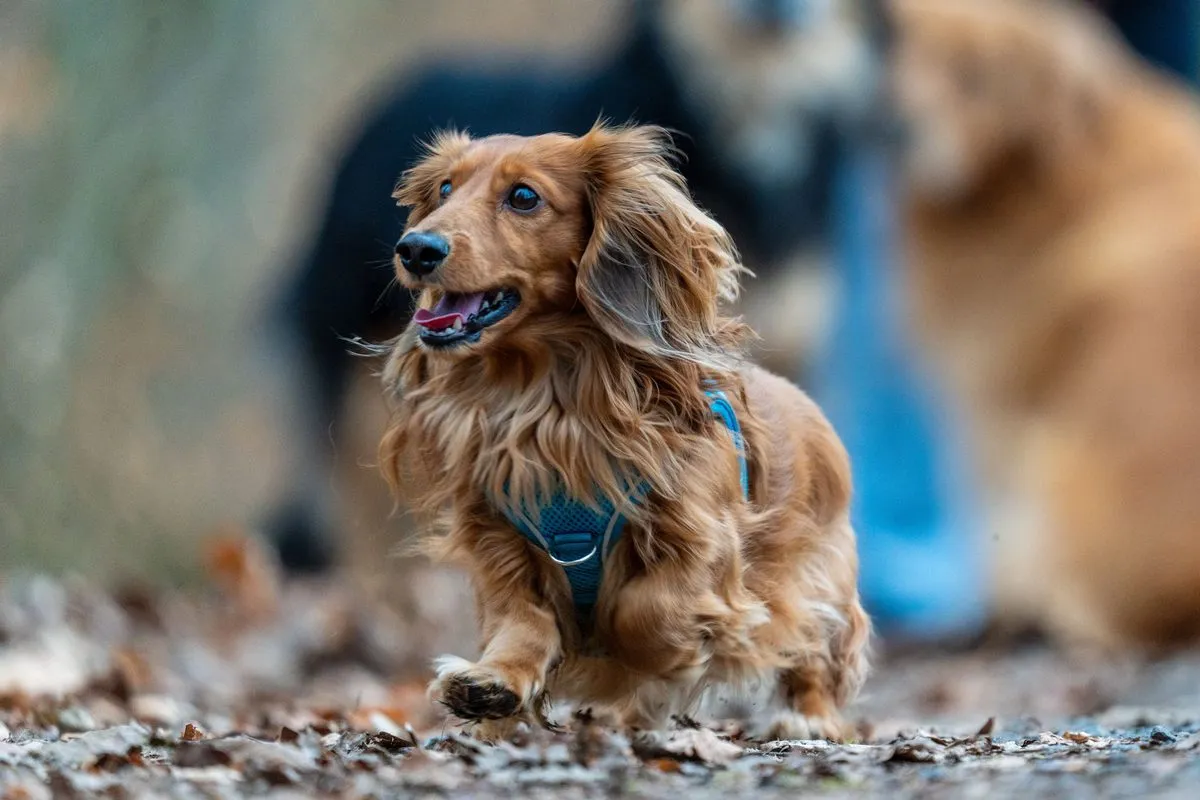
Long-haired
The long-haired Dachshund has a silky coat with feathering on the ears and legs. It needs more frequent brushing, depending on how thick the coat is, to keep tangles away.
Wire-haired
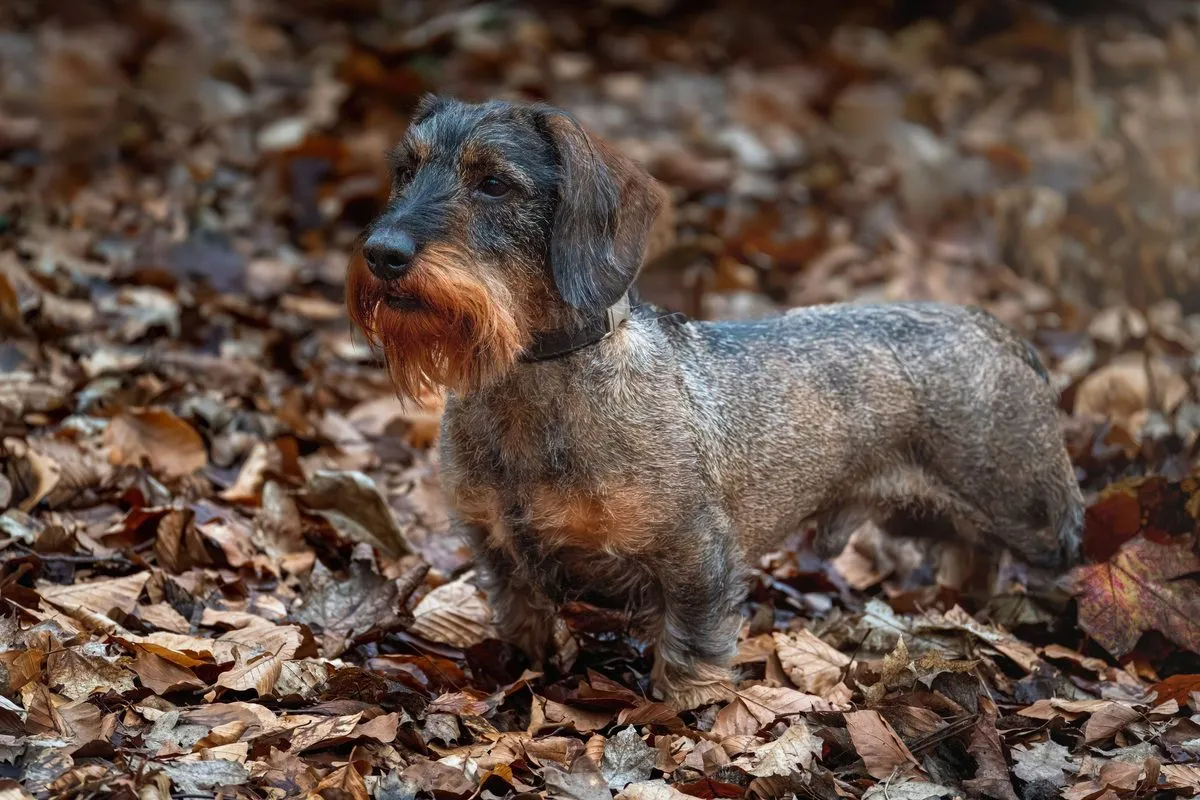
The wire-haired Dachshund has a rough, bristly coat with a beard and bushy eyebrows. Brush or comb it once or twice a week, trim the beard and brows now and then, and have the coat plucked or hand-stripped a few times a year.
Colors
Red is the most common color, but Dachshunds also come in cream, black and tan, chocolate and tan and more. Patterns like dapple, brindle and piebald add spots, stripes or patches to the base color.
Whatever the coat, trim the nails every month, and these dog nail trimming hacks help a wriggly Dachshund stay calm. The dog grooming routine by coat type covers the rest.
Exercise and a healthy back
Dachshunds are small, but a run around the house isn’t enough. They need regular exercise to stay fit and to build strong muscles that support their long back.
About 2 walks a day of moderate length suit most Dachshunds, in every season. Add sniffing games and short play sessions, and a Dachshund is a happy dog.
Stairs and furniture
A long back needs a little care. Don’t let your Dachshund run up and down stairs or jump on and off the furniture; carry them, or use a ramp to the couch.
Indoors with the family
Dachshunds are social dogs and don’t do well living outdoors. They want to be with their people, napping on a lap or following you from room to room.
Short scent games, like hiding a few treats around a room, put that famous nose to work. They tire a Dachshund out quickly without any strain on its back.
Dachshund puppies and training
A Dachshund puppy is bright, bold and quick to learn, but also independent. Start training the day your puppy comes home, and keep it short, upbeat and full of rewards.
Patience and rewards
Dachshunds are sensitive and won’t respond well to harsh words or punishment. Treats, praise and play work far better, and patience and consistency are the keys.
The puppy training schedule lays out what to teach week by week, from the name game and sit to come and walking on a loose leash.
House training
House training takes patience with an independent puppy. A steady routine, frequent trips outside and a reward right away help, and the guide to potty training a puppy has a chart by age.
A reliable recall
With that nose and prey drive, coming when called takes extra work. Practice in a fenced area or on a long leash, and make coming back to you the best deal around.
Family life
Dachshunds are loving, loyal family dogs. They bond closely with their people and enjoy being part of everything at home.
They’re very affectionate with their family and love to be close, whether on the couch or at your feet. Most are friendly with new people, too, once the first round of barking is over and the sniffing is done.
Children
A Dachshund can be a good friend to older children who handle it gently. With young children, an adult should always be nearby, and kids should learn to hold a Dachshund gently with its back supported.
Other pets
Most Dachshunds get along with other dogs, especially when they grow up together. Their prey drive can make small pets like rabbits or hamsters a temptation.
Small homes
A Dachshund adapts well to apartments and small homes, as long as it gets its daily walks. Expect a few barks at the hallway noises, too.
Where the Dachshund comes from
Dachshund is a German word meaning badger dog, and the breed’s German history goes back some 600 years. It was bred to dig into a badger’s den, a job that needed courage, cleverness and strength.
Breeders added a wire coat for work in thorny brush and a long coat for cold weather. Dachshunds of different sizes were bred for different prey, and packs of Dachshunds were often used on wild boar. By the late 1800s, breeders were setting standards for the breed’s sizes, coats and colors.
A symbol of Germany
The Dachshund has long been a national symbol of Germany. During the First World War, American fans took to calling the breed Liberty Hounds to keep them popular.
In the United States
The Dachshund was admitted to the AKC Stud Book in 1,885, and its popularity in America was immediate and lasting. Today it ranks among the most popular breeds in the AKC’s rankings.
Is a Dachshund right for you
A Dachshund suits a home that wants a small dog with a big personality. It’s loving, funny and brave, and it needs daily walks, steady training and a little care for its back.
Expect barking, digging and a stubborn streak now and then. In return, you get a devoted companion with a lot of heart.
Before you decide
Think about the bark. A Dachshund announces visitors, delivery trucks and squirrels, so neighbors close by will hear it.
Think about the back. Ramps to the couch and bed, a harness for walks and a habit of carrying your dog up and down stairs make daily life safer.
Think about training time. A Dachshund learns quickly when it wants to, and short, fun sessions every day keep it wanting to.
Comparing small breeds
The small dog breeds guide compares the Dachshund with other little dogs, from the Chihuahua to the Pug. For a new Dachshund, these wiener dog names are a fun place to start.