Australian Shepherd Size, Coat and Care
The Aussie at a glance: a smart, tireless herding dog with a merle or solid coat. Size, temperament, grooming and haircut tips, exercise, puppies and history.

By Maren Whitlock · Published
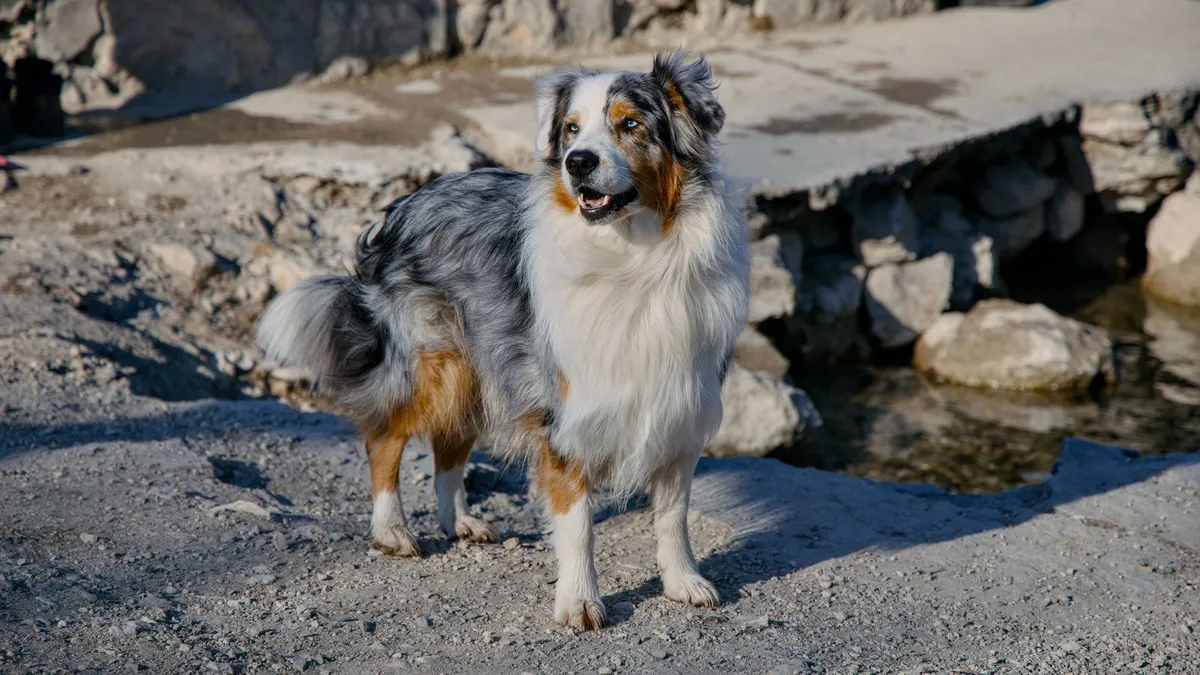
Australian Shepherd at a glance
- Size
- Medium
- Adult weight
- 40 to 65 lb
- Height
- 18 to 23 in
- Coat
- Medium, double
Typical figures for the breed. Any one dog can be bigger or smaller than these.
The Australian Shepherd is a smart, athletic herding dog with a keen gaze and a striking coat. It’s loyal, good-natured and full of energy, and it’s happiest with a job to do.
The card above shows the breed’s typical size and coat. Below are its look and colors, personality, grooming, exercise, puppies and training, family life and its surprising history.
Size and look
The Aussie is a medium-sized dog, lean and tough, built for long days of work. A male usually weighs 50 to 65 pounds and a female 40 to 55 pounds.
Males stand a little taller than females, and the breed runs from about 18 to 23 inches at the shoulder. It moves with agility and ease, as you’d expect from a ranch dog.
Coat colors
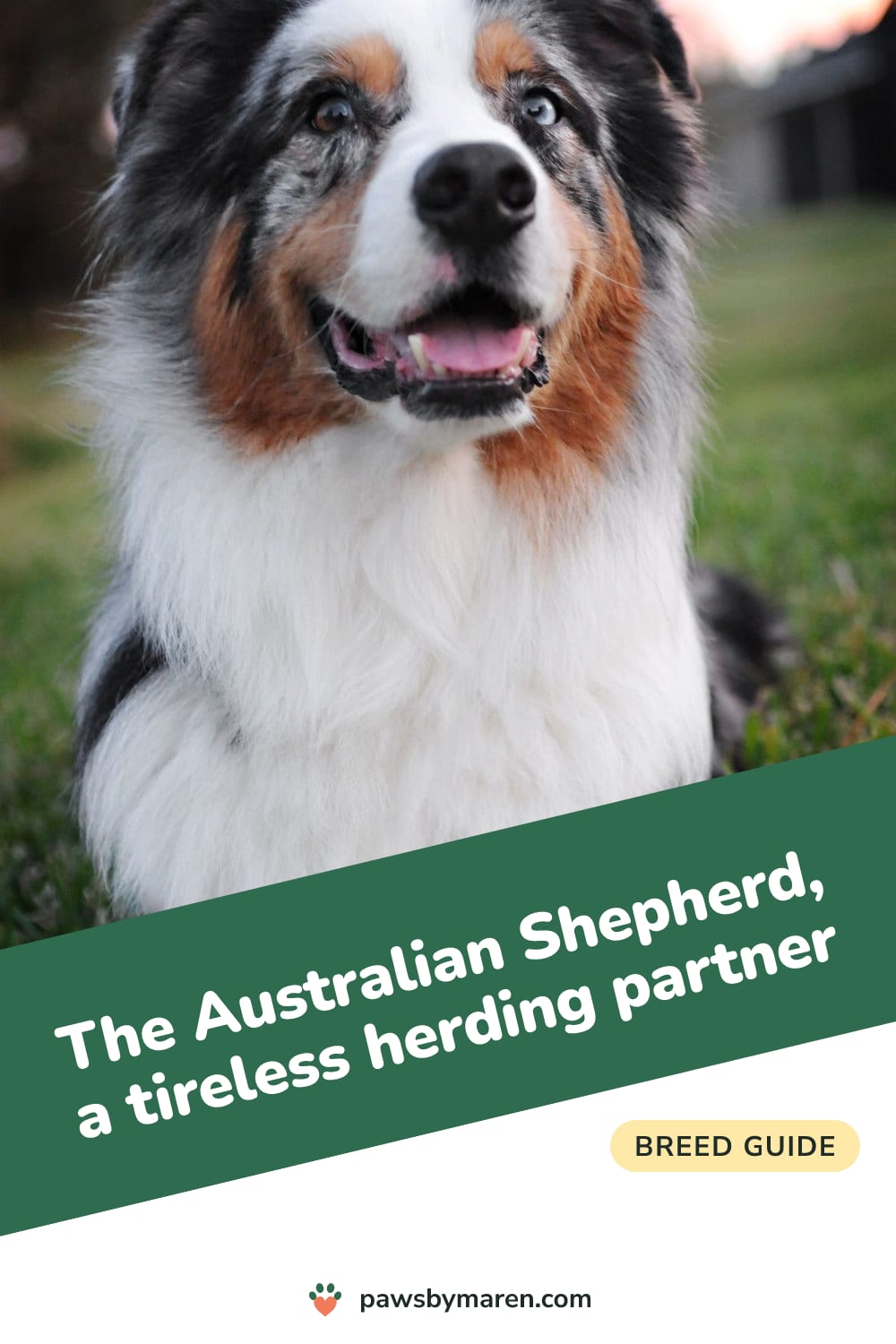
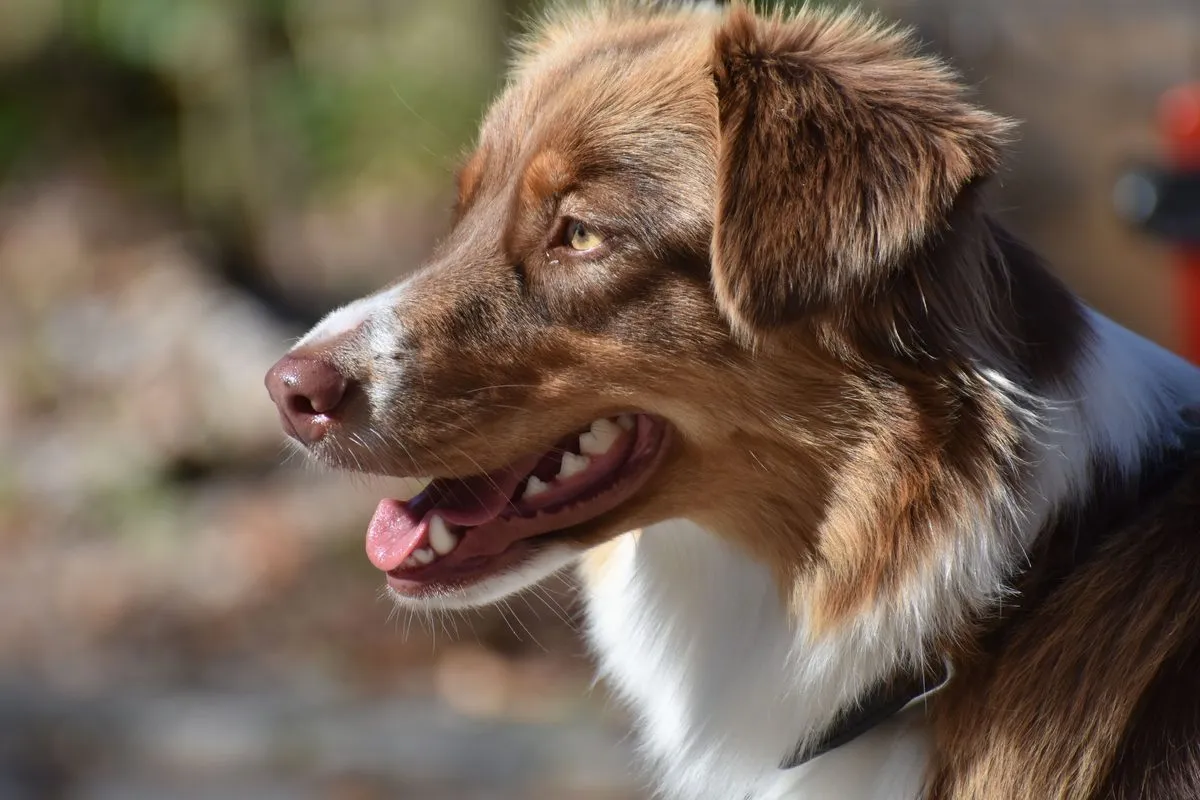
The breed comes in four colors: blue merle, black, red merle and red. Each can have white markings, copper points or both, with no color preferred over another.
Merle is a mottled pattern of darker patches on a lighter shade of blue or red. It gives many Aussies their marbled, one-of-a-kind look.
Eyes
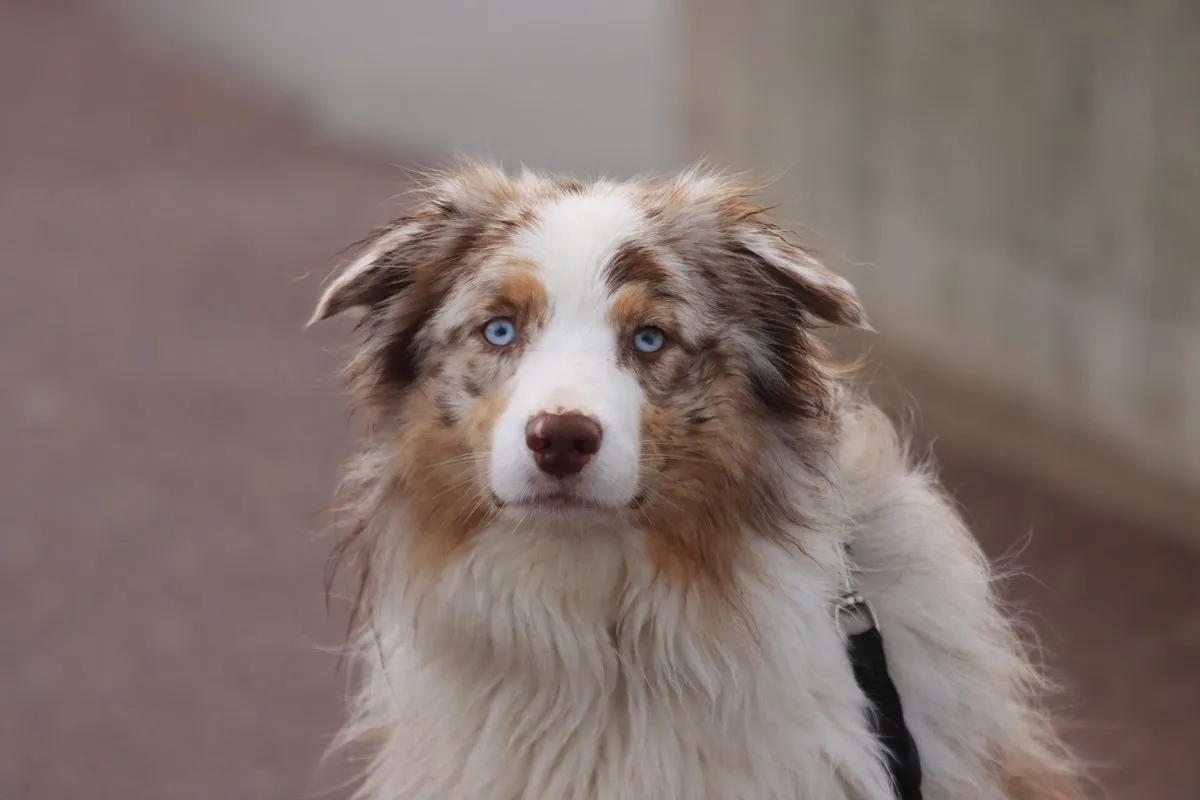
Aussie eyes can be brown, blue or amber, or a mix of these, with flecks and marbling. Eyes that don’t match, or one eye with flecks of another color, are part of the breed’s charm.
A smart, busy temperament
Aussies are remarkably intelligent, active and eager to work. Their breed standard calls them good-natured and seldom quarrelsome, with an even disposition.
They have a strong urge to herd, and they may try to herd birds, other dogs or even children. That drive is part of what makes them such good working partners, rugged and agile movers of stock with a work ethic that shows in everything they do.
Reserved with strangers
An Aussie may be a little reserved when meeting new people. With its own family, it’s loving, loyal and eager to be useful.
Not for everyone
The same brains and energy that make Aussies great workers can make them too much dog for a quiet home. A bored Aussie can outsmart a new owner and find its own, less welcome, jobs.
If you want a brainy, tireless partner for work, hiking or dog sports, though, the Aussie may be the perfect match.
Grooming and haircuts
The Aussie has a weather-resistant double coat of medium length, straight to wavy. The hair is short and smooth on the head and front legs, with feathering on the backs of the legs and a mane around the neck.
Weekly brushing
Brush once a week to keep the coat looking its best. In shedding season, use an undercoat rake every 2 to 3 days to lift the loose undercoat, then tidy up with a brush.
Baths and nails
Aussies often come in muddy from work or play, but they only need a bath now and then, unless they’ve rolled in something messy. Trim the nails regularly, as with every breed.
Haircut styles
An Aussie doesn’t need a haircut, and most owners keep the natural coat. A neat trim of the hair around the feet and a light tidy of the feathering keep the dog looking sharp.
Skip shaving. A double coat that’s shaved still sheds, and the top coat may grow back damaged. The dog grooming routine for double coats has a simple plan.
Exercise and a job to do
An Australian Shepherd needs a great deal of exercise every day. At minimum, plan on an hour or two of running and play in a large, fenced yard.
Aussies love long walks and hikes with their people. Once a puppy’s skeleton is fully grown, a healthy adult Aussie can make a great running partner.
Give the Aussie a job
The best plan is to give your Aussie a job. That can be herding, keeping an eye on the family, or a dog sport like obedience, herding trials, agility or dock diving.
Aussies also work as therapy dogs, service dogs, detection dogs and search-and-rescue dogs. Each of these jobs gives that boundless energy a purpose.
Exercise for the mind
A brainy dog needs mental work as well as physical. Training games, puzzle toys and new tricks keep an Aussie’s mind busy, and these dog enrichment ideas are an easy place to start.
Australian Shepherd puppies and training
Early socialization and obedience training are musts for an Aussie. Channeling that energy through training from the start is the key to a happy dog and a happy home.
Easy to train
Aussies are loyal, smart and full of energy, which makes them very easy to train. Short sessions with rewards suit them, and they learn new cues quickly.
The puppy training schedule lays out what to teach week by week, from sit and come to walking on a loose leash.
Herding and nipping
A herding puppy may try to round up anything that moves, from the cat to running children. Redirect that urge to a toy or a game, and teach calm manners early.
Time alone
Aussies bond strongly with their families. Left alone without company too often, they can become bored and destructive, so plan your days to include your dog, or arrange a sitter or a walker on long days.
Family life
An Australian Shepherd is a loving, loyal family member that wants to be part of everything, from the morning walk to the evening game of fetch. It’s good with young children and affectionate with its people.
Children
Aussies are known to be good with children, and many are gentle playmates. Teach kids to play calmly, and redirect any herding of running children to a game.
Other pets
An Aussie can live happily with other dogs, especially when it’s socialized early. Its urge to herd may turn toward cats or small pets, so introduce them carefully.
Home and yard
Aussies can be territorial and protective of their home. A securely fenced yard and plenty of daily activity help them settle well.
A well-exercised Aussie is a watchful, gentle presence in an active home. Daily walks, play and training keep it relaxed indoors, and a tired Aussie is a calm, contented one at the end of the day.
Where the Aussie comes from
Despite the name, the Australian Shepherd is an American breed. Its story begins in Europe, near the Pyrenees Mountains, where Basque shepherds worked with a herding dog called the Pyrenean Shepherd.
In the early 1800s, many Basques sailed to Australia with their dogs to herd sheep. There, they crossed their dogs with British imports such as Collies and Border Collies, building flocks across the wide-open interior.
On to California
Later, the Basque shepherds moved on to California. Ranchers admired their dogs and assumed they came from Australia, which is how the breed got its misleading name. The dogs had traveled halfway around the world before they ever reached an American ranch.
A cowboy’s dog
Refined in America, the Aussie became part of cowboy culture and a fixture on the rodeo circuit. It entered the AKC Herding Group in 1,993, and many still herd in the American West today. Others work as rodeo performers, therapy dogs and search-and-rescue dogs.
Is an Australian Shepherd right for you
An Aussie suits an active owner who loves the outdoors and enjoys training. In return, it’s a loyal, clever and tireless companion for work, sport and family life.
It’s not a dog for a quiet apartment or long days alone. Plan for daily exercise, ongoing training and a job that keeps that bright mind busy.
Before you decide
Think about time first. An Aussie needs an hour or two of activity every day, plus training and company, in every season.
Think about space too. A large, fenced yard helps, and so does an owner who loves hikes, long walks or a dog sport.
Meet adult Aussies if you can, and ask the breeder or rescue about the parents’ temperament and energy.
Comparing herding breeds
The Border Collie is another brilliant herding dog with even more drive, and the large dog breeds guide compares the Aussie’s size with other big, active dogs. These blue heeler puppy names suit any working ranch dog, Aussies included.