Big Dog Breeds and Gentle Giants to Know
Popular big dog breeds and giant breeds with their adult size, coat, energy and temperament, plus a chart to compare how big each one gets.

By Maren Whitlock · Published
Big dog breeds chart
| Breed | Size | Weight | Height | Coat |
|---|---|---|---|---|
| Standard Poodle | Large | 40 to 70 lb | Over 15 in | Long, curly |
| German Shorthaired Pointer | Large | 45 to 70 lb | 21 to 25 in | Short, smooth |
| Bull Terrier | Large | 50 to 70 lb | 21 to 22 in | Short, smooth |
| Collie | Large | 50 to 75 lb | 22 to 26 in | Short or long, rough and smooth |
| Golden Retriever | Large | 55 to 75 lb | 21.5 to 24 in | Medium, double |
| Belgian Malinois | Large | 40 to 80 lb | 22 to 26 in | Short, smooth |
| Boxer | Large | 50 to 80 lb | 21.5 to 25 in | Short, smooth |
| Labrador Retriever | Large | 55 to 80 lb | 21.5 to 24.5 in | Short, double |
| Rhodesian Ridgeback | Large | 70 to 85 lb | 24 to 27 in | Short, smooth |
| Alaskan Malamute | Large | 75 to 85 lb | 23 to 25 in | Medium, double |
| German Shepherd | Large | 50 to 90 lb | 22 to 26 in | Medium, double |
| Weimaraner | Large | 55 to 90 lb | 23 to 27 in | Short, smooth |
| Giant Schnauzer | Large | 55 to 95 lb | 23.5 to 27.5 in | Medium, double and wiry |
| Doberman Pinscher | Large | 60 to 100 lb | 24 to 28 in | Short, smooth |
| Bloodhound | Large | 80 to 110 lb | 23 to 27 in | Short, smooth |
| Cane Corso | Large | 88 to 110 lb | 23.5 to 27.5 in | Short, smooth |
| Bernese Mountain Dog | Large | 70 to 115 lb | 23 to 27.5 in | Medium, double |
| Akita | Large | 70 to 130 lb | 24 to 28 in | Medium, double |
| Rottweiler | Large | 80 to 135 lb | 22 to 27 in | Short, smooth |
| Newfoundland | Giant | 100 to 150 lb | 26 to 28 in | Medium, double |
| Great Dane | Giant | 110 to 175 lb | 28 to 32 in | Short, smooth |
| Saint Bernard | Giant | 120 to 180 lb | 26 to 30 in | Short, double, rough and smooth |
No breed in the chart has that size and coat together. Try another size or coat.
Adult sizes as the breed standards give them, smallest first. Height is measured at the shoulder. Size goes by the top of the weight range: small up to 30 lb, medium up to 65 lb, large up to 140 lb, giant over 140 lb.
Big dog breeds range from easygoing family retrievers to tireless working dogs and calm, heavy giants. Below are the most popular ones, grouped by type, with what each is like to live with.
The chart above shows how big each breed gets as an adult. Pick Large or Giant, or a coat length, to narrow it down, and download or print the list you end up with.
How big is a big dog breed
The chart sorts breeds by the top of their adult weight range. A breed counts as large when that top weight is above the medium class, and as giant when it’s above the large one; the line under the chart gives the exact cutoffs.
Weight isn’t the only measure that matters. A Great Dane is tall and lean, while a Rottweiler of a similar weight is shorter and much more solid, and each one fills a room in its own way.
Every range joins males and females. A male usually sits near the top of the range and a female near the bottom, so two dogs of the same breed can differ a lot in size.
For breeds of every size side by side, the dog breeds list compares small, medium, large and giant breeds in one chart. For the other end of the scale, see the guide to small dog breeds.
Gentle giants
These are the biggest breeds in the chart. Many of them are calm at home and patient with people, but their size shapes every part of daily life, from the car to the couch.
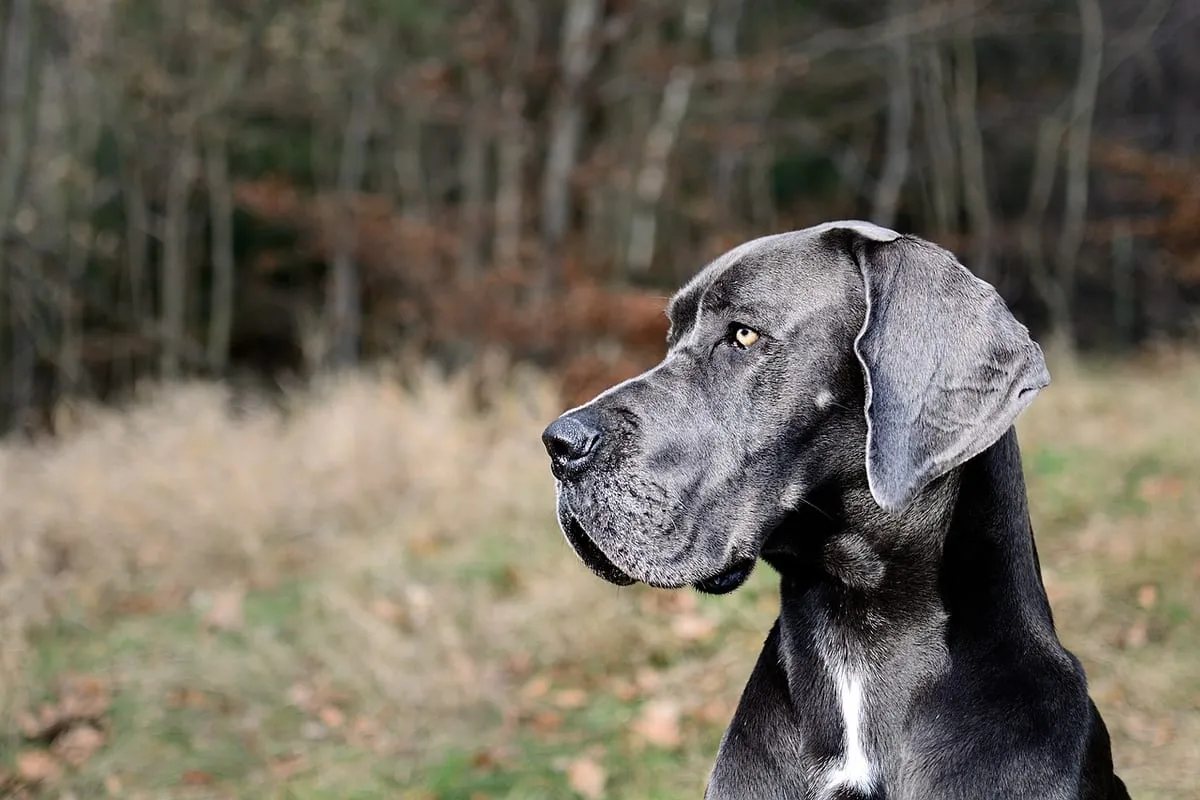
Great Dane
The Great Dane is one of the tallest breeds, with a short, smooth coat that needs very little grooming. Danes are friendly and good-natured, and many of them are gentler indoors than their size suggests.
They still need daily walks and room to stretch out. Early training matters, because a Dane who leans or jumps can knock a person over without meaning to.
Newfoundland
The Newfoundland is a big, sweet-natured dog with a thick double coat, first bred to work in the water. Newfies are known for being very good with children and other dogs.
They’re calm and quiet, and they rarely bark. That heavy coat needs regular brushing, especially in shedding season.
Saint Bernard
The Saint Bernard is a gentle, patient giant that gets along well with children. Saints are fairly calm and don’t need a lot of running, but they do need space and daily walks.
Their coat comes in two kinds, rough and smooth, and both shed. A Saint Bernard puppy grows fast, so start manners and leash training early.
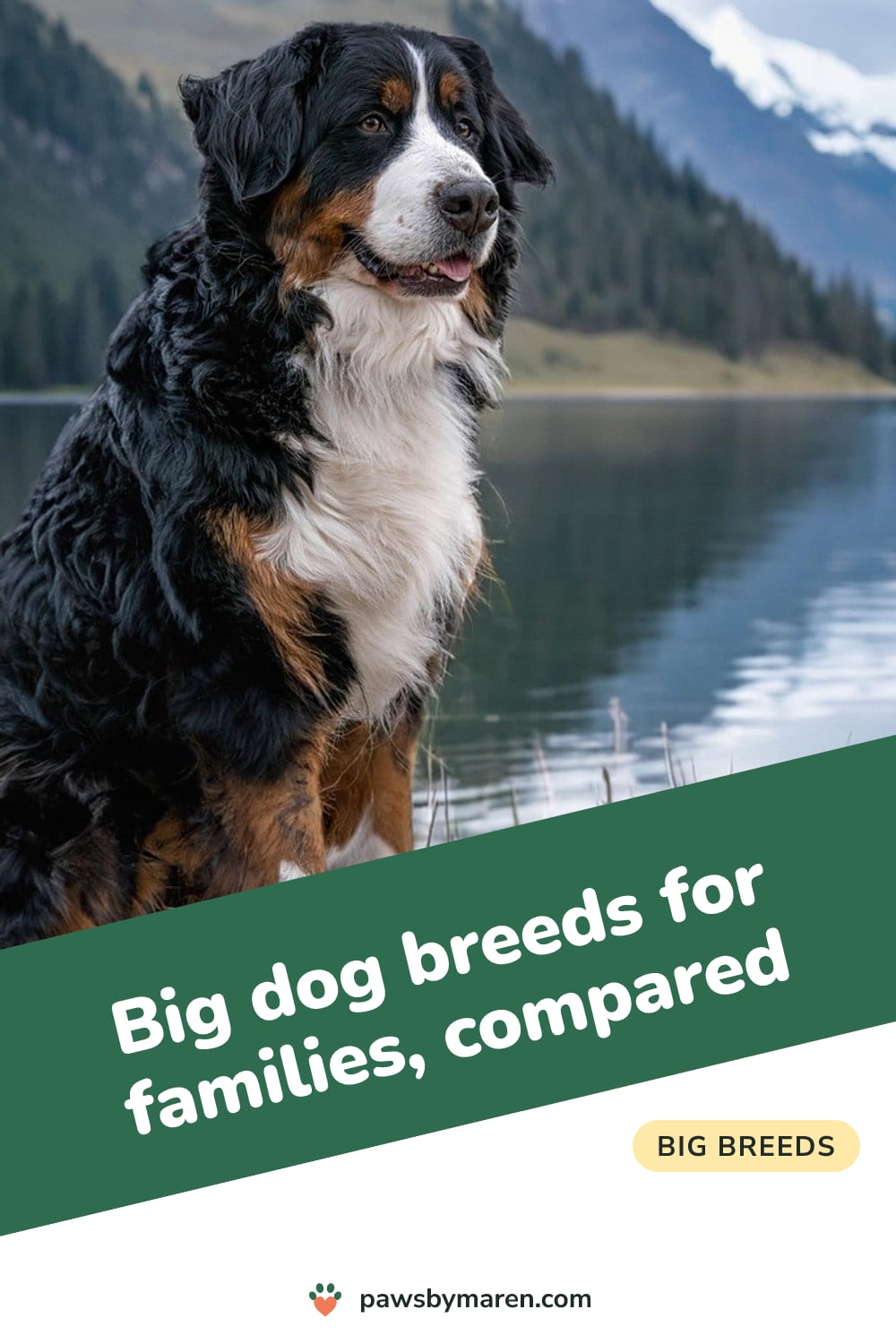
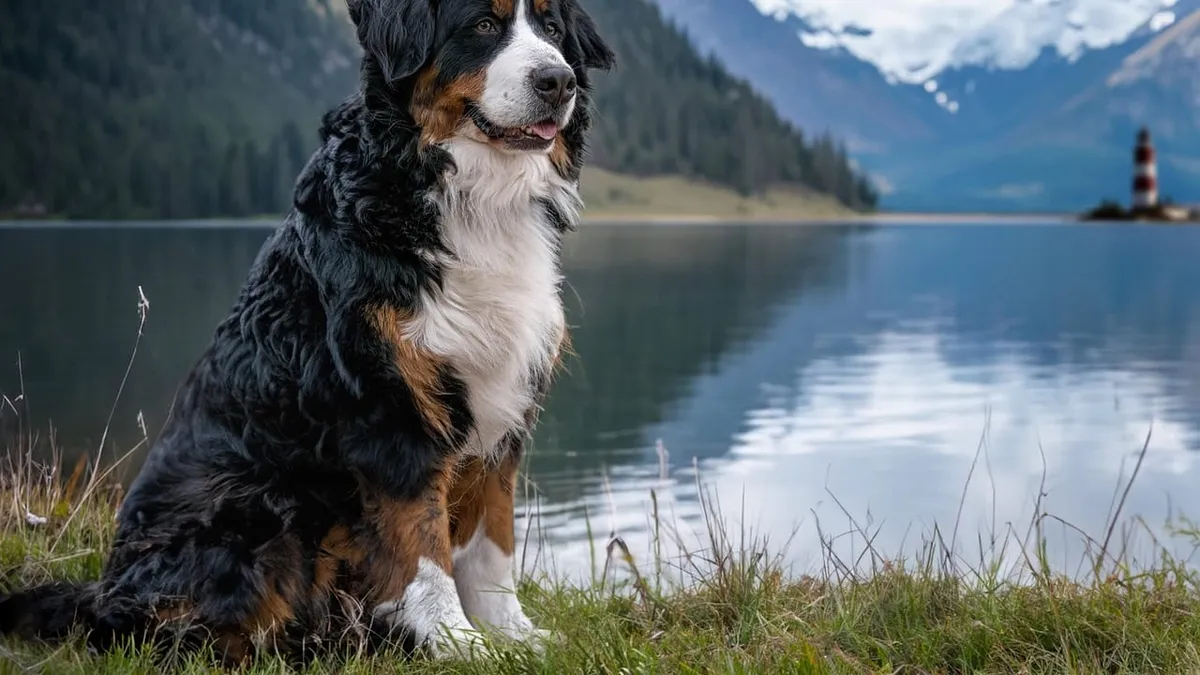
Bernese Mountain Dog
The Bernese is a striking tricolor dog, bred to work on farms, with a medium-length double coat that sheds heavily. Berners are affectionate, family-loving and very good with children and other dogs.
They enjoy cool weather, walks and time outdoors with their people. Plan on frequent brushing and some extra vacuuming, and the Bernese Mountain Dog guide covers the breed in full.
Big family dogs
These breeds are popular for a reason. They’re friendly, eager to please and usually good with children, and they enjoy being part of everything the family does.
For a first dog, these best family dogs pick out the breeds of every size that are easiest to train and live with.
Labrador Retriever
The Lab is one of the most popular dogs anywhere: friendly, outgoing and very easy to train. Labs love people, other dogs and almost any game with a ball.
They have plenty of energy and need daily exercise and play. Their short, dense coat sheds a fair amount, so a weekly brush helps.
Golden Retriever
The Golden Retriever is a friendly, gentle dog that’s very good with children and other dogs. Goldens are quick learners and rarely bark much.
Their medium-length double coat sheds a lot and needs brushing a few times a week. Daily walks and games of fetch keep them happy.
Standard Poodle
The Standard Poodle is the largest of the Poodle sizes, and one of the smartest and easiest breeds to train. Its curly coat sheds very little, but it keeps growing and needs regular clipping.
Standard Poodles are playful, athletic and good with children. They enjoy long walks, swimming and learning new tricks.
Collie
The Collie is a gentle, loyal herding dog, very good with children. It comes in two coats, rough and long or smooth and short.
Collies are quick to bark, which makes them good at letting you know who’s at the door. They enjoy daily walks and time with the family.
Boxer
The Boxer is a playful, energetic dog that keeps a puppy’s sense of fun for years. Boxers are very good with children and love to be with their people.
Their short coat needs little grooming and doesn’t shed much. They need plenty of exercise and steady, patient training.
Big working and guarding breeds
These breeds were bred for jobs like herding, guarding and pulling. They’re smart and loyal, and they do best with an owner who enjoys training and gives them plenty to do. The Cane Corso, an Italian mastiff-type guardian, belongs to this group too.
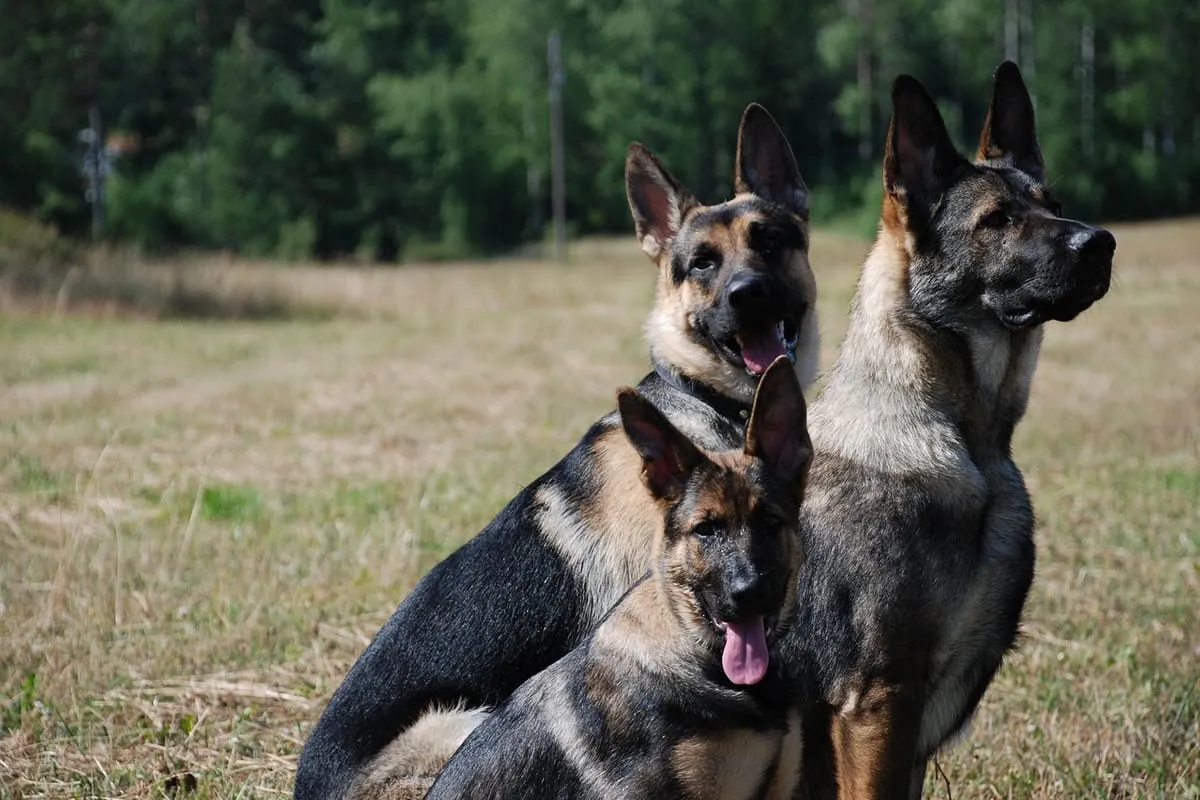
German Shepherd
The German Shepherd is confident, smart and very trainable, which is why it’s a favorite for police and service work. Shepherds are good with children in their own family and protective of their home.
They have lots of energy and need exercise and training every day. The double coat sheds heavily, so brushing is part of the routine.
The German Shepherd guide covers the coat, long haired dogs, puppy training and the breed’s history in more detail.
Rottweiler
The Rottweiler is a strong, loyal guardian, calm and confident with its own family. Rotties are very trainable and need early training and lots of positive meetings with people and other dogs.
The short coat needs very little grooming. They rarely bark without a reason, and they do best with an experienced owner.
The Rottweiler guide covers the breed’s guardian nature, puppy training and its history as the Butcher’s Dog of Rottweil.
Doberman Pinscher
The Doberman is sleek, athletic and very smart, one of the easiest big breeds to train. Dobermans are loyal and alert, and good with children they grow up with.
They have a lot of energy and need daily exercise and a job to do. Their short coat is about as easy to care for as a coat gets.
Akita
The Akita is a dignified, loyal dog from Japan, devoted to its family and wary of strangers. Akitas often don’t get along with other dogs, so they suit a home where they’re the only dog.
Their thick double coat sheds a lot, especially once or twice a year. They need an owner with experience and a calm, steady hand.
Belgian Malinois
The Malinois is an intense, hardworking herding dog, often seen in police and military work. Malinois learn fast and need a great deal of training, exercise and mental work every day.
They suit very active owners with experience. Without enough to do, a Malinois finds its own jobs, and you may not like them.
Alaskan Malamute
The Malamute is a powerful sled dog, built to pull heavy loads over long distances. Malamutes are friendly with people and love to be part of the family’s activities.
They need a lot of exercise and enjoy cold weather. The thick double coat sheds heavily, so plan on regular brushing.
Big hounds and sporting dogs
Hounds and sporting dogs were bred to hunt by sight, scent or with a hunter in the field. They’re friendly and active, and many of them have a strong urge to chase or follow their nose.
Weimaraner
The Weimaraner is a sleek, silver-gray hunting dog with endless energy. Weims are affectionate, playful and very trainable, and good with children.
They need lots of exercise and like to stay close to their people, so they don’t enjoy long stretches alone.
German Shorthaired Pointer
The German Shorthaired Pointer is an eager, all-round hunting dog with a short, easy coat. GSPs are friendly, very trainable and good with children.
They have a great deal of energy and suit active families who run, hike or play outdoors every day.
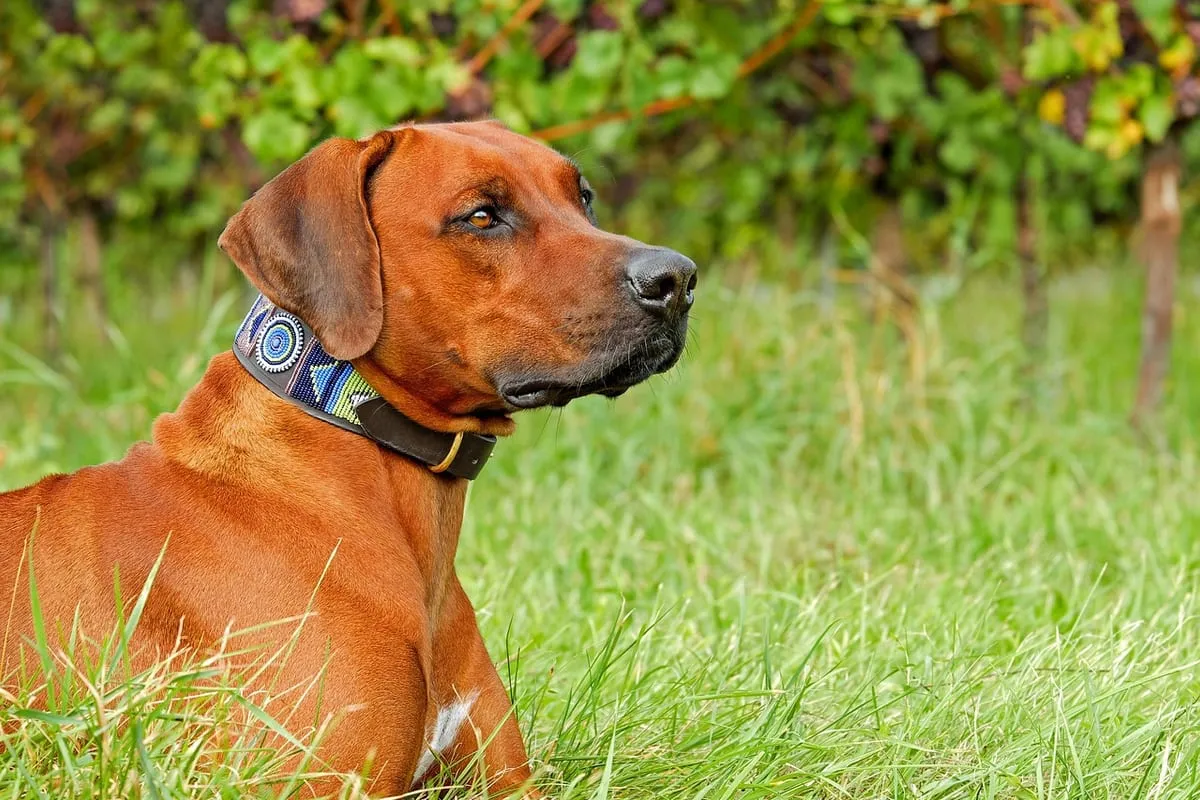
Rhodesian Ridgeback
The Ridgeback is named for the ridge of hair that grows the wrong way along its back. It’s a calm, confident hound, good with children and quiet at home.
Ridgebacks are independent thinkers, so training takes patience and consistency. Their short coat needs little grooming.
Bloodhound
The Bloodhound is famous for its nose and its skill at following a scent trail. Bloodhounds are gentle and patient, but once they catch a scent, they follow it.
They’re quick to bark and howl, and they do best on a leash or in a fenced yard. Their loose skin and short coat need a weekly wipe and brush.
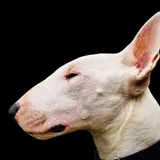
Bull Terrier
The Bull Terrier is the one terrier on this list, with an egg-shaped head and a comical, mischievous streak. Bull Terriers are playful and full of energy.
They often don’t get along with other dogs, and they need firm, patient training. Their short coat is easy to keep clean, and the Bull Terrier guide covers both coat varieties and the Mini.
Living with a big dog
A big dog needs more of everything: space, food, gear and time. Before you choose, think about how a large or giant dog fits your home and your days.
Space and travel
Big dogs need room to turn around and stretch out, both at home and in the car. Check that a crate for the adult size fits in your car and your home, and think about how you’d lift your dog if you ever had to.
Stairs, elevators and slippery floors matter more with a heavy dog. Rugs or runners on smooth floors help big dogs keep their footing.
Gear for a big dog
Buy for the adult size where you can. A crate with a divider grows with your puppy, and the guide to crate training a puppy covers how to set it up.
A well-fitting harness gives you more control on walks than a collar alone, especially with a strong puller. Plan on a sturdy leash, a big bed and bowls that suit a tall dog.
Training and manners
Good manners matter more with a big dog, because a jump or a pull that’s cute in a puppy is a problem in a grown dog. Start leash walking, polite greetings and a solid sit and stay early.
The dog commands guide has simple steps for the cues every big dog should know. Short, upbeat sessions with treats work for every breed.
Raising a big breed puppy
Big breed puppies grow fast, and they’re often bigger than they act. A clumsy, cheerful puppy can easily knock over a small child or pull you off your feet, so training starts on day one.
Keep play calm around kids and teach your puppy to sit for attention instead of jumping. Plenty of gentle meetings with people, dogs and new places help them grow into calm, confident adults.
Practice the everyday things while your puppy is still easy to lift and steer: walking past other dogs, waiting at the door, riding in the car and standing still to be brushed. A habit learned at a few months old is much easier than one taught to a grown dog.
To guess how big your puppy will get, ask the breeder about the parents’ size. The puppy growth chart estimates adult size for purebreds and mixes, including the big doodle mixes.
Before your puppy comes home, the new puppy checklist covers what to have ready, from the crate to the potty spot. A big dog also needs a big, supportive bed, and the dog bed guide shows how to size one.