Rottweiler Size, Coat and Guardian Nature
The Rottweiler at a glance: size and strength, the black and rust coat, a calm and loyal guardian nature, exercise, puppy training, family life and history.

By Maren Whitlock · Published
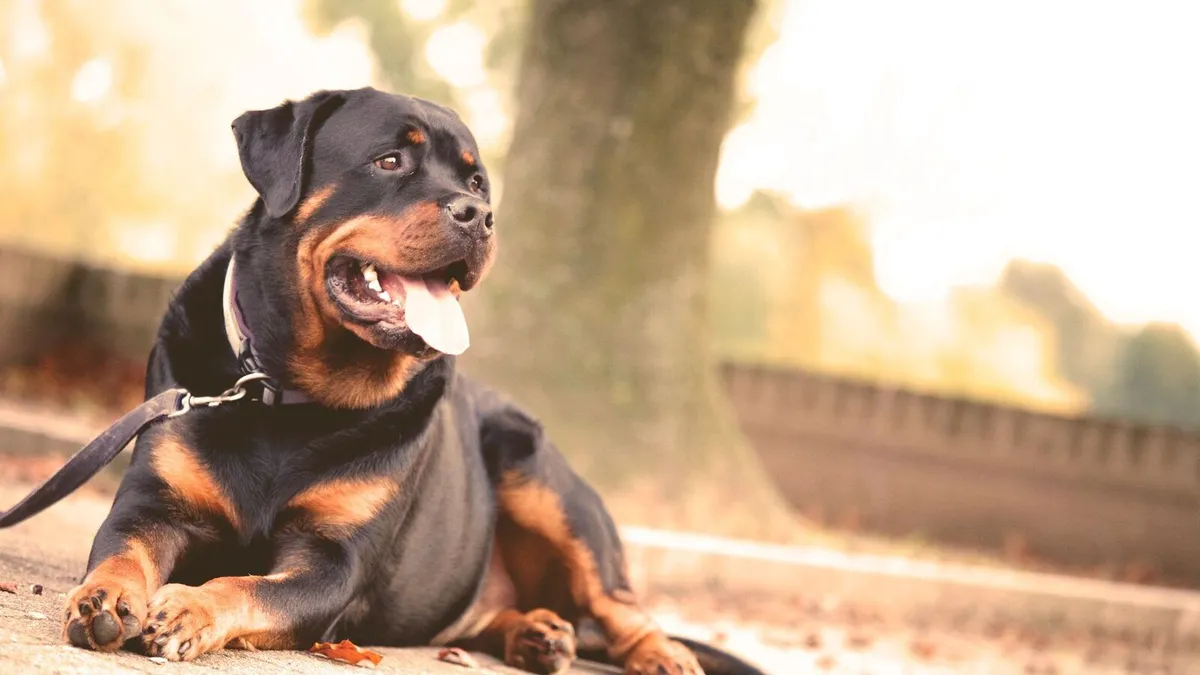
Rottweiler at a glance
- Size
- Large
- Adult weight
- 80 to 135 lb
- Height
- 22 to 27 in
- Coat
- Short, smooth
Typical figures for the breed. Any one dog can be bigger or smaller than these.
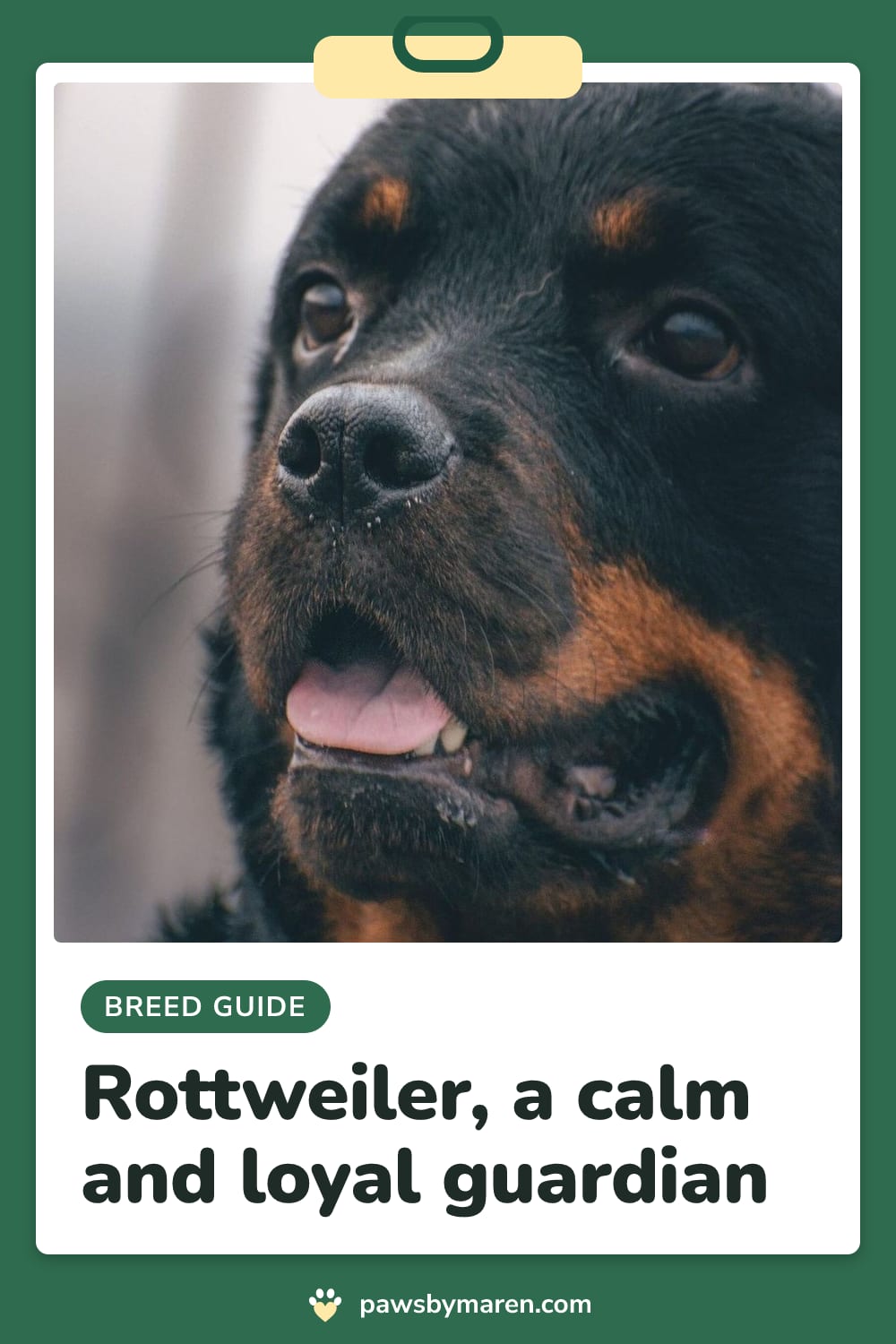
The Rottweiler is a powerful working dog with a calm, confident nature and a deep love for its family. It’s a natural guardian that watches the world with quiet self-assurance, and a gentle, sometimes silly companion at home.
The card above shows the breed’s typical size and coat. Below are its character, the coat, exercise, puppy training, family life and the breed’s long history as a working dog.
Size and build
The Rottweiler is a robust breed of great strength. Males stand a little taller than females, and females are a bit smaller and lighter overall.
The body is muscular and solid, with thickly muscled hindquarters that power an easy, effortless trot. The short black coat with rust markings adds to the look of strength.
Big Rottweilers
A grown Rottweiler is a big, heavy dog, and the card above shows the typical range. The puppy growth chart puts the Rottweiler’s adult weight and height next to dozens of other breeds, which helps when you plan for a crate, a bed and a car.
German Rottweilers
The breed comes from Germany, from the old cattle town of Rottweil. People often say German Rottweiler for a dog from German breeding lines, but it’s the same breed with the same needs.
Strength and handling
A strong, heavy dog needs good leash manners from the start. Teach your puppy to walk calmly beside you while it’s still small, so walks stay easy once it’s fully grown.
A calm, loyal guardian
A well-bred and properly raised Rottweiler is calm and confident, courageous but not unduly aggressive. Loyal and loving with its family, it keeps a self-assured aloofness with people it doesn’t know.
That aloof look is the Rottweiler’s guardian side. It watches strangers calmly and decides for itself who’s a friend, and with good training and socialization that instinct stays steady and positive.
The silly side
The serious face hides a playful heart. Rottweilers can be downright silly with the people they love, and many don’t seem to know they aren’t a toy breed, happily plopping onto a lap for a cuddle.
A quiet dog
Rottweilers usually bark infrequently. They tend to watch first and sound off only when something truly catches their attention.
Territorial instincts
The breed has natural territorial instincts. Early training and plenty of positive meetings with people, places and other animals help a Rottweiler use those instincts well.
Coat, shedding and grooming
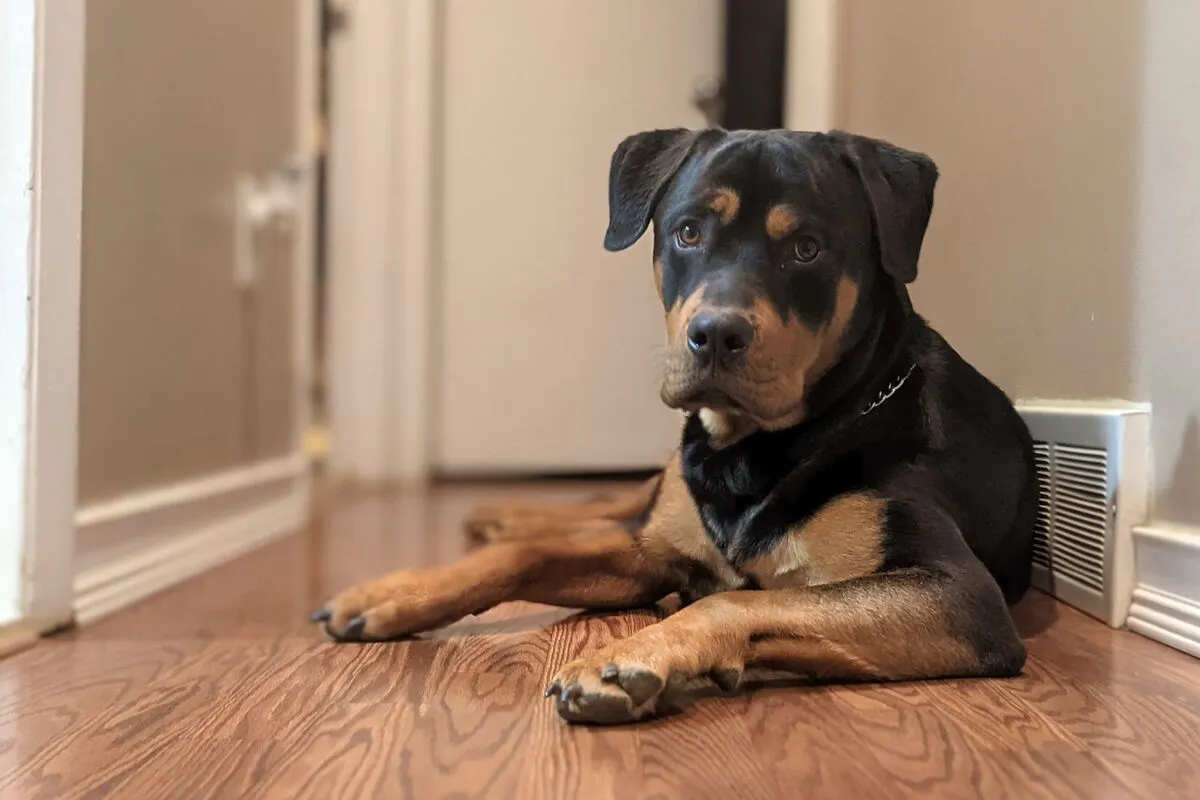
The Rottweiler has a straight, coarse outer coat that lies flat, with an undercoat on the neck and thighs. It’s easy to care for and looks glossy with very little work.
Brush your Rottweiler weekly and bathe it regularly. It sheds only moderately for most of the year, with heavier shedding twice a year, usually in spring and fall.
Teeth and nails
Brush the teeth and trim the nails every week. A grinding tool is especially handy for keeping a big dog’s nails short and smooth.
Colors and markings
The breed standard calls for a Rottweiler that’s always black with rust to mahogany markings. The markings sit in set places: a spot over each eye, on the cheeks and the sides of the muzzle, on the throat and chest, on the legs and under the tail.
The undercoat can be gray, tan or black. The rust markings should cover only a small part of the body, so the dog reads as black at a glance.
Exercise and a job to do
Rottweilers love swimming, walking and trotting, especially with their people. This muscular, athletic breed needs a chance to exercise every day.
Exercise also keeps a Rottweiler fit, since extra weight isn’t good for any dog. A few solid workouts a day, with some training mixed in, suit most adults well.
Jobs and sports
Rottweilers learn carting easily and make excellent workers in herding, tracking and obedience. There’s almost no limit to the dog sports and activities a Rottweiler can learn.
The breed shines in many canine sports and works alongside a human partner in many roles, so a class or club can give your dog a real job to enjoy.
Busy work at home
On quiet days, short training sessions and games give a Rottweiler’s mind a workout. Food puzzles and sniffing games help too, and they’re a calm way to end the day.
What a Rottweiler enjoys most is doing things with its people. A walk somewhere new or a short game together counts for as much as the exercise itself.
Rottweiler puppies and training
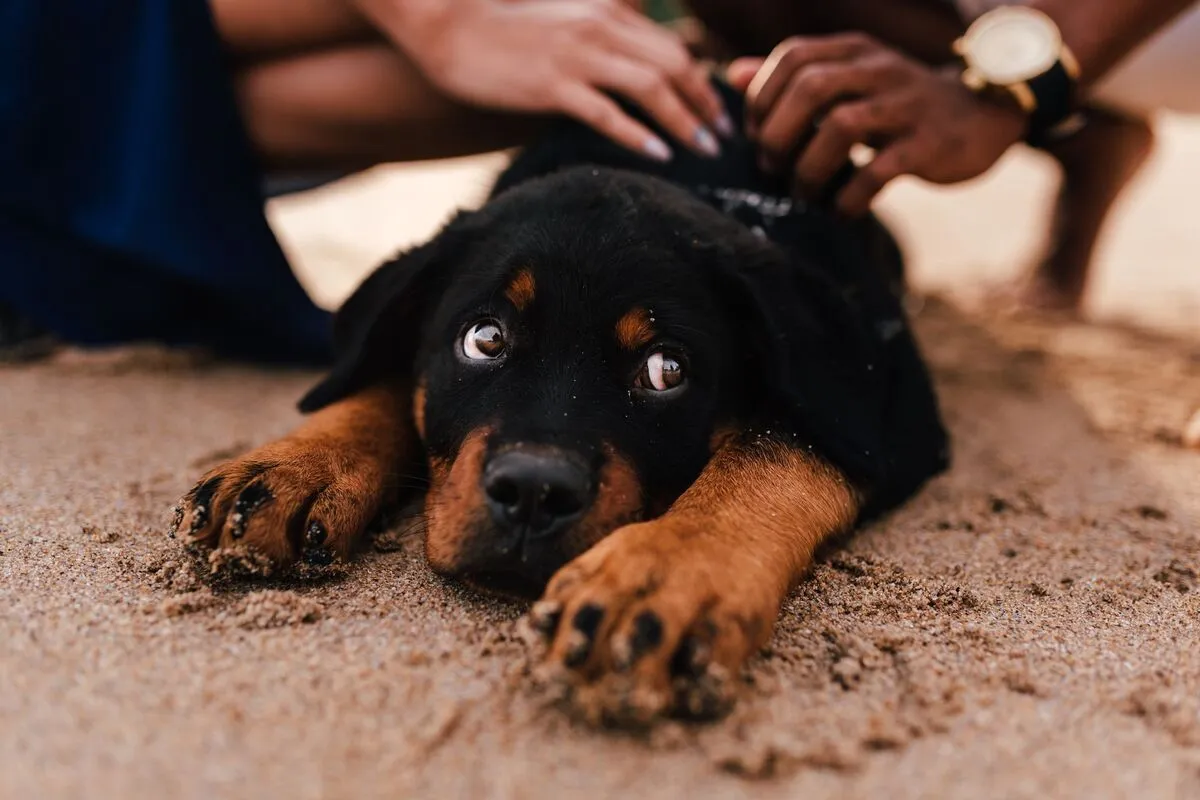
A Rottweiler must be trained from early in life. Puppy socialization, basic training classes, clear leadership and living in the home with its family are the keys to a well-mannered adult.
The breed is intelligent, highly trainable and eager to please, though some Rottweilers can be stubborn. Keep training consistent, fair and firm, without ever being rough.
First lessons
Sit, down, come and leave it give a Rottweiler puppy a strong start, and the dog commands guide has simple steps for each. Short, happy sessions work best for a young puppy.
No rough play
Skip wrestling and roughhousing with a Rottweiler, since it can encourage aggression. Play tug and fetch with toys instead, and follow the steps for puppy biting when those puppy teeth come out.
The crate
A crate gives a growing puppy a safe place to rest and helps with potty training. The steps for crate training a puppy make the crate a happy spot from day one.
Family life with a Rottweiler
Within its family, a Rottweiler is a gentle playmate and protector. Rottweilers are people dogs that don’t do well isolated from their humans, so they belong in the house with the family.
Children
Because they’re big and strong, Rottweilers do best with children under supervision. Teach kids to be calm and gentle around the dog, and never leave a young child alone with any large dog.
Other dogs and pets
Many Rottweilers get along with other dogs, with supervision at first. Introduce new pets slowly, and reward calm, polite behavior when they meet.
An owner who’s ready
A Rottweiler does best with an owner who’s ready to put real time into training and daily life together. Leadership, patience and consistency matter more than experience alone.
Rottweilers don’t do well cut off from people and everyday life. Include your dog in outings, visitors and family routines from puppyhood on, so the world feels familiar and calm.
Where the Rottweiler comes from
The Rottweiler’s story starts with the Roman legions. As they marched across Europe, they brought their herds with them as food, and they needed tough, durable dogs to move and guard those herds.
The Romans developed these drover dogs from mastiff types. Where the legions met the Germanic tribes on the empire’s northern borders, their dogs became the foundation of many German breeds.
The Butcher’s Dog of Rottweil
After the empire fell, the drover dogs found work in the cattle town of Rottweil. They moved herds to market and protected people and cattle from bandits along the way, earning the name Rottweiler Metzgerhund, the Butcher’s Dog of Rottweil.
New jobs
When railroads took over moving cattle in the 1800s, Rottweilers found new work as police dogs, protectors and all-around working dogs. They were among the first guide dogs for the blind and have served as search-and-rescue dogs at disaster sites.
The first German breed standard was written in 1,901, and the breed has changed little since. The Rottweiler was admitted to the AKC Stud Book in 1,931.
Is a Rottweiler right for you
A Rottweiler is a wonderful companion for a committed owner who enjoys training and wants a loyal, confident dog at their side. It rewards that effort with devotion, protection and plenty of affection.
It’s a harder fit for someone who’s away a lot or wants a dog that can be left alone in the yard. Without early training, socialization and daily company, a strong guardian breed can become hard to manage.
Before you decide
Think about who will train the dog, how you’ll handle a strong dog on walks and how much time you can spend together each day. A breed club or a rescue that knows Rottweilers can tell you more about life with one.
Comparing big breeds
If you’re still choosing, these large dog breeds compare the Rottweiler with the German Shepherd, the Doberman and other big working and family dogs. The Cane Corso is another loyal, protective guardian worth a look, and the Bull Terrier is a muscular, playful one.
Naming a Rottweiler
The dog names by breed page lists the names real Rottweilers carry most, a good start for a strong, loyal dog.