Pug Size, Personality, Care and Puppy Tips
The Pug at a glance: a small, sturdy toy dog with a wrinkled face, a loving and playful personality, easy care, puppy training, family life and Chinese roots.

By Maren Whitlock · Published
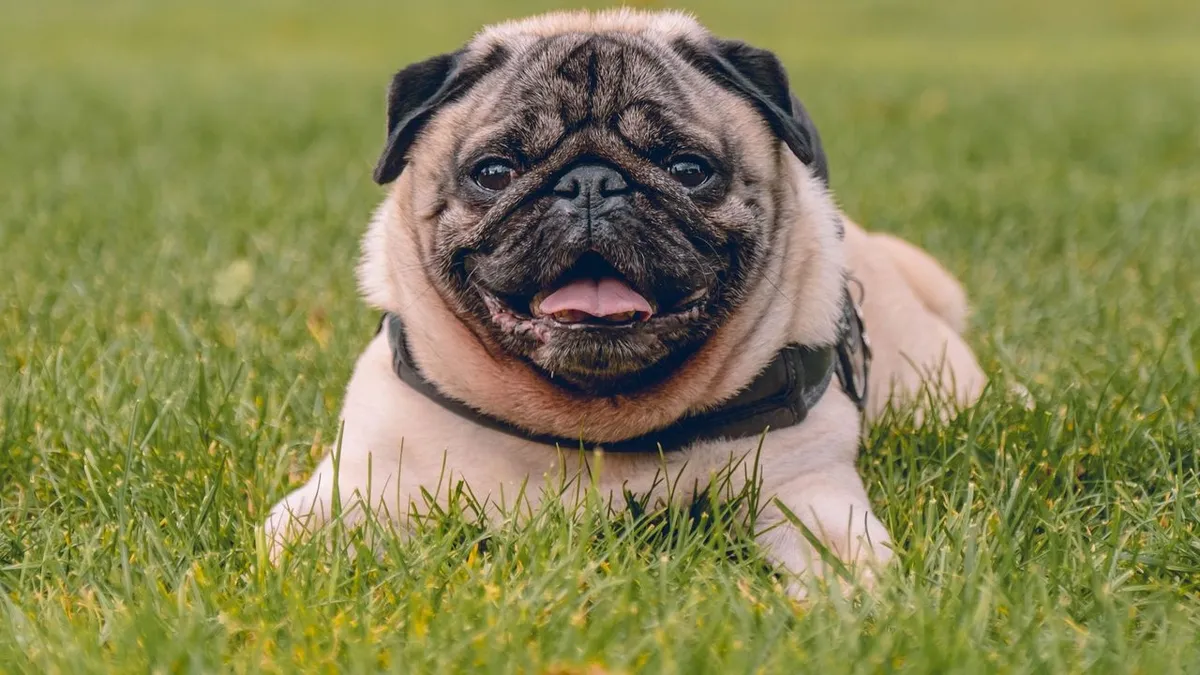
Pug at a glance
- Size
- Small
- Adult weight
- 14 to 18 lb
- Height
- 10 to 13 in
- Coat
- Short, smooth
Typical figures for the breed. Any one dog can be bigger or smaller than these.
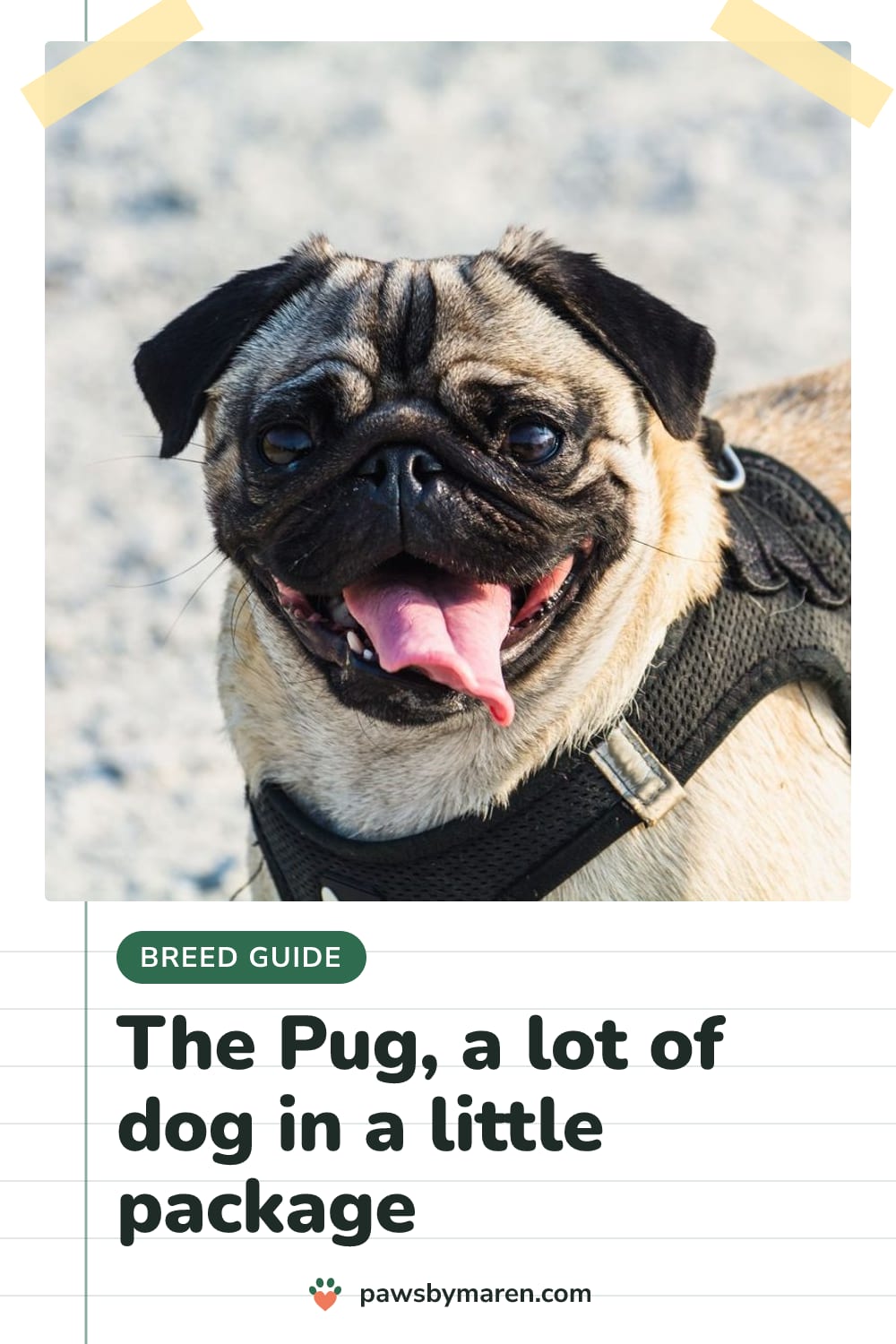
The Pug is a small, sturdy dog with a big heart and an even bigger personality. It’s loving, playful and charming, and it lives to be with its people.
The card above shows the breed’s typical size and coat. Below are its look, personality, coat and care, exercise, puppy training, family life and the breed’s long history.
Size and build
The Pug’s motto is the Latin phrase multum in parvo, a lot in a little. It fits the breed well: a Pug is small, but it’s solid and muscular, with a square, thickset body.
A grown Pug typically weighs 14 to 18 pounds. That makes it light enough to carry and sturdy enough for a good game in the yard.
The face
The large, round head is the Pug’s trademark. Its big, dark, sparkling eyes and deeply wrinkled brow give it a range of almost human expressions, from surprise to happiness to curiosity.
The muzzle is short, blunt and square, and the small, soft ears feel like black velvet. Ears come in two shapes, the folded rose ear and the button ear that falls forward.
One size only
The breed has one size, so a mini Pug isn’t a separate type. A dog sold under that name is a small Pug or a mix with a smaller breed, and it’s worth asking about both parents.
The puppy growth chart puts the Pug’s adult weight and height next to dozens of other breeds, from the tiniest toys to the giants.
A loving, playful personality
Pugs are even-tempered, outgoing and playful. They have great charm, and they love to be the center of attention at home.
Above all, a Pug wants to be with its family. It follows its people from room to room, and many Pugs will happily spend much of the day snuggled up on the sofa.
A quiet companion
Pugs rarely bark, which makes them good neighbors in an apartment. They will still let you know when someone is at the door, but they aren’t known as noisy dogs.
Most Pugs are friendly with visitors too. A new person is usually a new friend, and a Pug greets them happily.
Sensitive feelings
A Pug’s feelings are easily hurt. Harsh words or rough handling upset this gentle dog, so kind, patient training works far better.
A Pug also doesn’t like being left alone for long periods. It does best in a home where someone is around for much of the day.
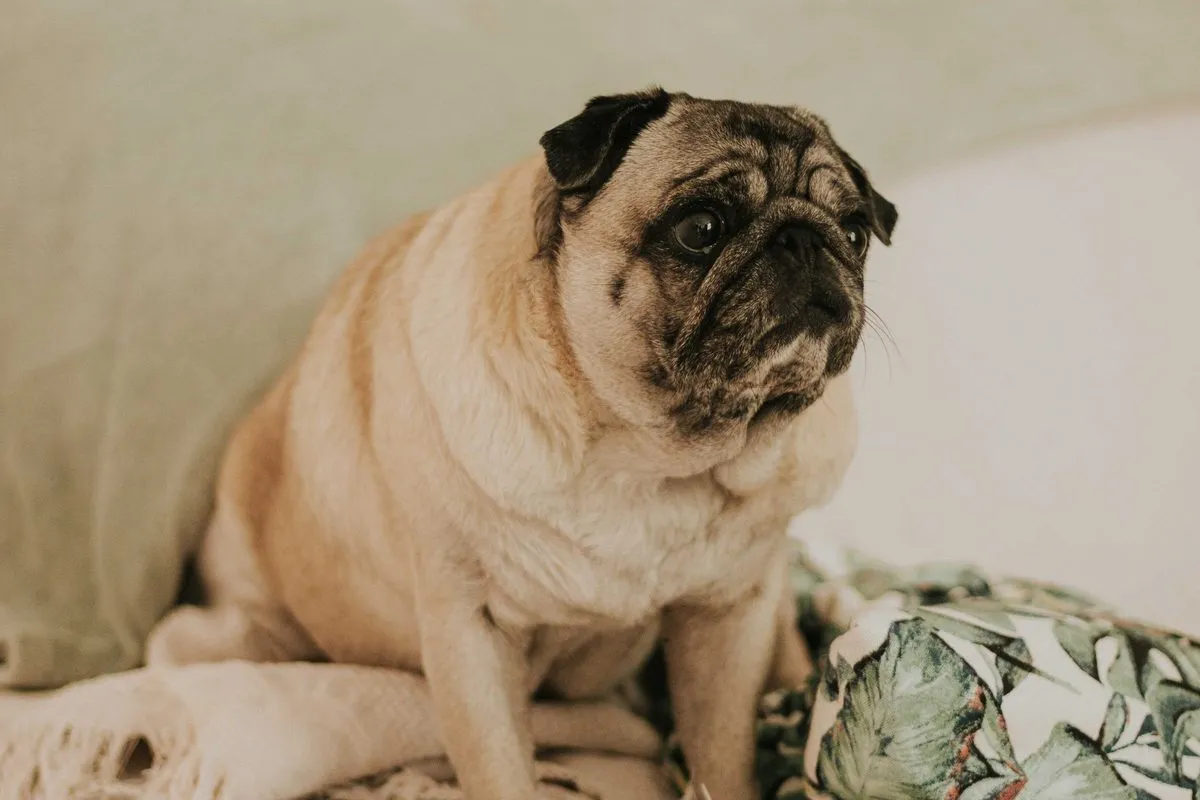
Coat, colors and grooming
The Pug’s coat is fine, smooth, soft, short and glossy. It needs little care, but it does shed, so expect some hair on your clothes and furniture.
The upside of a short coat is that grooming takes only a few minutes a week. There’s no trimming or clipping to plan, and a quick brush on the sofa doubles as cuddle time your Pug will love.
Colors
Pugs come in three colors: silver or apricot-fawn, both with a black face mask, and all black. A Pug’s color doesn’t change its size or personality.
Brushing and bathing
A weekly brush keeps the coat neat and catches loose hair before it lands on the sofa. A medium-bristle brush, a rubber grooming mitt or a hound glove all work well.
Pugs don’t need many baths. Wash yours when it gets into something messy or starts to smell a little doggy, and the dog grooming routine for short coats puts brushing, baths, nails and teeth on one printable page.
Nails
Trim the nails regularly, since overly long nails can make walking uncomfortable.
Exercise and daily care
Given the chance, a Pug will spend much of the day on the sofa. Pugs also love their food, so daily exercise matters for keeping them fit and trim.
The good news is that a Pug is playful, sturdy and lively. Moderate exercise every day, like walks or play sessions in the yard, keeps it in good shape.
Hot weather
As a short-faced breed, the Pug doesn’t handle hot weather well. Skip hard exercise when it’s warm or humid, keep walks short on hot days, and let your Pug rest somewhere cool.
Pugs do best in moderate climates, not too hot and not too cold. With a little care in summer and a warm spot in winter, they’re happy almost anywhere.
Dog sports
Many Pugs enjoy dog sports. Pugs take part in and do well at agility, obedience and rally, which are fun ways to keep a Pug’s body and mind busy.
Pug puppies and training
A Pug has been bred to be a companion, and it lives to please its people. That makes it generally easy to train with treats, praise and plenty of patience.
Because a Pug’s feelings are easily hurt, harsh training methods should never be used. Short, happy sessions and lots of rewards bring out the best in a Pug puppy.
First lessons
Start with sit, down and come in short sessions a few times a day. The dog commands guide has simple steps for each, and a Pug that loves food learns quickly with small treats.
Socialization and classes
Early socialization and puppy training classes help a Pug puppy grow into a calm, confident adult. Let your puppy meet new people, sounds and places calmly and a little at a time.
Chewing and play
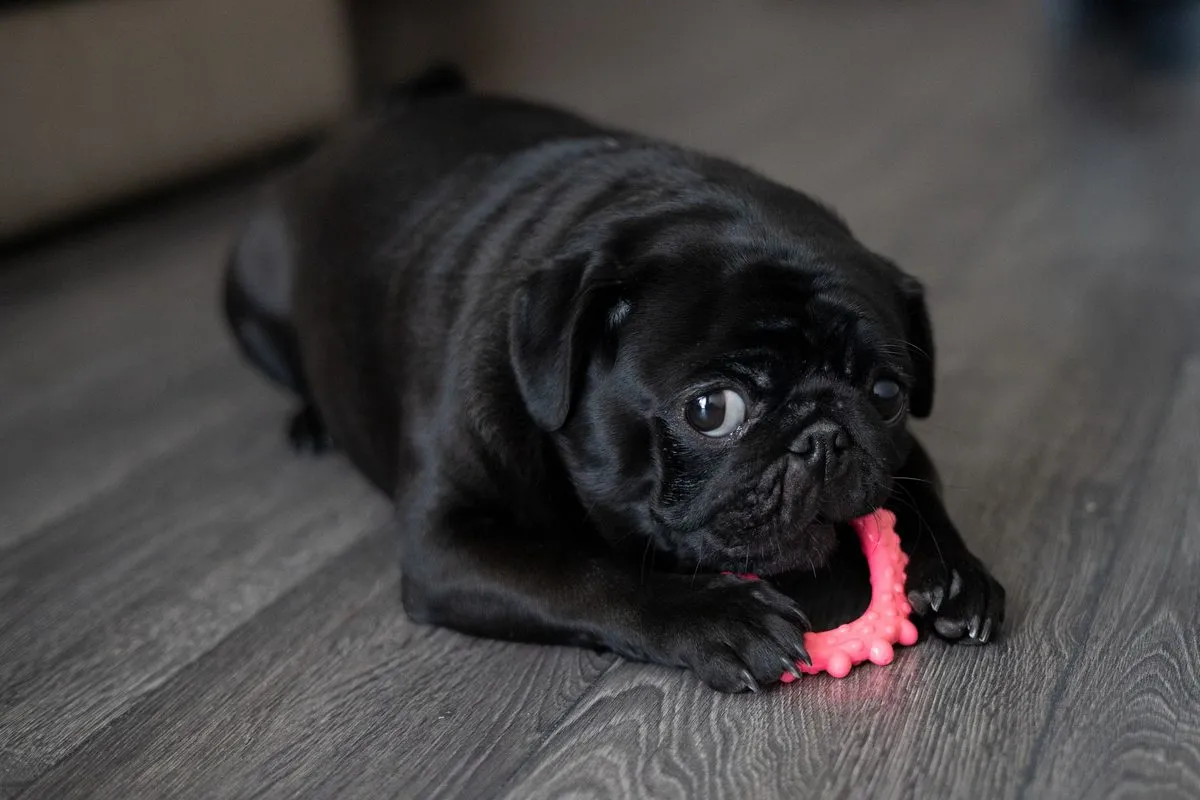
Like every puppy, a young Pug explores the world with its mouth. Offer safe chew toys and swap them for anything it shouldn’t have, and these steps for puppy biting help with nipping during play.
Family life and children
Pugs are known as an ideal house dog. They’re happy in the city or the country, with kids or older people, and as an only pet or with other dogs.
Children
A Pug is sturdy for a small dog and usually loves children. Teach kids to be gentle, to sit on the floor to cuddle the dog, and to let it rest when it walks away, and keep an adult nearby during play.
Other pets
Most Pugs get along well with other dogs. Introduce a new dog calmly and supervise the first meetings, and give each pet its own bed and bowl. A Pug that loves company often enjoys having another friendly dog around the house.
Apartments and small homes
A small size, a quiet nature and modest exercise needs make the Pug a great fit for apartment life. The guide to the best family dogs for first-time owners compares it with other easygoing breeds.
Where the Pug comes from
The Pug is an ancient breed that can be traced back some 2,000 years. The emperors of ancient China loved flat-faced toy dogs, and the Pug, the Pekingese and the Shih Tzu were all kept as pampered pets of the imperial court.
Pugs were closely held treasures in China, and outsiders could get one only as a gift. They were also kept as pets in Buddhist monasteries in Tibet.
Royal favorites in Europe
In the 1500s, Dutch traders brought Pugs from China to Europe. Legend holds that a Pug saved the life of the Prince of Orange by barking a warning of an attack, and the breed became the mascot of the royal House of Orange.
When William and Mary of Orange arrived in England to take the throne, their Pugs came too and started a craze for the breed among the British. A story also tells of Josephine, the wife of Napoleon, sending messages hidden under the collar of her Pug, Fortune.
Where the name comes from
No one knows for sure where the name Pug comes from. One idea links it to the Latin word pugnus, a fist, since the face can look like a clenched fist.
Another idea points to the marmoset monkeys that were popular pets in the early 1700s and were also called pugs. In Holland the breed is known as the mopshond, and in France as the carlin.
In the United States
The AKC recognized the Pug in 1,885. Today it’s one of the best-known small breeds in the country, loved for its face, its humor and its devotion.
Is a Pug right for you
A Pug is a wonderful companion for someone who wants a small, loving dog that’s happy indoors and close by. It gives charm, humor and affection, and asks mostly for company and kindness.
It’s a harder fit for a home where the dog would be alone for long hours, or for someone looking for a running partner in the heat. Its shedding also matters if you like a hair-free sofa.
Before you decide
Think about who will be home with the dog, how you’ll keep it cool in summer and how you’ll keep it fit. A breed club or a rescue that knows Pugs can tell you more about life with one.
Comparing small breeds
If you’re choosing among small dogs, these small dog breeds compare the Pug with the Chihuahua, the French Bulldog, the Shih Tzu and other little companions.
Naming a Pug
Once your Pug comes home, the dog names by breed page lists the names real Pugs carry most, a good place to start for a little dog with a big personality.