Dog Tricks to Teach, from Easy to Show-Off
Fun dog tricks to teach at home, from touch and shake to roll over and a bow, with simple steps for each and a printable checklist to track them.

By Maren Whitlock · Published
Dog tricks checklist
0 of 19 learned
Dog tricks are a fun way to train, and they keep your dog’s mind busy. Every trick below comes with simple steps, starting with easy first tricks and building to a few that will impress your friends.
Tick off each trick in the checklist above as your dog learns it, and print it for the fridge so the whole family can practice.
How to teach any trick
Most tricks are taught the same way. You guide your dog into the move with a treat, reward the moment they do it, and add a word once they do it easily.
The treat that guides your dog is called a lure. Hold it right at your dog’s nose and move it slowly, so your dog follows it into the position you want.
The four steps
- Lure: guide your dog into the move with a treat at their nose.
- Reward: the moment they do it, say “yes” and give the treat.
- Name it: once your dog does the move easily, say the cue word just before you lure.
- Fade the lure: make your hand motion smaller and give the treat from your other hand, until the cue alone is enough.
Keep sessions short and fun
A few minutes at a time is plenty. Stop while your dog is still keen, and always end on a trick they can do, so the session finishes with a win.
Clever, busy breeds like the Border Collie often treat trick training as a favorite daily job.
Use small, soft treats your dog already eats and loves. If your puppy is still learning the basics, the puppy training section covers sit and down, which many tricks start from, and the dog commands guide covers the rest.
Easy first tricks
These tricks are quick to teach and make a great start for puppies and grown dogs alike. Many of them build skills for harder tricks later.
Touch
- Hold your open hand a little to the side of your dog’s nose.
- When your dog sniffs or bumps your hand, say “yes” and reward.
- Once they bump your hand every time, say “touch” as you offer it.
- Move your hand a little farther away, so your dog walks over to touch it.
Shake hands
- Ask your dog to sit.
- Hold a treat in a closed fist low in front of their chest.
- Wait. Most dogs paw at the fist; the moment the paw lifts, say “yes” and open your hand.
- Once your dog paws reliably, say “shake” and offer your open palm instead of your fist.
Spin in a circle
- Hold a treat at your dog’s nose, at the level of their head.
- Move it slowly in a large circle to one side, so your dog turns to follow it.
- When they finish the circle, say “yes” and reward.
- Say “spin” as you start, then make the circles faster and smaller, until a small hand signal is enough.
Teach the other direction the same way with a different word, like “twirl,” so your dog learns both.
Find it
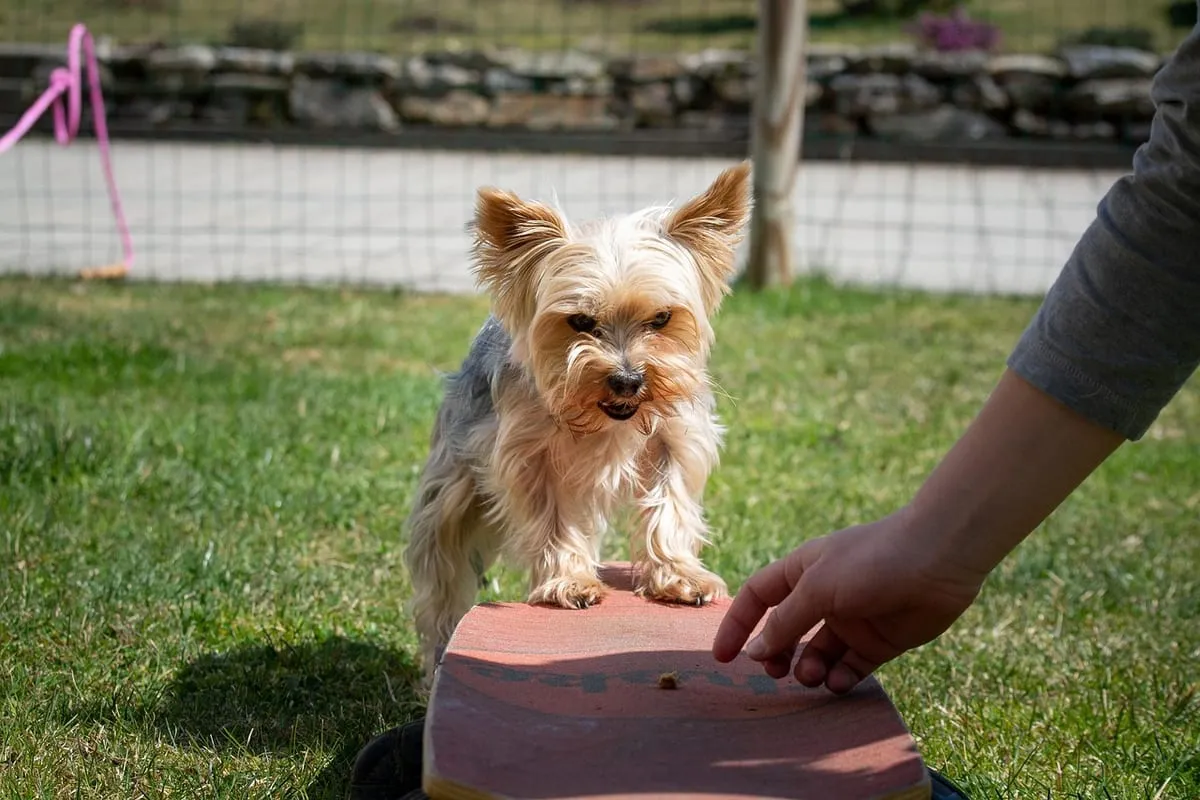
Show your dog a treat, let them watch you place it on the floor a short way off, then say “find it” and let them go. Once that’s easy, hide the treat under a cup or behind a chair leg, so your dog has to use their nose.
Paws up and fetch
For paws up, lure your dog’s front paws onto a low, steady step and reward. For fetch, toss a toy a short way, reward when your dog brings it back, and add distance a little at a time.
Next-step tricks
Once your dog knows a few easy tricks, these build on them. Take each one in small pieces and reward every bit of progress.
Roll over
- Ask your dog to lie down, then kneel beside them.
- Hold a treat beside their nose and move it toward their shoulder, so they roll onto their side. Reward.
- Keep moving the treat over their shoulder toward their back, so they roll onto their back, then on over to the other side. Reward.
- Once they roll smoothly, add the cue “roll over,” and make your hand motion smaller over time.
Practice on a soft rug or grass, never on a hard floor.
Wave hello
Start with shake hands. Offer your palm a little higher and farther away, and reward when your dog’s paw lifts toward it without touching. Add the cue “wave” once the paw lifts in the air every time.
Go to your place
Put a mat or bed down, lure your dog onto it with a treat, and reward when all four paws are on it. Add the cue “place,” then stand a little farther from the mat each time before you send your dog to it.
Through a hoop
Start with a hoop resting on the ground and lure your dog to walk through it. Use a cue like “through,” and raise the hoop only a little, keeping it low so the trick stays an easy hop.
Show-off tricks
These tricks take more practice, but they’re the ones that get a smile from everyone. Teach them once your dog is happy with the lure, reward and cue routine.
Take a bow
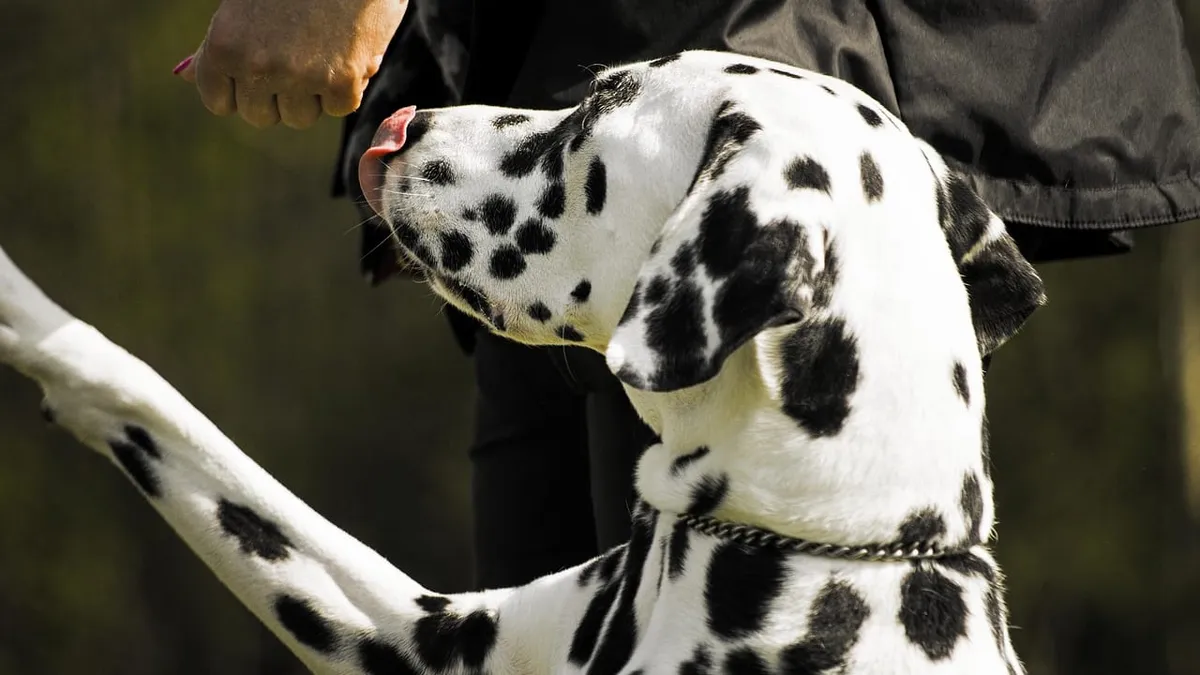
- With your dog standing, hold a treat at their nose and move it slowly down toward the floor between their front paws.
- When their chest dips and their back end stays up, say “yes” and reward right away.
- Add the cue “bow,” and reward the moment the chest goes down, before your dog lies all the way down.
Back up
Stand facing your dog in a hallway or beside a wall, so they stay straight. Step toward them; the moment they take a step back, say “yes” and toss a treat. Add the cue “back” once they step back as you move in.
Play dead
Teach roll over first. Then lure your dog onto their side and reward them for staying there, still and relaxed, for a moment. Add a cue like “bang,” and build up the time a little at a time.
Weave through your legs
Stand with your feet apart and lure your dog through your legs from one side to the other with a treat. Take a step and lure them back through the other way. Once they follow the pattern, make the lure smaller and walk slowly as they weave.
When a trick gets stuck
Every dog hits a trick that won’t come together. That’s normal, and it usually means the step you’re asking for is too big.
Make it easier
Go back to a step your dog can do and break the next one into smaller pieces. Reward tiny progress, like a head turn toward the right side, and build from there.
Check your lure and timing
Keep the treat right at your dog’s nose; when it’s too far away, they lose track of it. Say “yes” the instant your dog does the move, not a second later, so they know exactly what earned the treat.
Take a break
A tired or distracted dog won’t learn well. Train after a walk, in a quiet room, and stop for the day with a trick your dog already knows.
When your dog has a few tricks down, string them together into a short routine. It’s great fun to show off, and it keeps every trick fresh.
Tricks are one kind of brain work. For sniffing games, food toys and other dog enrichment ideas, see the checklist of everyday ideas. Once a trick is polished, show it off on a day out, and these things to do with your dog have a bucket list of ideas.